

![Highscreen 386 SX 20 [Vobis]](https://www.jungsi.de/blog/wp-content/uploads/Highscreen-386-SX-20-aufgeklappt.jpg)
Vobis, Highscreen, and the 386SX Laptop – A Journey into the 90s
Anyone who had contact with computers in the 1990s is highly likely to be familiar with the company Vobis and the brand Highscreen. At the time, Vobis was one of the largest computer retail chains in Europe, and in the early 1990s, it had around 800 branches across eleven countries. By 1996, more than half of all German households had purchased their first PC at a Vobis store.
The Success Story of Vobis
Vobis placed an early bet on the IBM-compatible PC running MS-DOS as its operating system. While new and interesting computers were hitting the market in the USA, it often did not take long before they could also be found on the shelves at Vobis. The brand achieved its major breakthrough with the introduction of Highscreen—its own PC series, which was manufactured in the Far East. While this was no longer an uncommon practice at the time, Vobis succeeded in offering high-performance computers at affordable prices.
A particularly remarkable model was the Colani PC, designed by the German designer Luigi Colani. This futuristically shaped computer won the "PC of the Year" award from *Chip* magazine in 1994. I myself owned one of these computers back then—it wasn't cheap, but it was perfectly configured for getting started in the world of computing.
Starting in 1992, Vobis placed increased emphasis on Windows 3.1, which proved to be significantly more user-friendly than its predecessors. This led to Vobis becoming one of the largest licensees of Microsoft Windows.
Vobis and OS/2 – A Brief Excursion
Interestingly, Vobis (much like its competitor ESCOM) also placed its bets on the alternative operating system IBM OS/2. The exact reasons remain unclear: one theory suggests that Microsoft took too long to ship Windows 95, while another speculates that Vobis did not wish to contribute to the further consolidation of Microsoft's monopoly. A subsequent legal dispute between Microsoft and Vobis was ultimately settled—Microsoft presumably realized that it would not be prudent to pick a fight with one of Europe's largest computer retailers.
In 1996, co-founder Theo Lieven left the company and sold his shares—a pivotal moment, as Aldi began offering low-cost PCs en masse shortly thereafter. I, too, was affected by this, for at the time I ran a small computer shop and repaired some of the Aldi PCs that were popular back then. The retail giant Metro, which backed Vobis, was unable to compete against the discount strategy employed by Aldi and its supplier, Medion. The company Vobis was broken up in 1999 and finally wound down in 2000.
Personal Memories of Vobis
Vobis was always a highlight for me. The nearest store was 50 kilometers away—but a true Eldorado for computer enthusiasts. I found the "Denkzettel" particularly exciting; it was a promotional flyer that was regularly delivered along with the daily newspaper. In it, you could marvel at the latest computers and components. Among other things, I bought OS/2 and Linux there (back then, still on floppy disks!)—and, later on, a computer tower featuring a Colani design.
My Highscreen 386SX-20 laptop
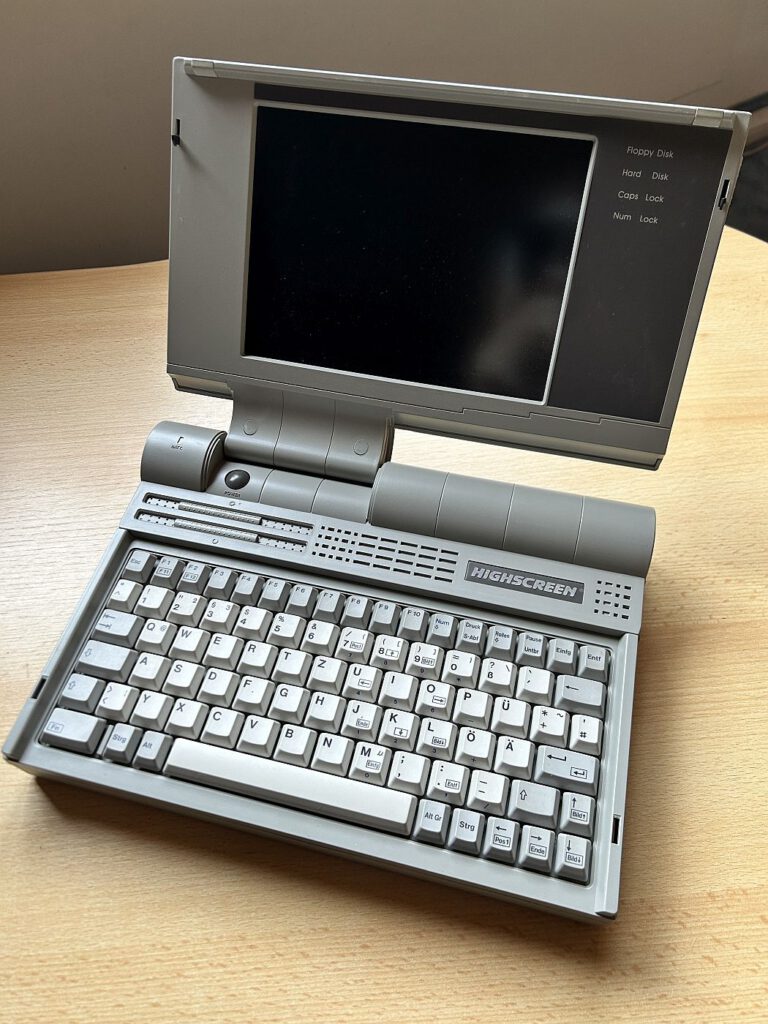
Driven by this nostalgia, I acquired a Highscreen device—not the "Colani," admittedly, but a typical DOS laptop from 1991.
The Highscreen 386SX-20 notebook was sold by Vobis, but was also offered under other brand names—for instance, as the OKANO at Karstadt or as a Halikan model from Chaplet Systems. Its specifications were quite solid for the standards of the time:
- Processor: Intel 80386SX at 20 MHz
- Memory: 2 MB RAM, expandable to 6 MB
- Diskettenlaufwerk: 3,5″ Floppy 1.44 MB
- Hard drive: 40 MB
- Graphics: VGA with 640 x 480 pixels
- Operating System: Windows 3.1
- Weight: 2.9 kg with battery
- Preis 1991: 4.732 DM (2025: 4.750 €)
If one compares the device with an Apple PowerBook 180 from the same era, the similarities are striking: both notebooks featured bulky casings, small screens, and—at nearly 3 kg—were no lightweights.
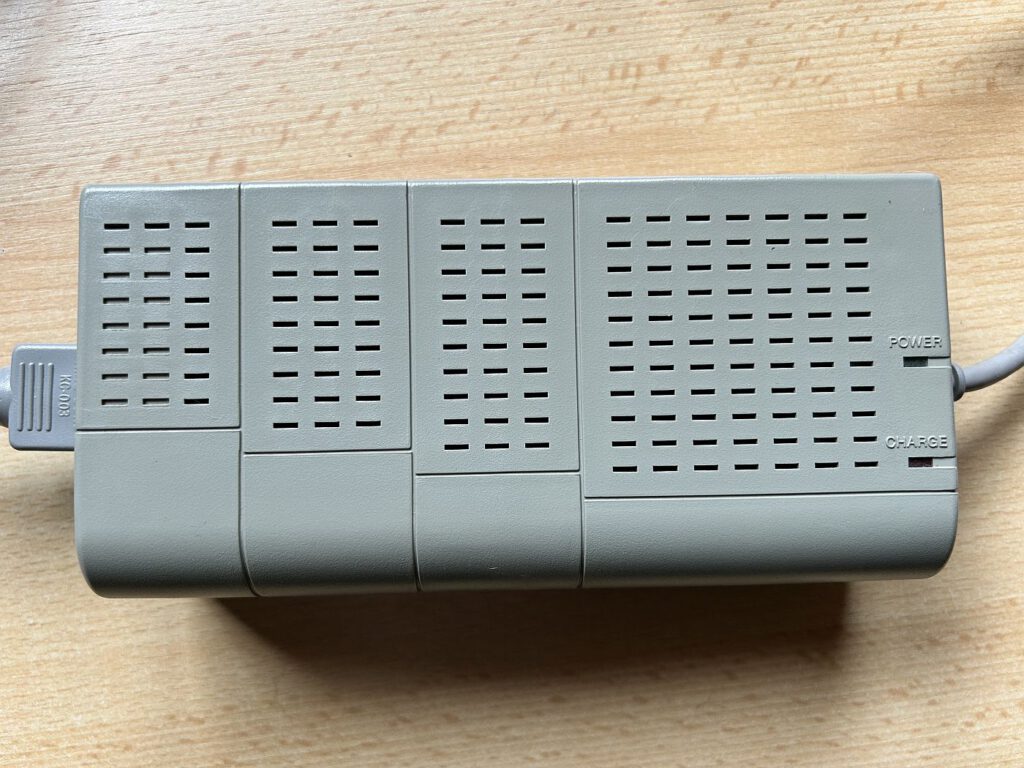
In terms of connectivity, there wasn't a great deal: on the side, there was a port for a PS/2 keyboard, while the rear featured a docking station port, a COM/mouse connector, a VGA output, and a port for a printer and floppy drive. Unfortunately, the device did not yet feature an integrated pointing device (mouse control), meaning that an external mouse was required for use with Windows.
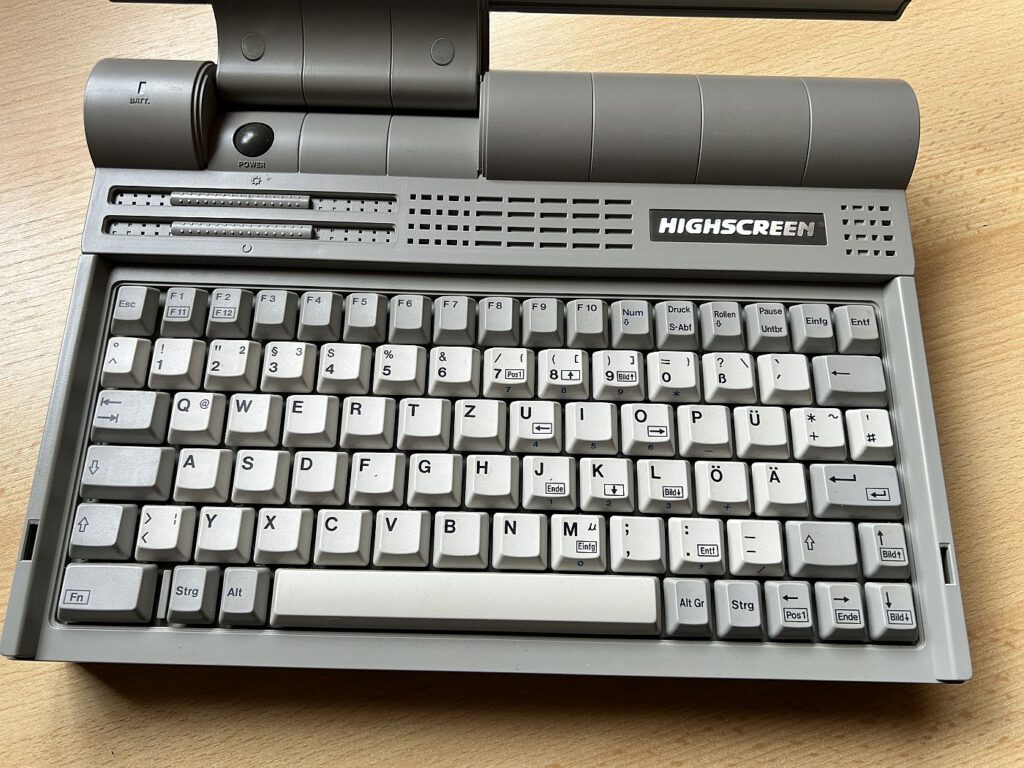
Highscreen 386 SX 20 – Keyboard 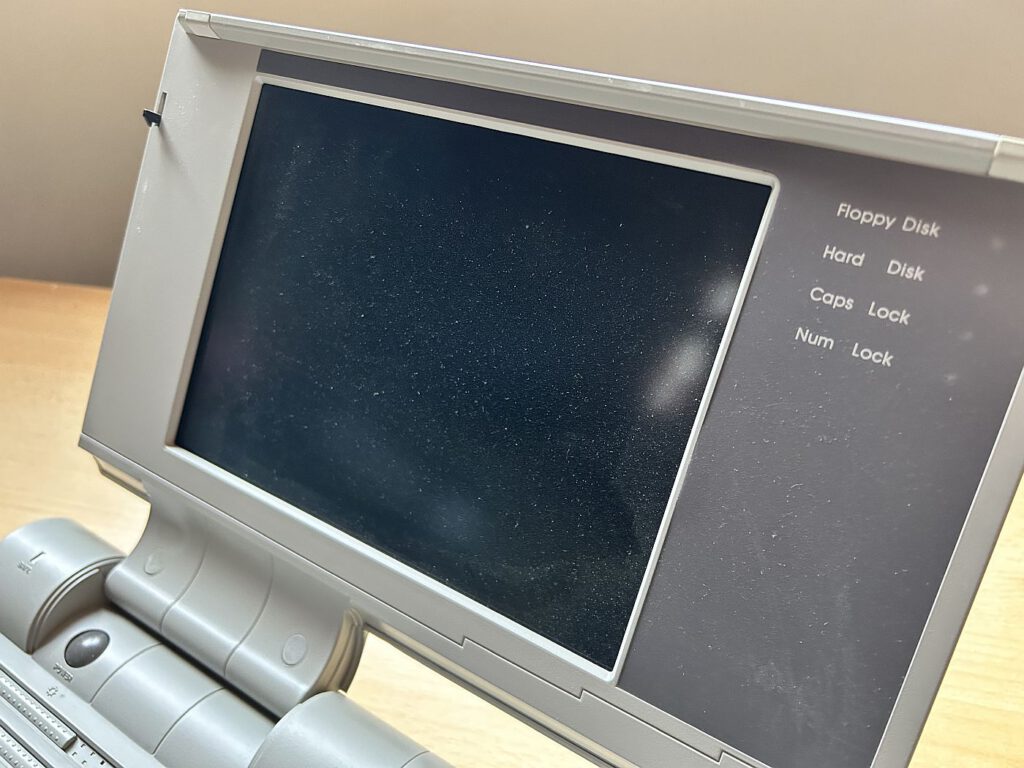
Highscreen 386 SX 20 – Screen 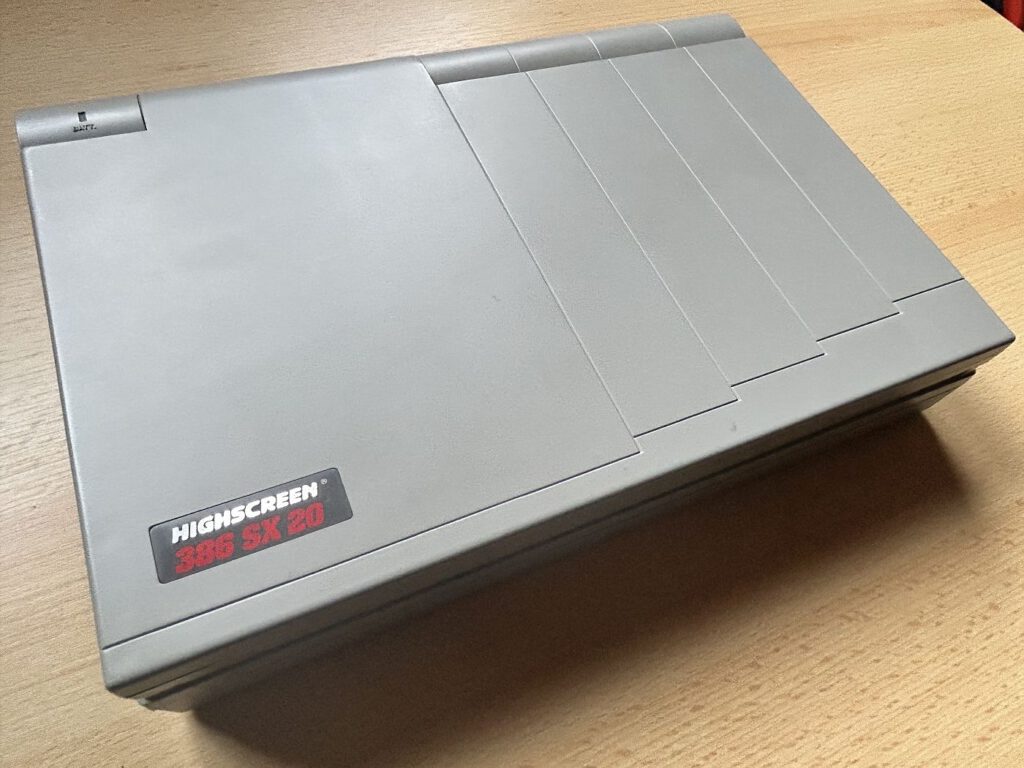
Highscreen 386 SX 20 – Slanted Top 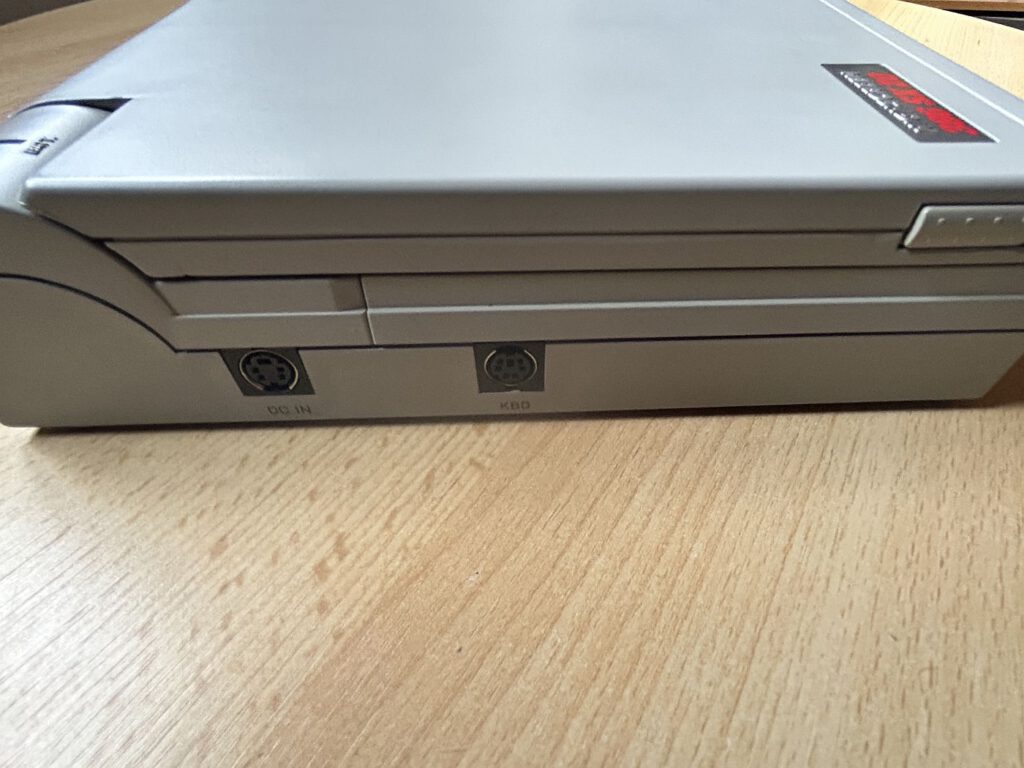
Highscreen 386 SX 20 – Keyboard and Power Connections 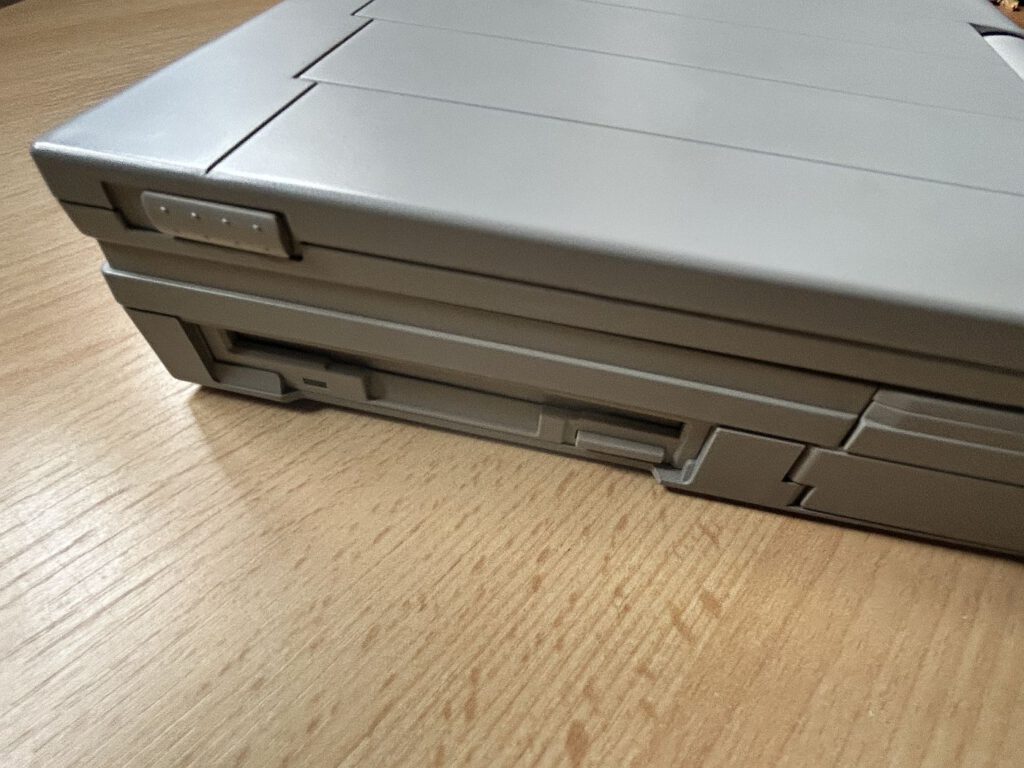
Highscreen 386 SX 20 – floppy disk drive 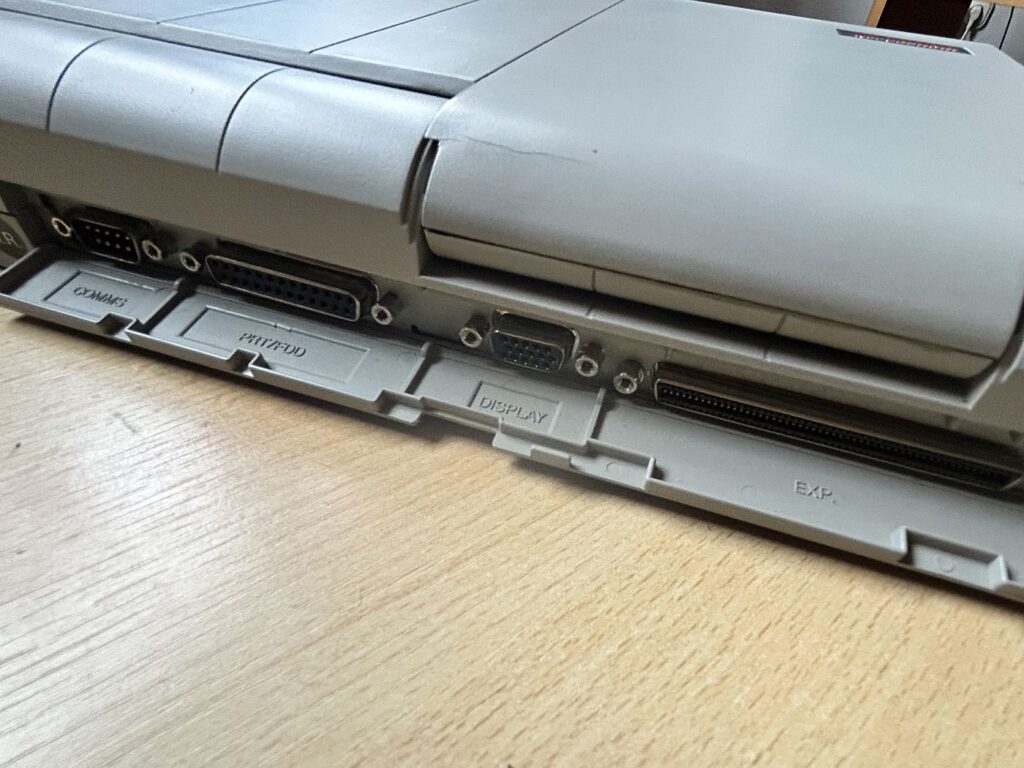
Highscreen 386 SX 20 – Ports 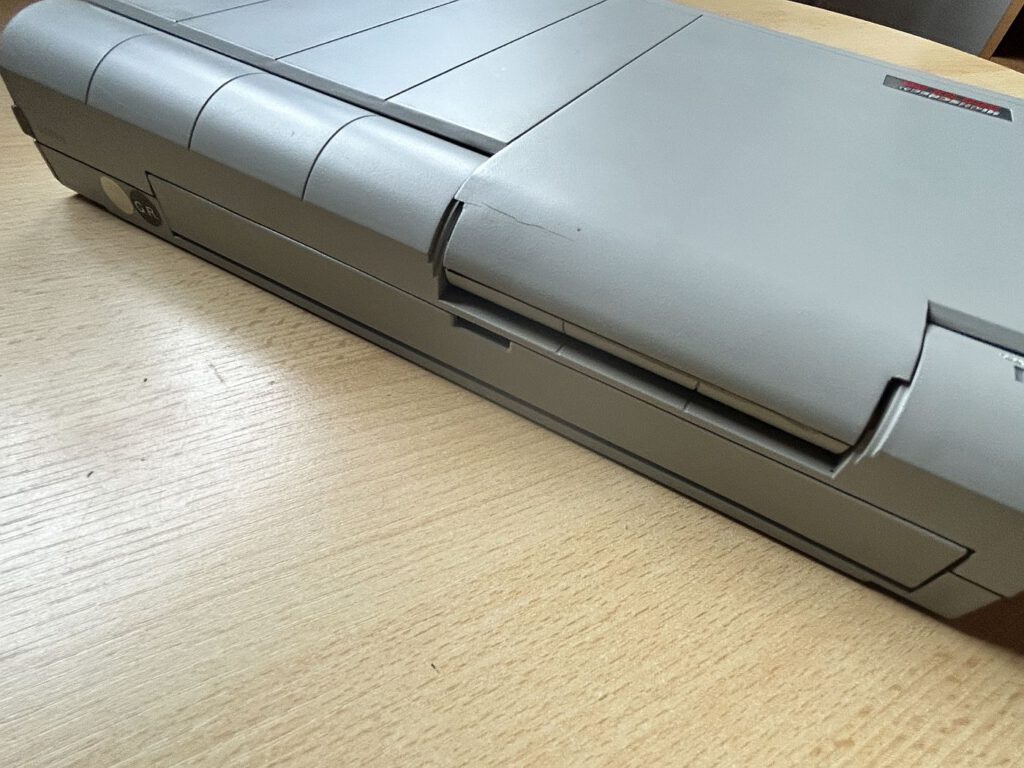
Highscreen 386 SX 20 – Rear View 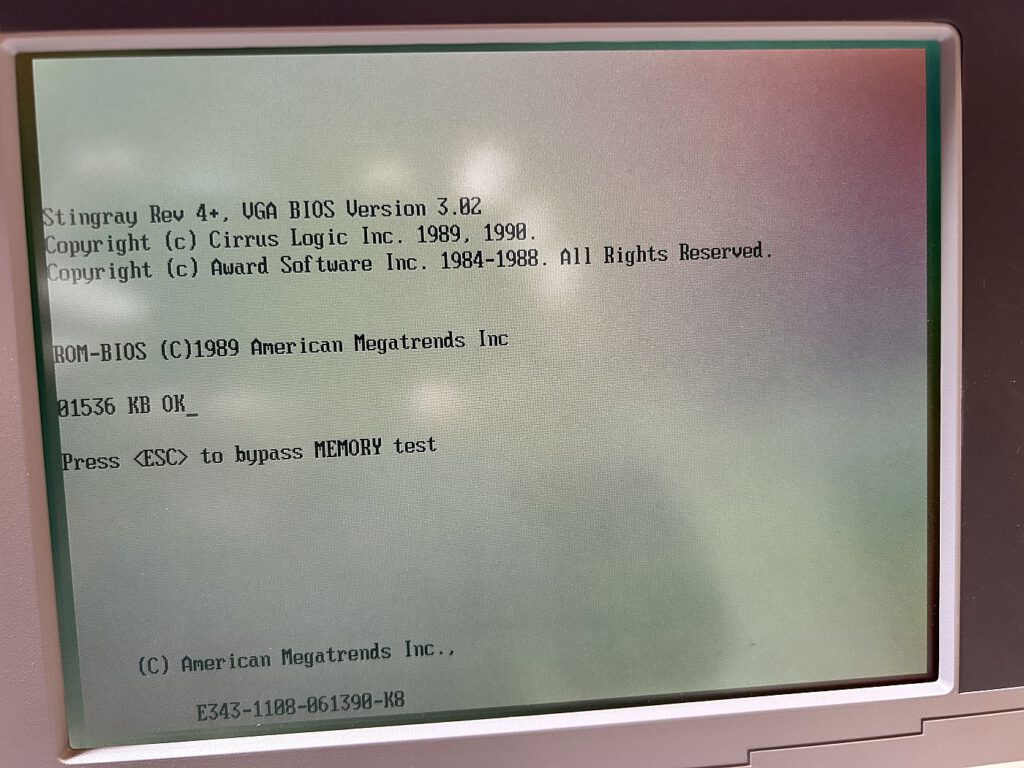
Highscreen 386 SX 20 – Memory Test 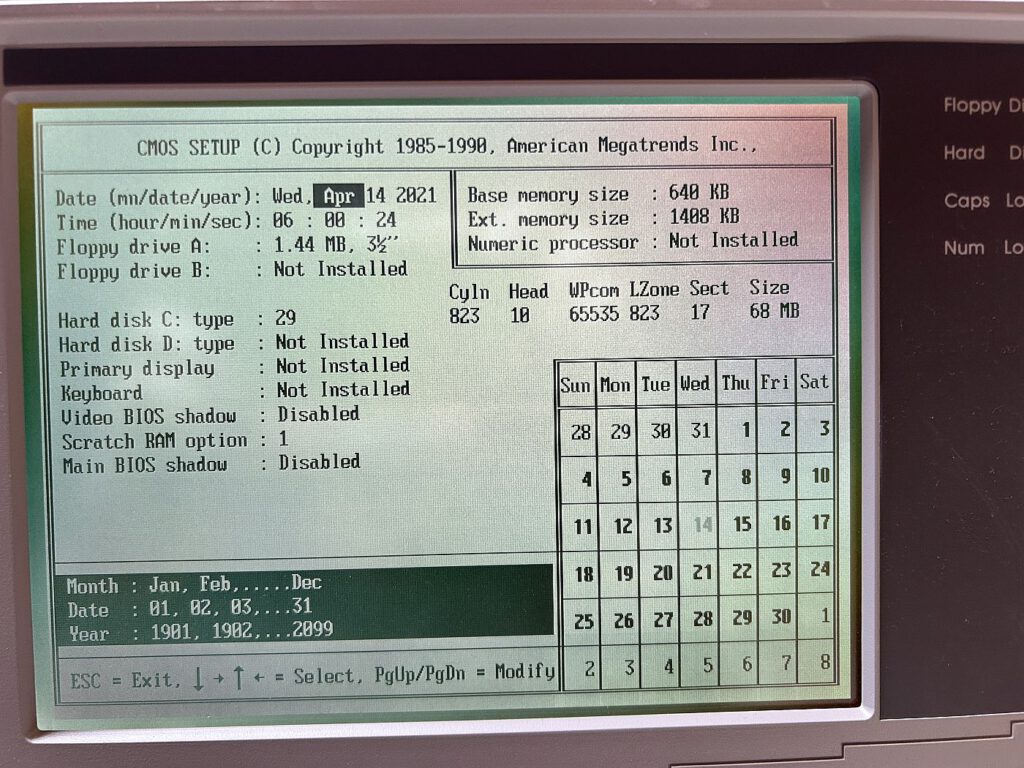
Highscreen 386 SX 20 – BIOS 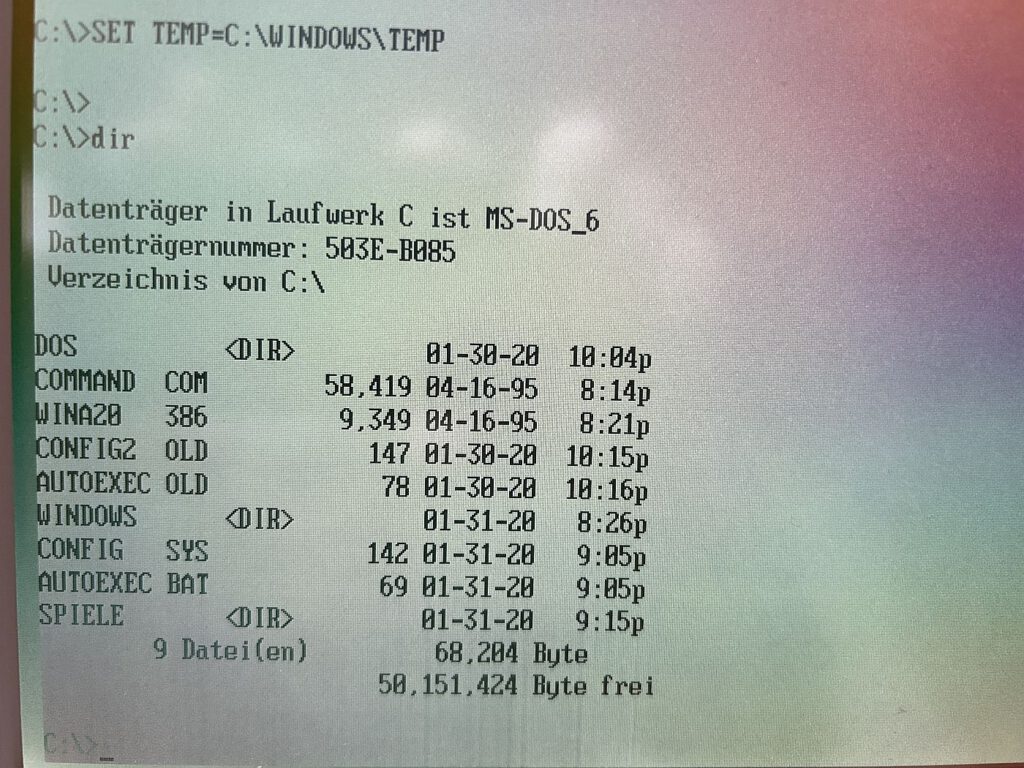
Highscreen 386 SX 20 – Drive C 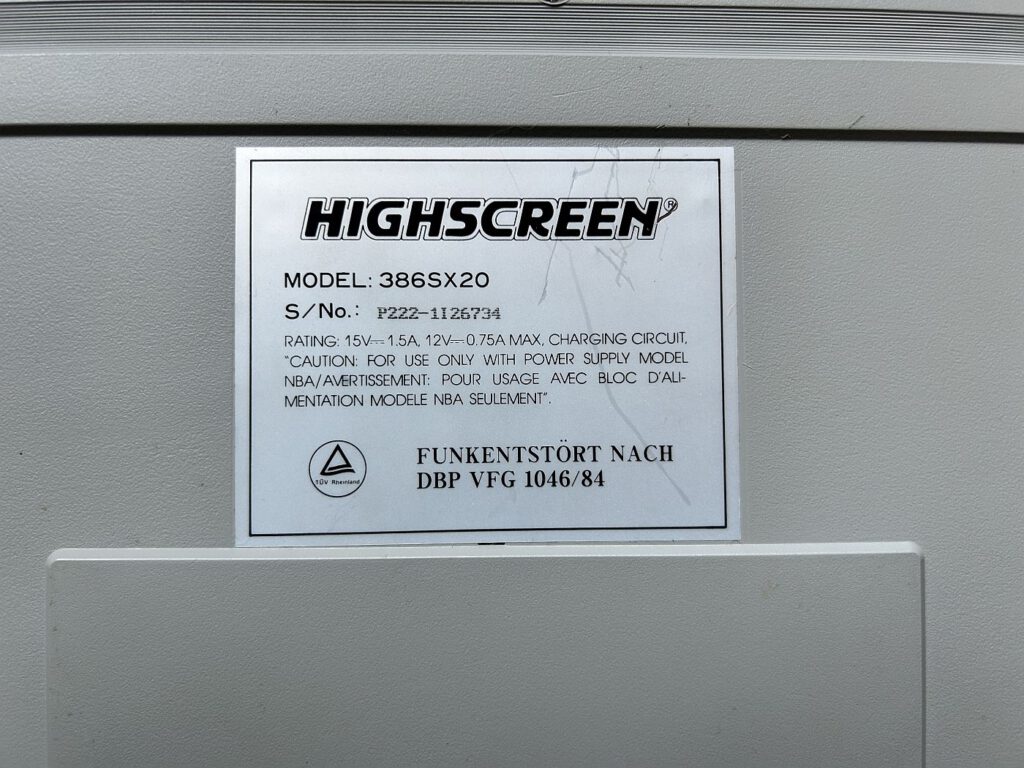
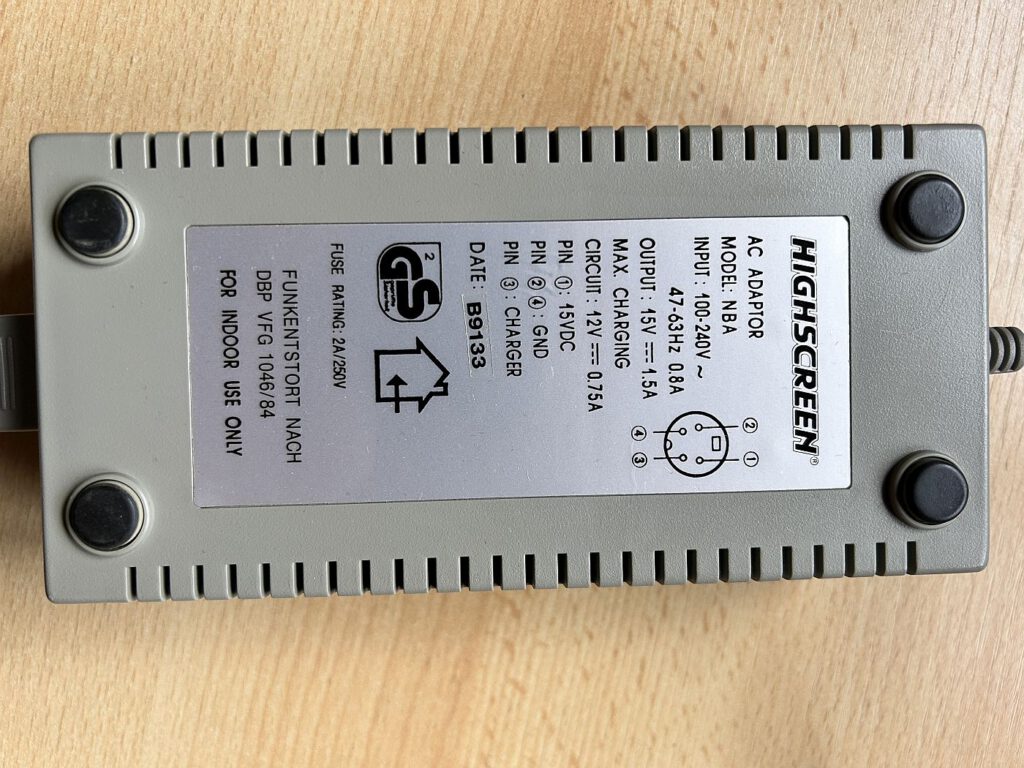
Highscreen 386 SX 20 – model sticker 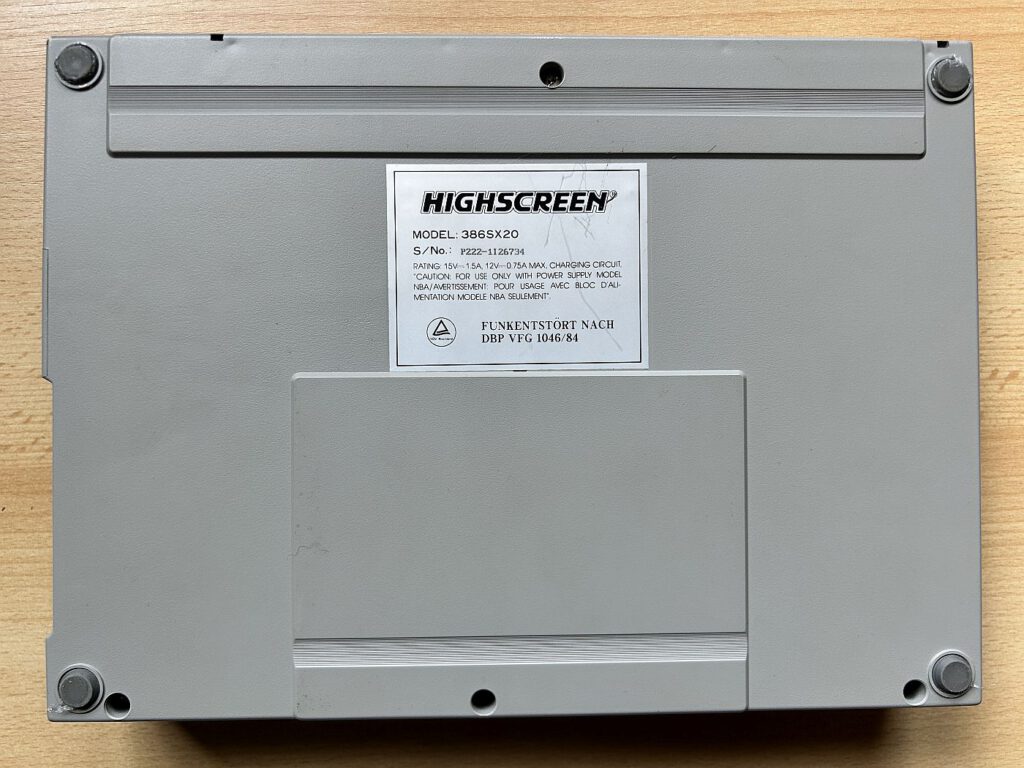
Highscreen 386 SX 20 – Underside
The 80386SX – A Look at the Processor
The Intel 80386 was a significant processor of the x86 era and was produced from 1985 to 2007. My laptop utilizes the SX variant of the 386, which stands for "Single-Word eXternal." While the standard 386 featured a 32-bit data bus, the 386SX was equipped with a 16-bit data bus and a 24-bit address bus—internally, however, it also operated using a 32-bit architecture. Clock speeds ranged from 16 to 33 MHz, with my model running at 20 MHz.
The processor was seated in an 88-pin PGA socket and was, at the time, a more cost-effective alternative to the more powerful 386DX models.
Conclusion
Vobis was a defining brand of the 1990s, enabling many computer users to make their entry into the world of PCs. The Highscreen brand stands as a symbol of an era when computers were still something special—when purchasing one required careful consideration. My Highscreen 386SX-20 serves as a fond reminder of that time: a piece of computing history that brings back memories of my first encounters with Windows, OS/2, and DOS.
HighScreen 386 SX 20 – Batterie ersetzen
Vobis „Denkzettel“ – April 1991
![Aurum Graphics Gremlin [PC]](https://www.jungsi.de/blog/wp-content/uploads/Aurum-Graphics-Gremlin-Oberseite.jpg)
![Tecra 8100 [Toshiba]](https://www.jungsi.de/blog/wp-content/uploads/Toshiba-Tecra-8100-aufgeklappt.jpg)
![Schneider PC1512 SD [Schneider/PC]](https://www.jungsi.de/blog/wp-content/uploads/Schneider-PC-1512SD.jpg)
Leave a Reply