

![Saba Videoplay/ITT Telematch Processor [Saba/ITT]](https://www.jungsi.de/blog/wp-content/uploads/Saba-Videoplay-und-ITT-Tele-Match-mit-Spielen.jpg)
The article about the consoles Saba Videoplay and ITT Telematch Processor requires a look into the past of game consoles. As many may know, the first video game console, the Magnavox Odyssey, was released in 1972. As the next evolutionary step, the American company Alpex developed a new prototype in 1974 featuring the *Intel 8080* processor. This introduced the concept of a game console utilizing cartridges that employed non-volatile memory in the form of EPROMs.
Alpex set out to find a licensee and found Fairchild Camera und Instrument Corp. Through its Fairchild Semiconductor division, the company had its own in-house chip development capabilities and insisted on using a proprietary microprocessor.
Engineer Gerald A. Lawson was tasked with determining the prototype's capabilities. Lawson, one of the first African American engineers in Silicon Valley, modified the prototype to utilize Fairchild's F8 processor chipset. The keyboard originally planned by Alpex was replaced by an innovative 8-way joystick. An internal presentation of the system took place in late 1975, leading to the decision to develop the Video Entertainment System.
After the problems with the cartridges and the joystick had been resolved, work was completed in 1976, and the device—with its innovative components—was patented.
The console—initially a non-functional mock-up—was unveiled to the public at CES in Chicago in June 1976. Interest was initially lukewarm until the device, now designated the Channel F (Channel Fun), was presented at another trade show in November. The price was $150 for the console and $20 for the cartridges. Shipments of the first units were scheduled for November 1976. The console came with the games Tennis and Hockey built-in; however, only a few units could be shipped because each device had to be individually inspected by the FCC (Federal Communications Commission).
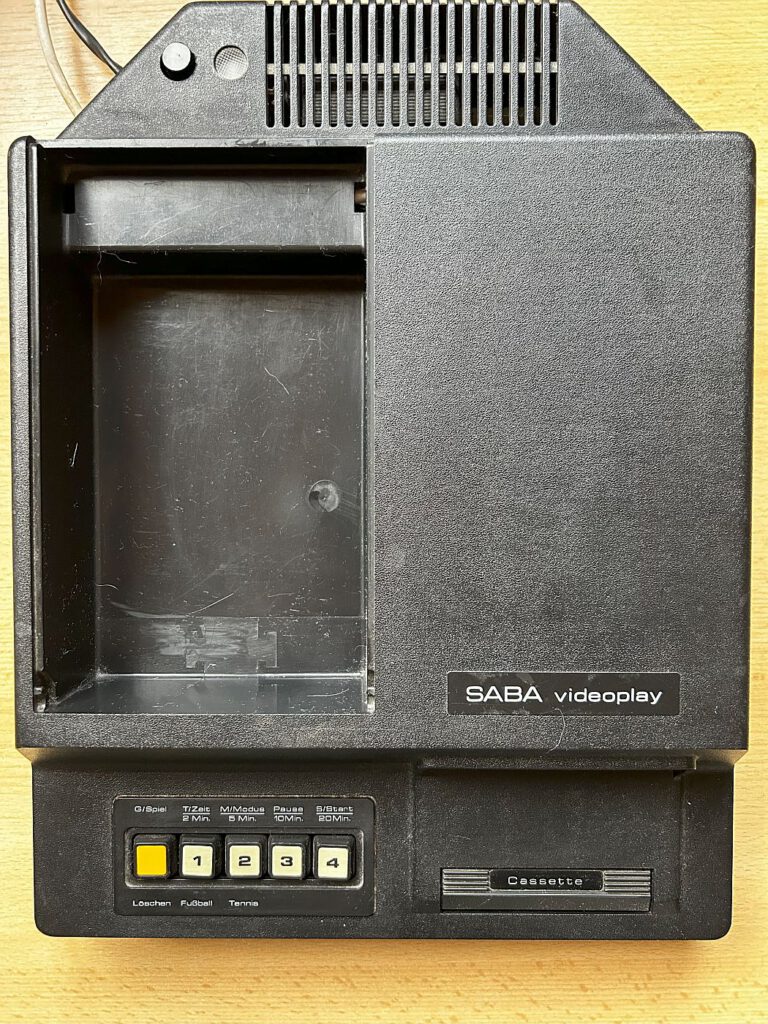
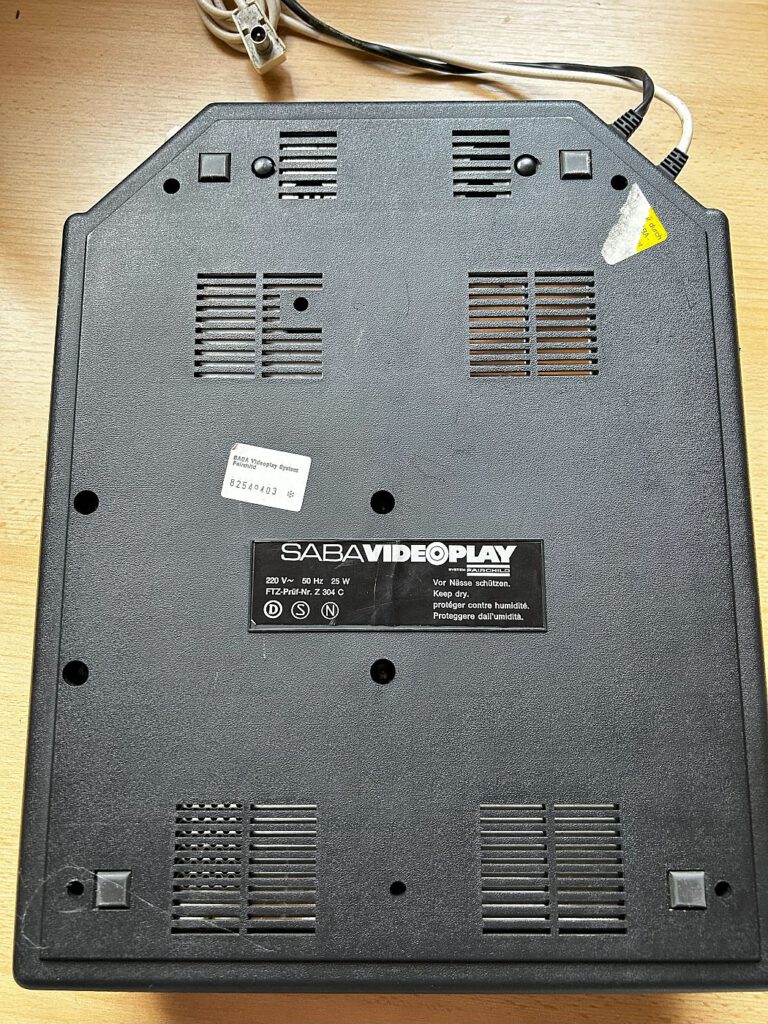
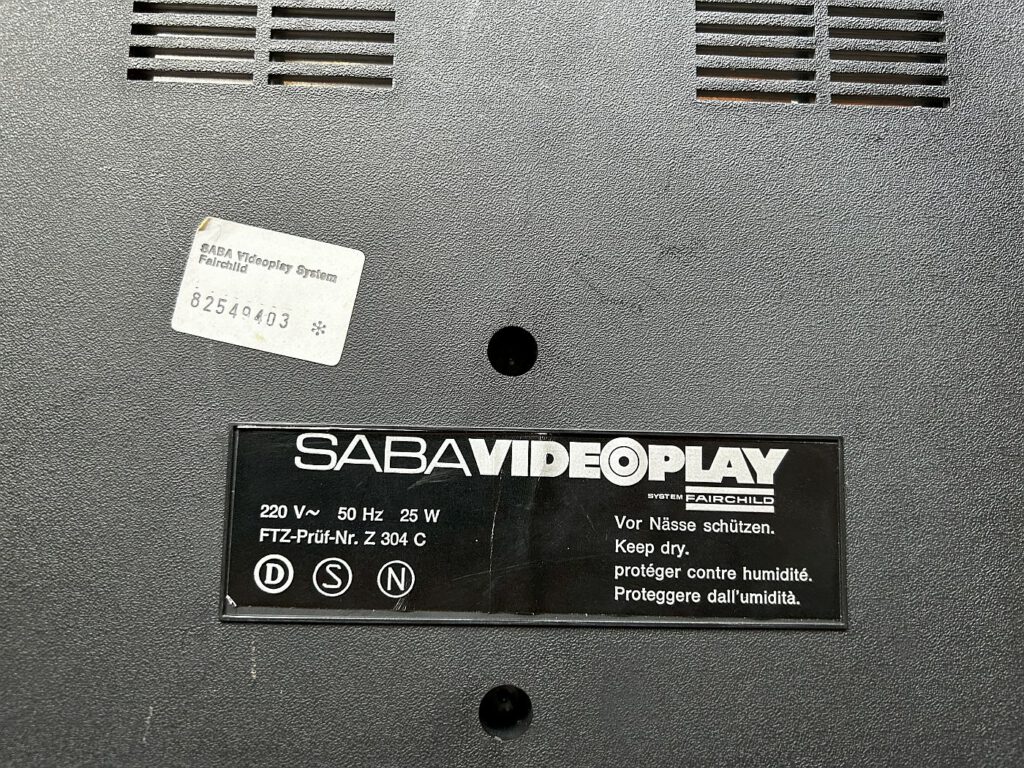
The Fairchild TV game was unveiled at the Electronica trade fair in Munich in November 1976. Among the first licensees was the Black Forest-based radio manufacturer Saba, which presented its console—the SABA Videoplay*—at the IFA in Berlin in August 1977. By the end of 1977, the price of the console stood at 500 DM, while the games cost around 50 DM. Licensees in other European countries also offered the products under various names.
In 1977, an oversupply of outdated devices in the US triggered a price war that forced many consoles to be sold below manufacturing cost. Towards the end of the year, the Atari VCS launched as a competitor to the Channel F . Initially, only nine titles were available, though they were modeled after arcade games. Fairchild responded with 17 games and lowered the device's price to $100. Production of 200,000 consoles was planned for 1978, following the sale of 250,000 units.
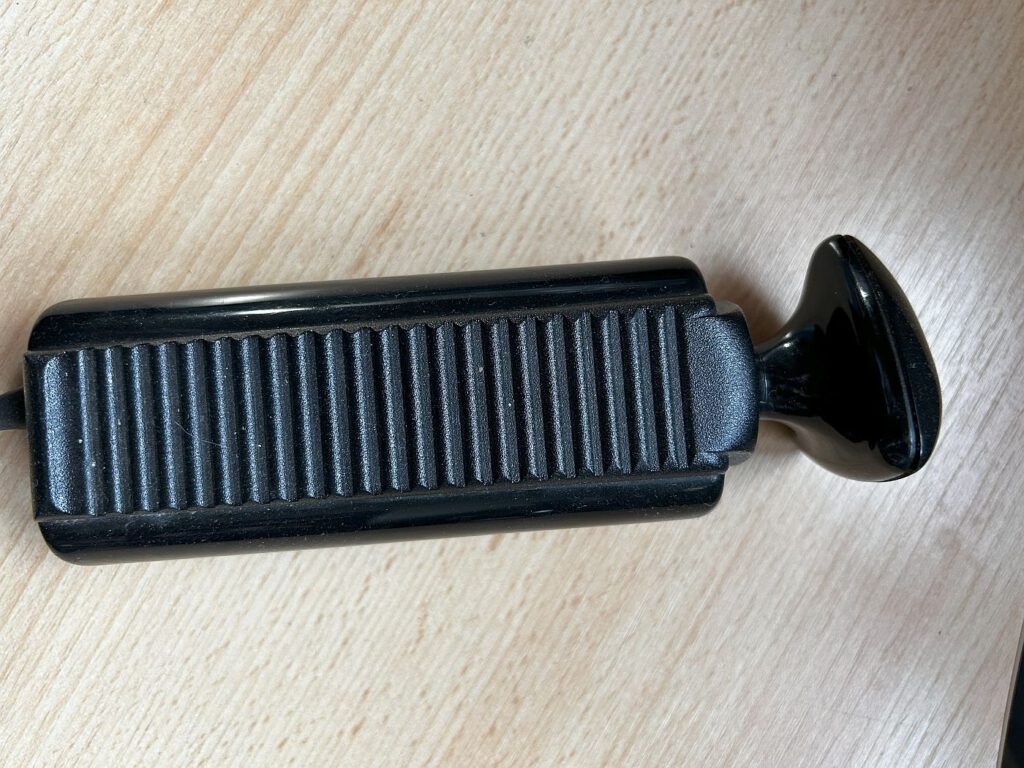
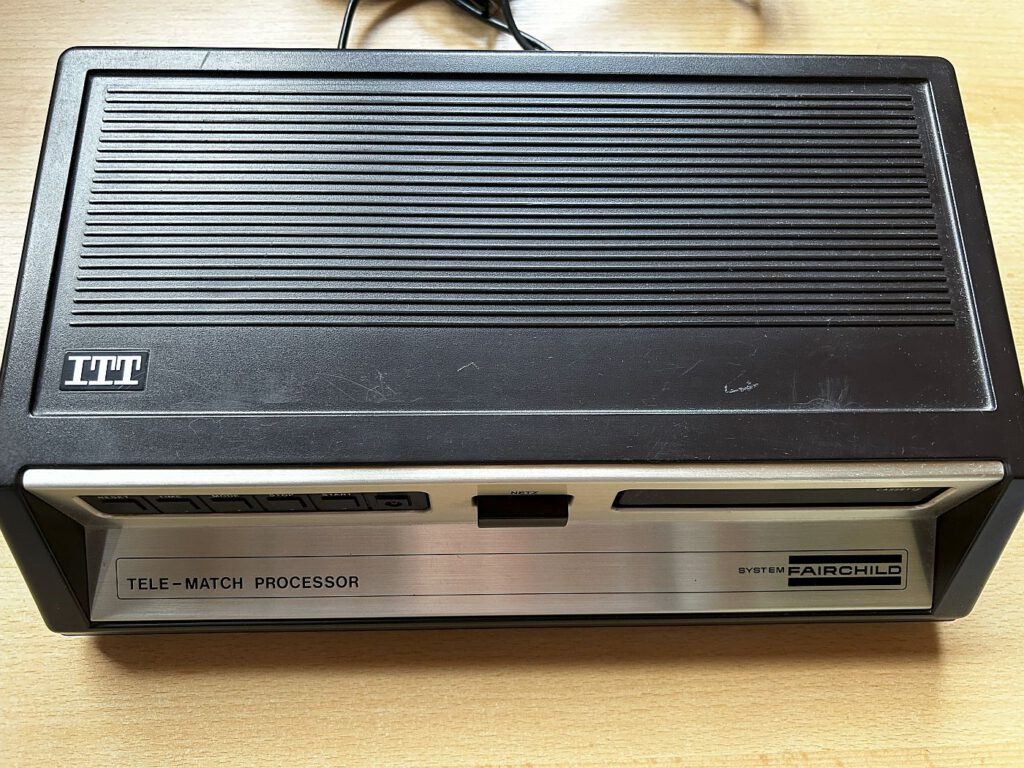
In 1978, the Fairchild console was redesigned; the Channel F System II featured a sleeker casing with detachable joysticks and more cost-effective electronics. That same year, two variants based on the revised model were introduced in Germany: the ITT Telematch Processor and the Nordmende Color Teleplay µP. The ITT console sold for 490 DM, while the games cost 48 DM. Additionally, another updated version, the Saba Videoplay II, was released. The controller serves to distinguish between the two Saba versions: the first version is rounded at the top with ribbed sides, whereas the new version has a more angular top and a stick shaped to fit the palm of the hand.
The controller was held in one hand while the small joystick on top was operated with the other. The mini-joystick allowed for movement in all directions and included a firing function (activated by pressing down); it was known as the "Spielepilot."
The modernized console version failed during the 1978 North American Christmas shopping season, with prices ranging from $125 to $150. In 1979, Fairchild withdrew from the market, selling all remaining inventory and its technical know-how to Zircon International Inc. A total of between 350,000 and 400,000 consoles were sold in the US.
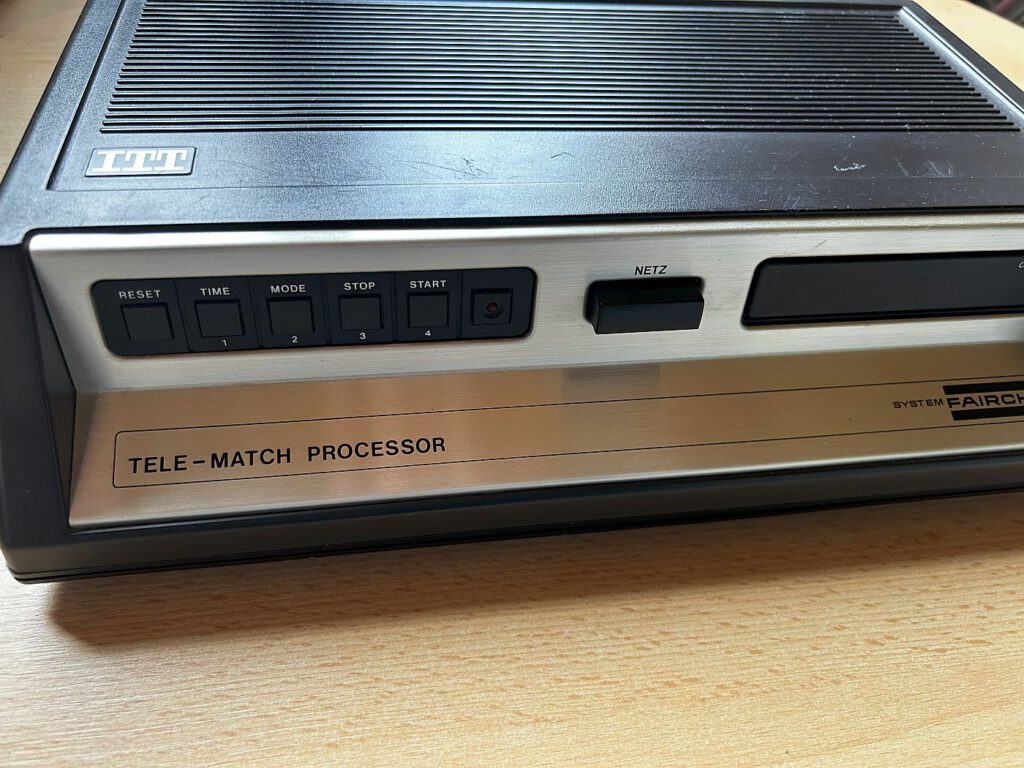
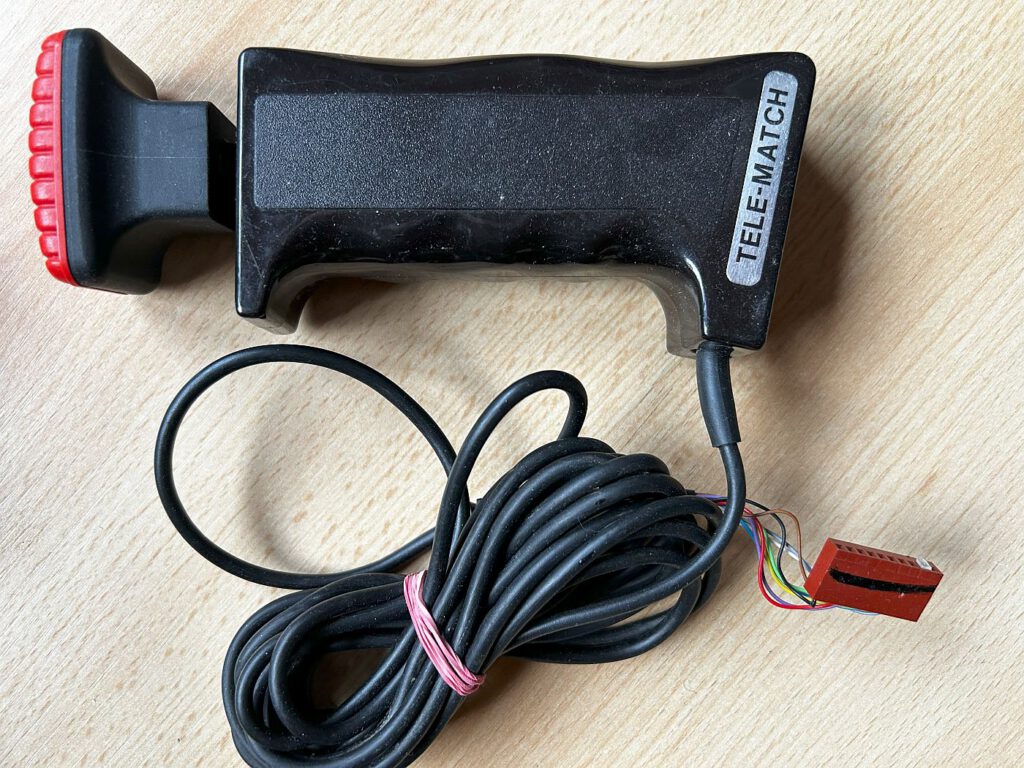
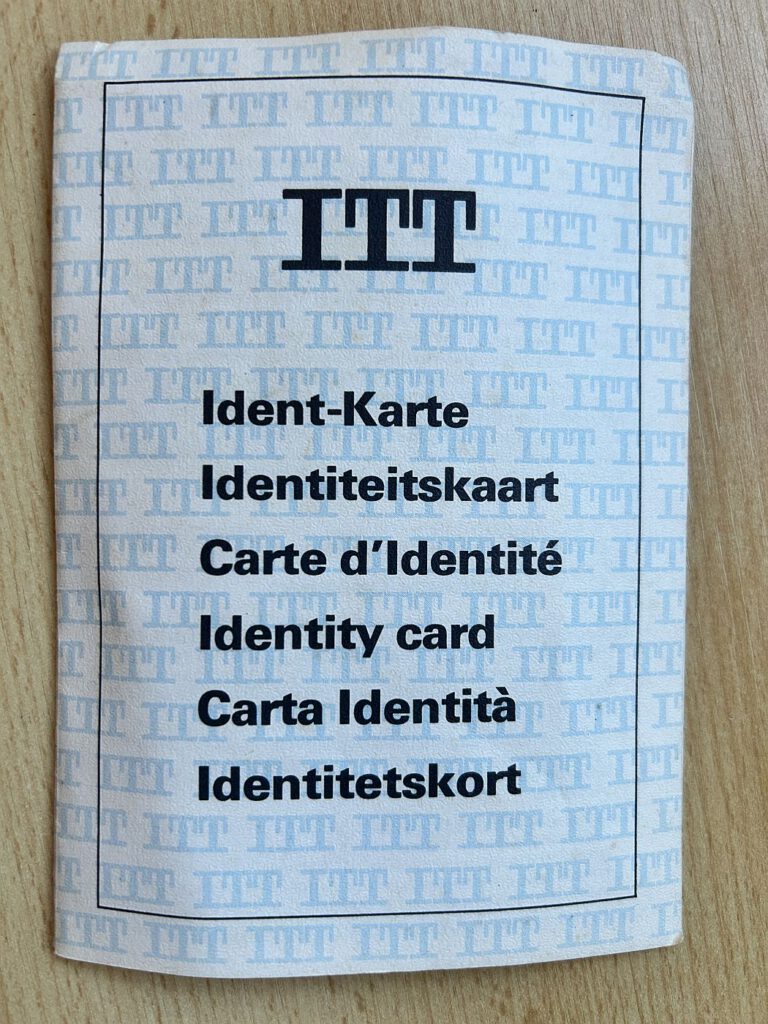
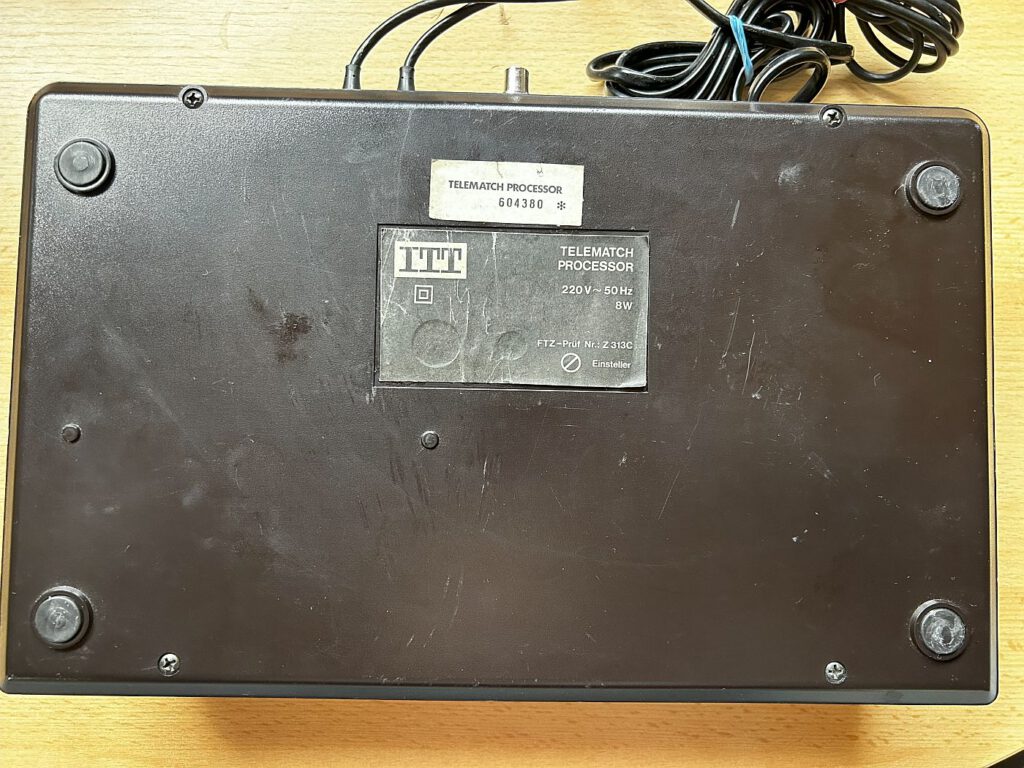
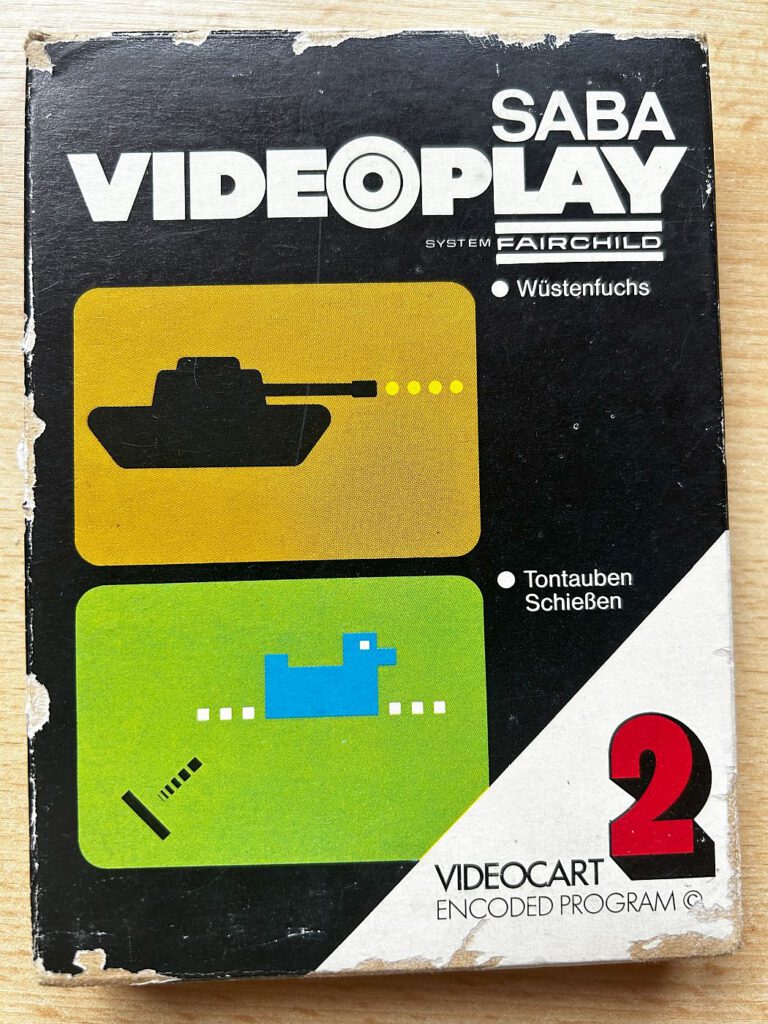
Games
All games produced by Fairchild and other companies were numbered sequentially. There are 26 games for the Channel F, some of which were distributed internationally and adapted for the domestic market.
Saba Videoplay: 20 games
ITT Telematch Processor: 15 games
Nordmende Color Teleplay: 14 games
The Saba Videoplay has two built-in games that can be played without cartridges: Soccer and Tennis.
Technical data
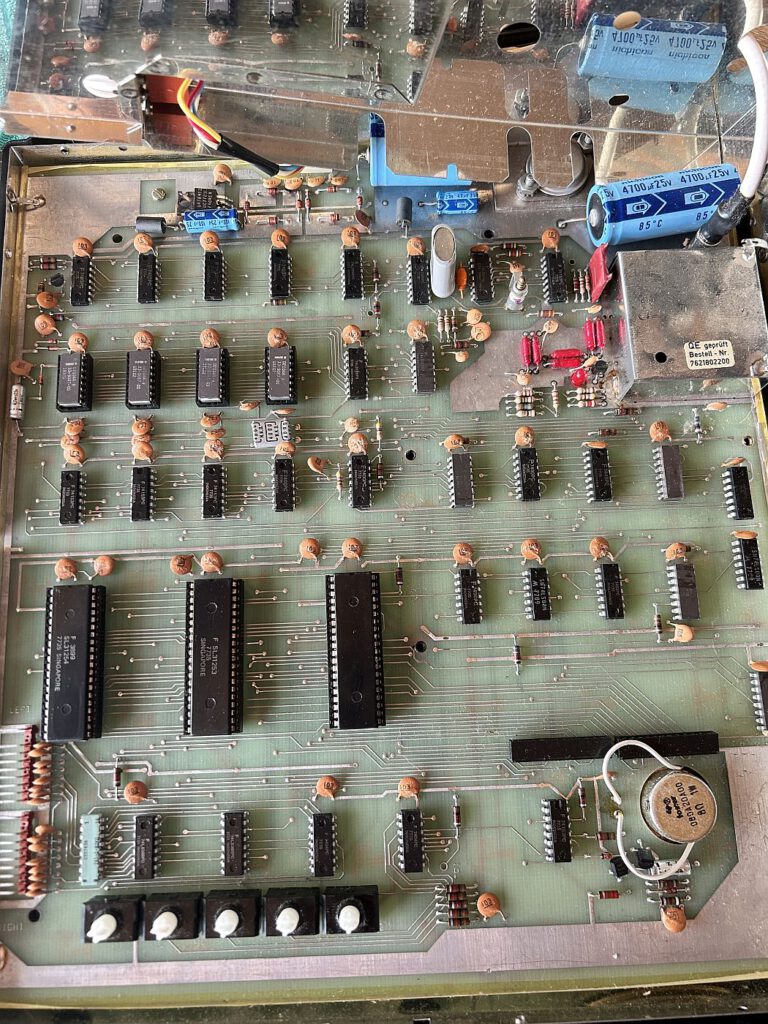
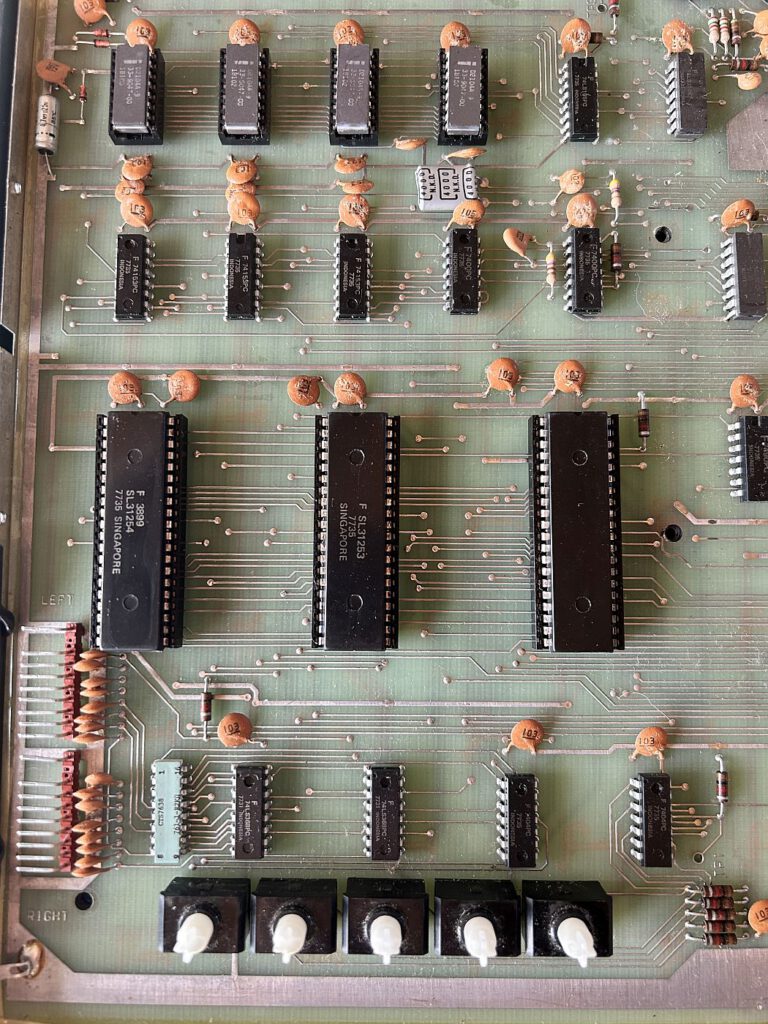
The heart is the 8-bit processor Fairchild 3850 with a clock frequency of 1.8 MHz, which is the center of the F8 microprocessor system. 64 bytes of RAM were already integrated. There was also 2 KB of video memory, which acted as a frame buffer for the image content, and 2 KB of ROM. The memory could be expanded using game modules (usually 1 KB), with the exception of the chess module from SABA with 6 KB EPROM and an additional 2 KB of freely usable RAM.
You can choose between the integrated games without a cartridge inserted. Games can be paused or extended using additional buttons. The resolution includes 128 pixels and 64 lines, of which only 102 x 58 were used. Each pixel could display one of eight colors, but only a maximum of four colors were possible per line at the same time.
The “sound” only consists of different frequencies that are played via the integrated loudspeaker.
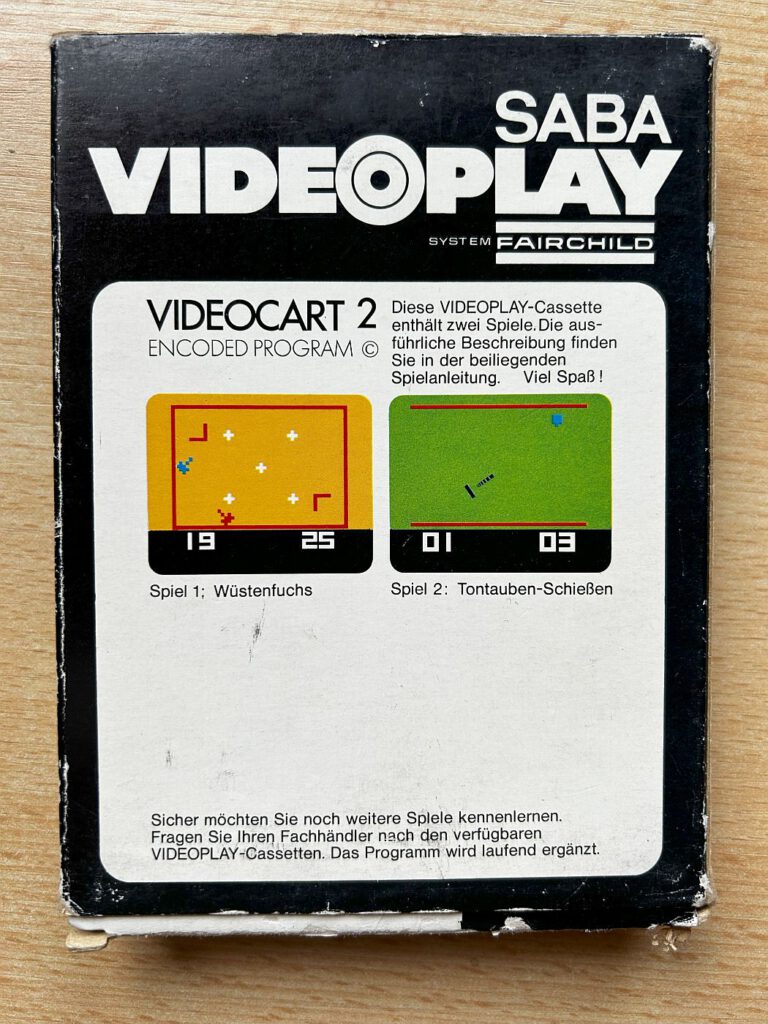
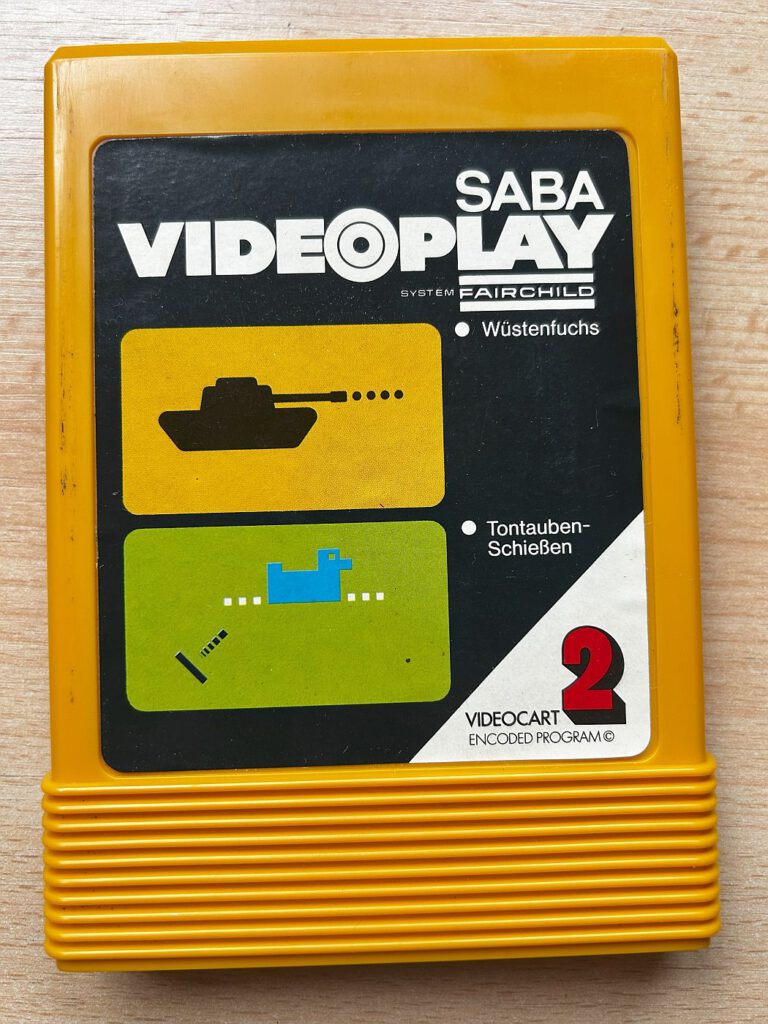
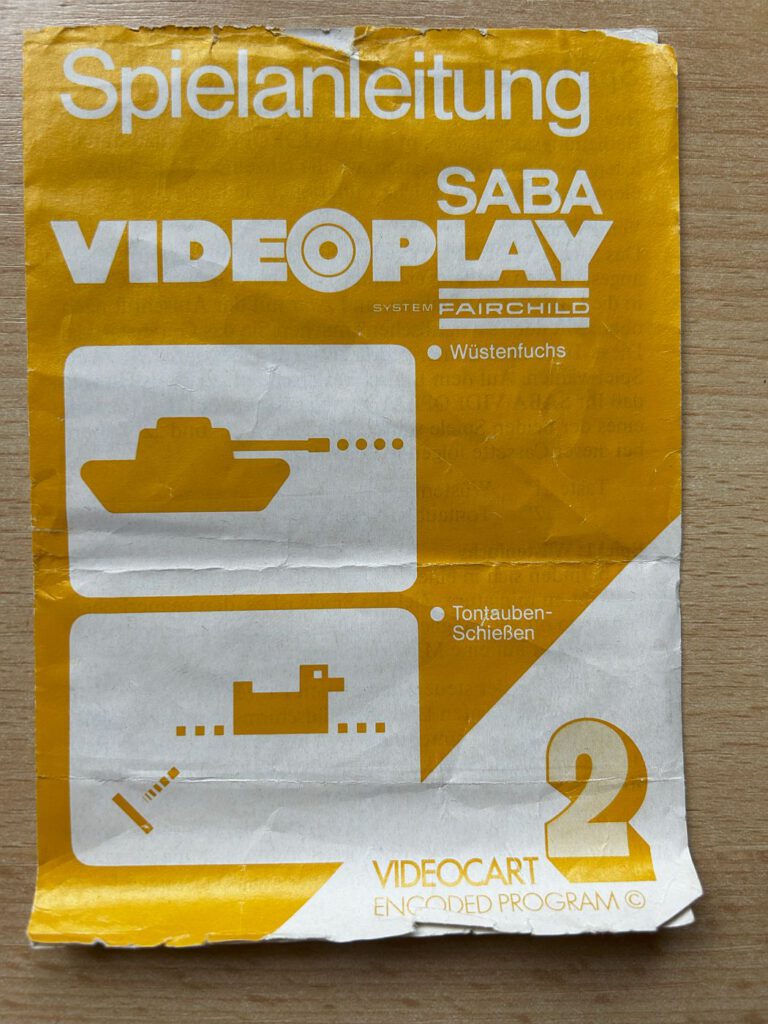
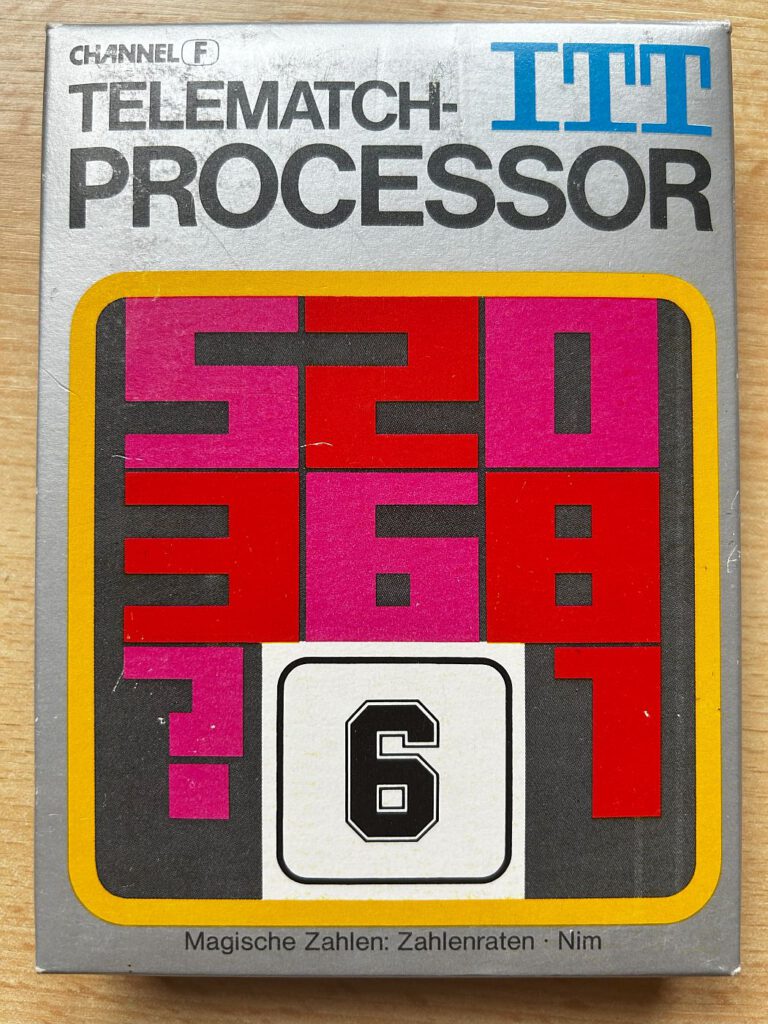
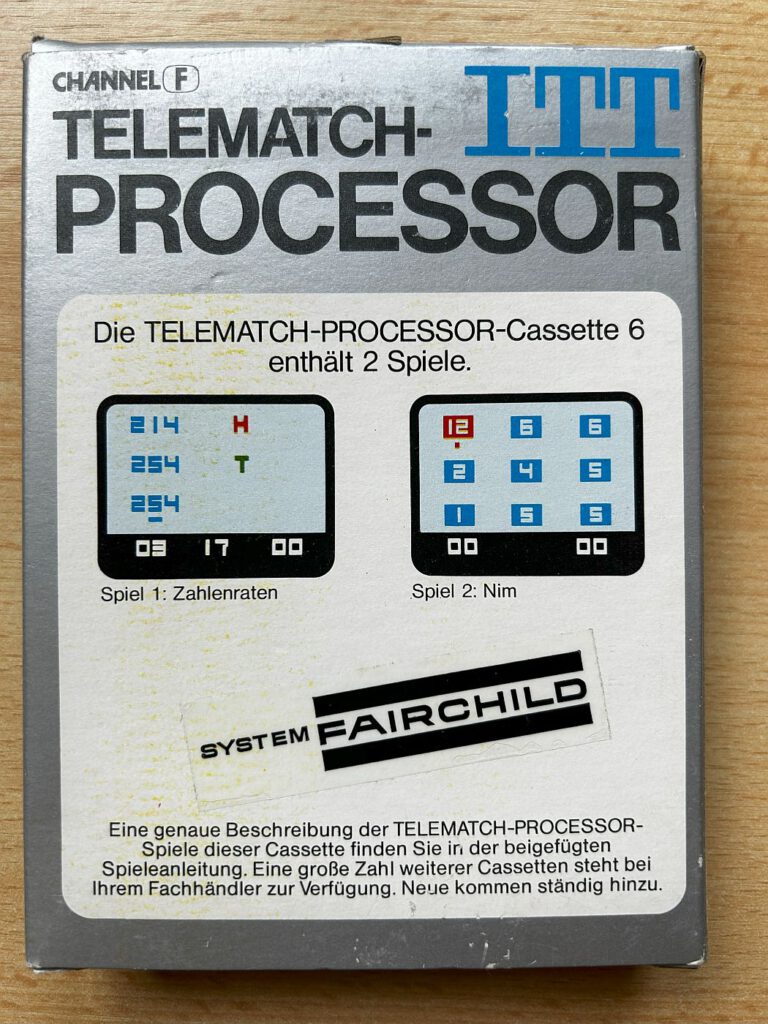
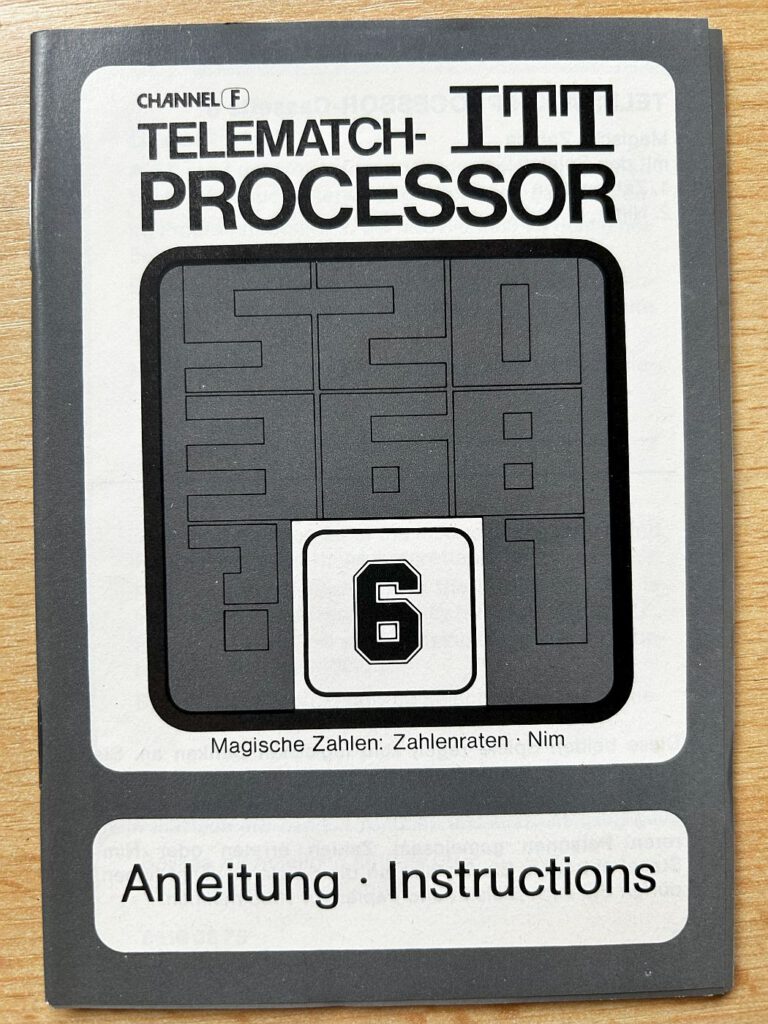
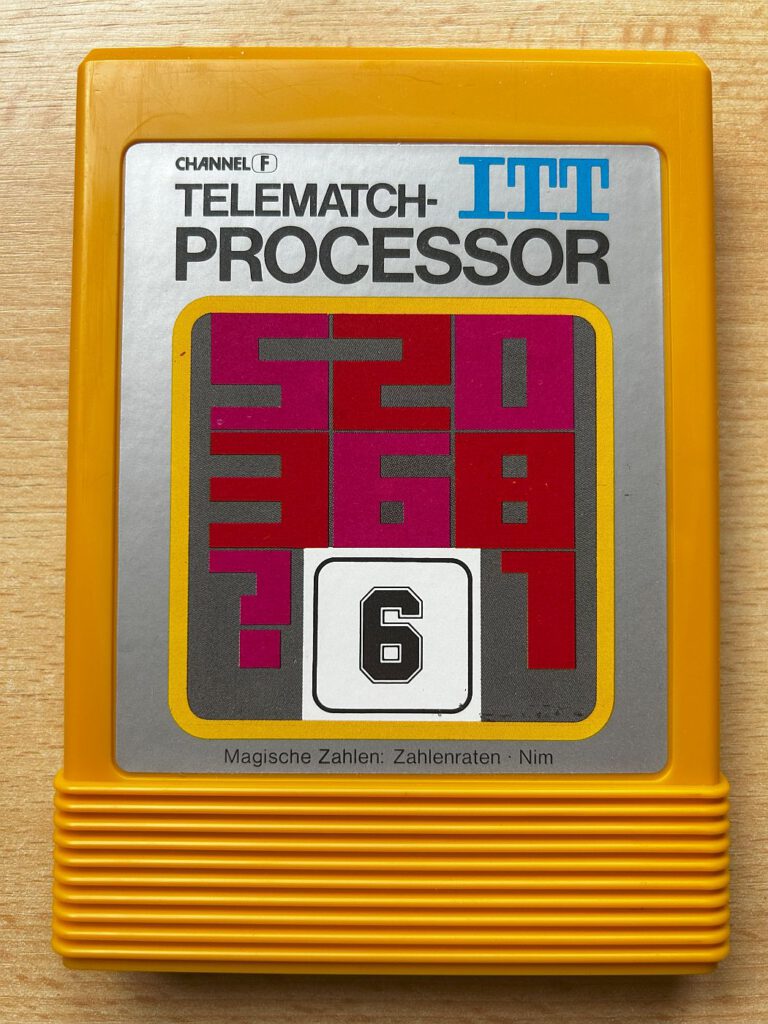
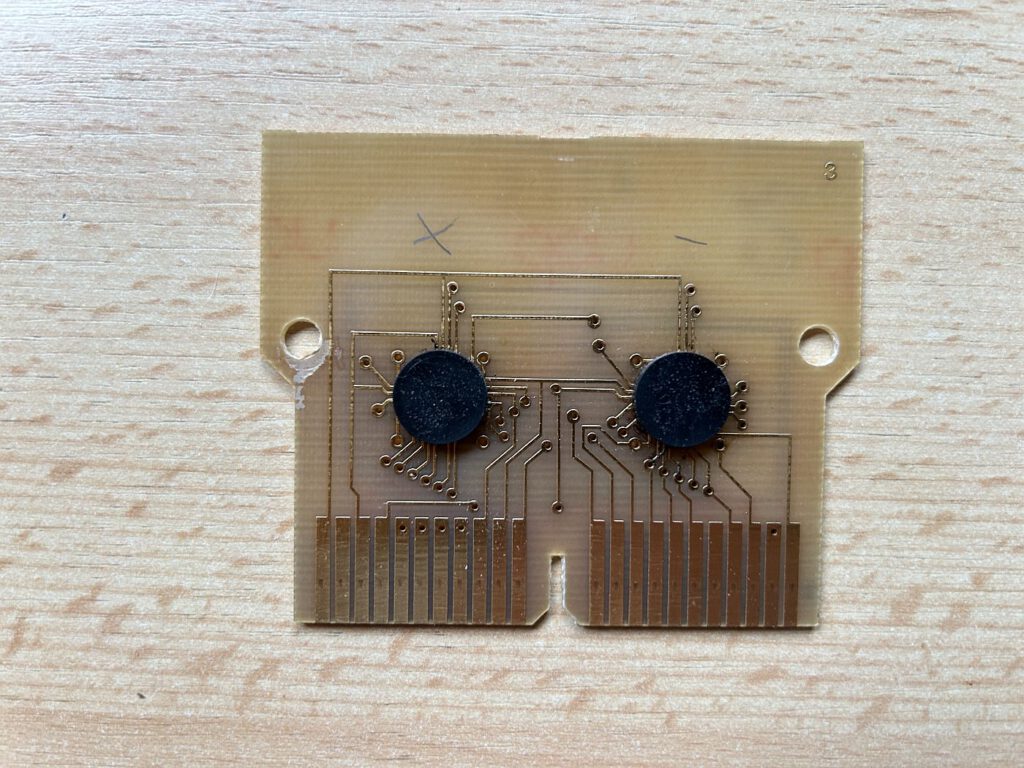
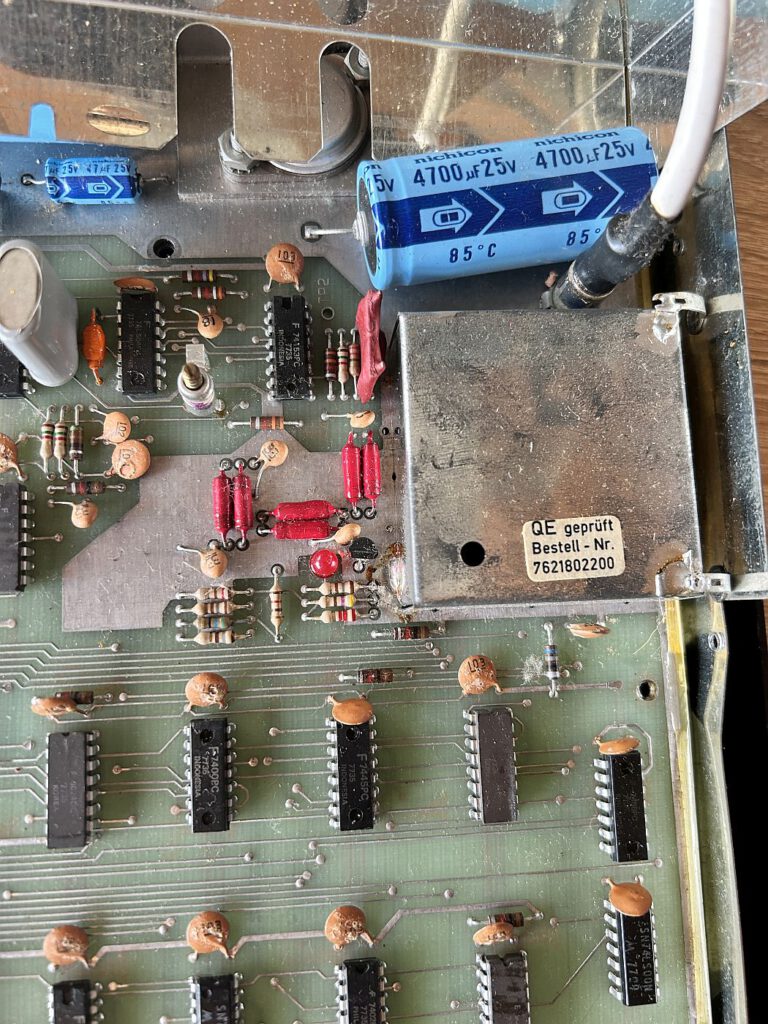
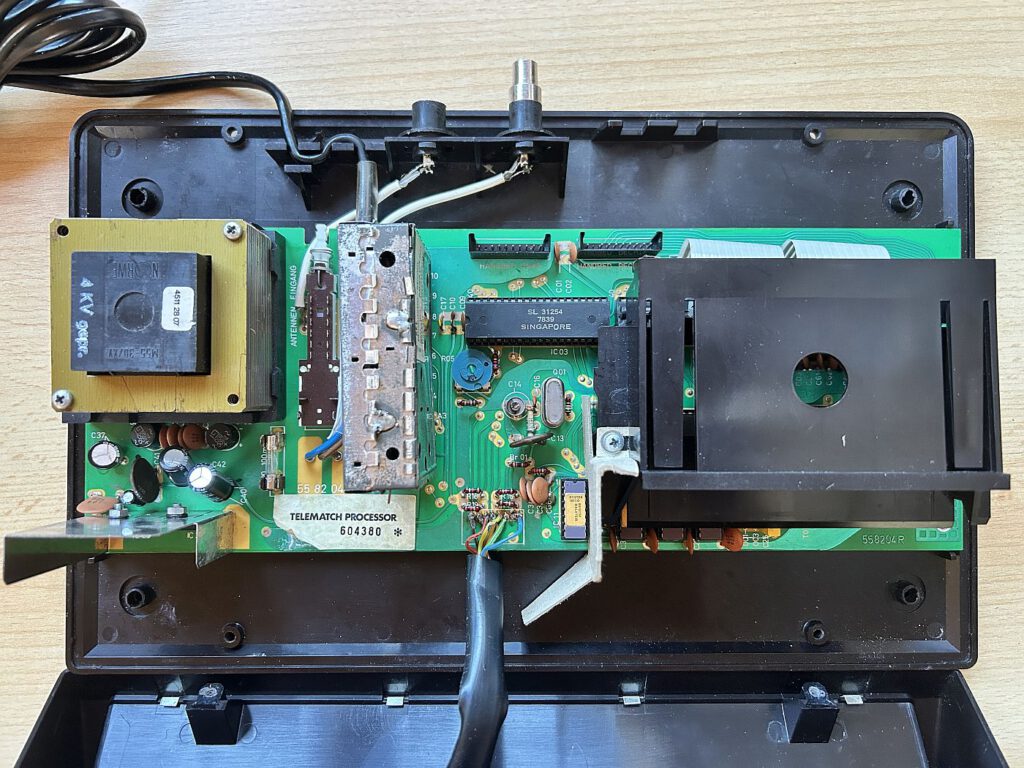
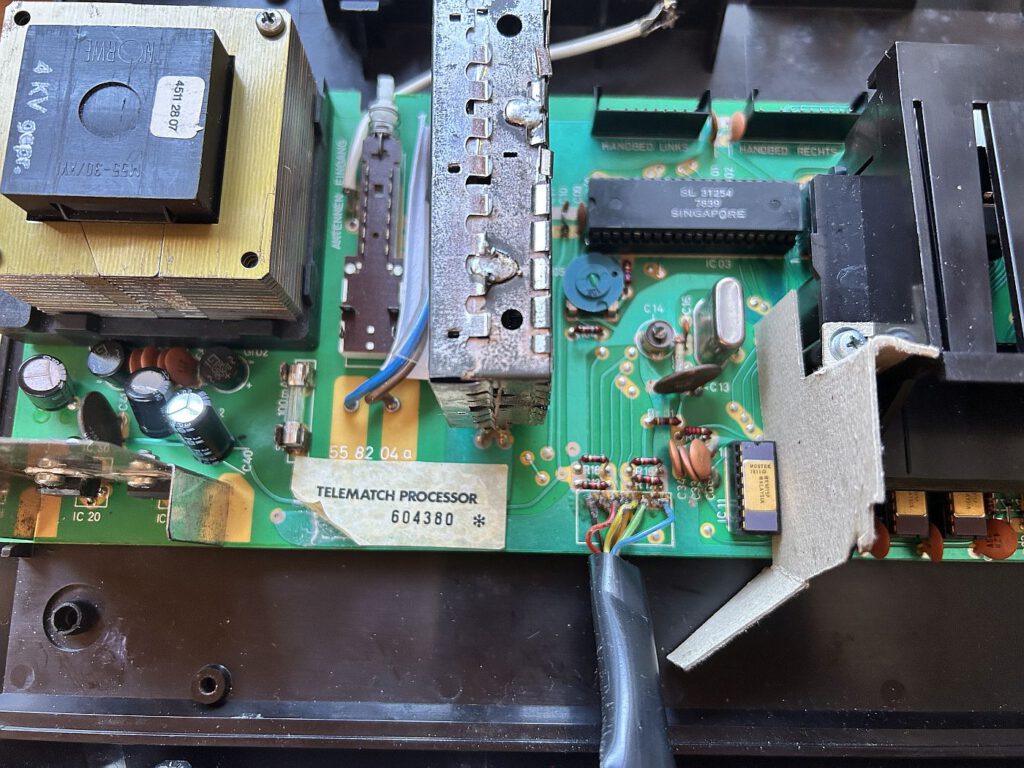
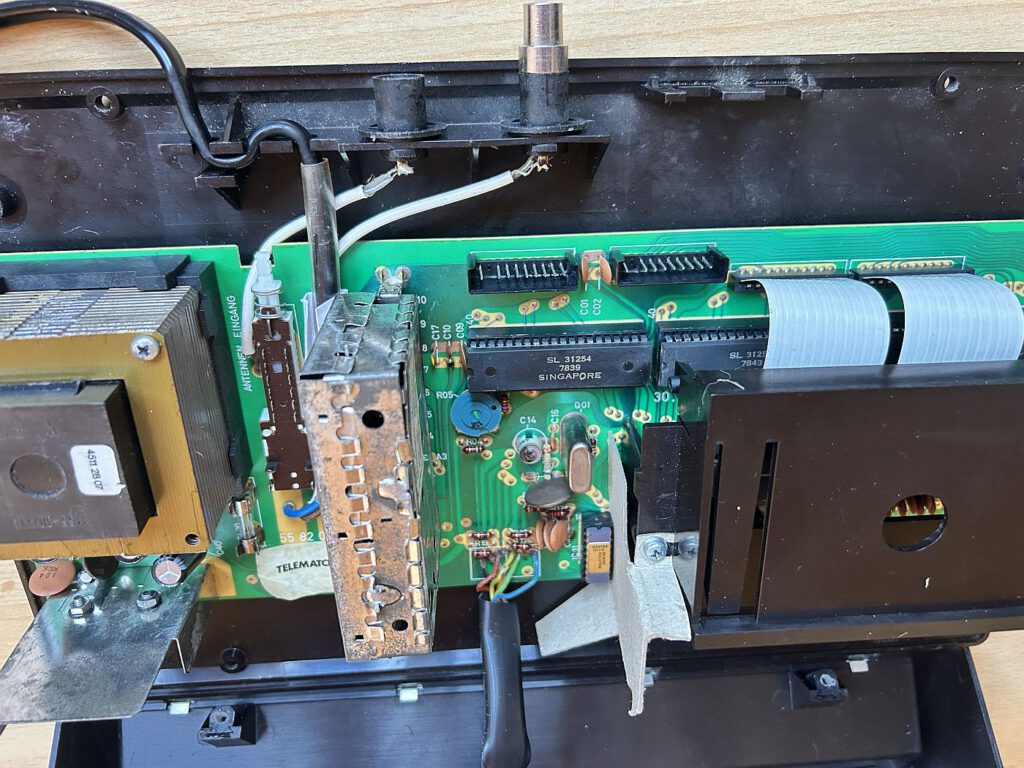
Bei meinen Tests mit den Geräten funktionierte das Telematch ohne Probleme – die Saba-Konsole zeigte aber nur ein buntes Muster auf dem Bildschirm an. Ich habe das Gerät zerlegt und als erstes sah ich die beschädigte Verbindung zwischen dem Modulschacht und der Platine. Da aber ein Spiel eingebaut ist, ist das kein Grund für die fehlerhafte Funktion. Das erste was mir in den Sinn kam, war die Sockel der Chips zu reinigen – Prozessor, ROMs, und Speicher. Also alle Chips entfernt und die Sockel mit Elektronik-Kontaktspray eingesprüht. Siehe da – das Saba funktioniert wieder!
Das Flachbandkabel für den Cartridgeslot konnte ich nicht reparieren – es gibt wohl verschiedene Möglichkeiten. Ein davon ist, dass ein Festplattenkabel umfunktioniert wird. Zu viel Bastelei für mich – ich habe einige Ersatzkabel in den USA bestellt: BackBit – damit sich das auszahlt, habe ich ein paar mehr bestellt. Nach der Lieferung habe ich drei davon übrig. Falls Interesse an dem Kabel besteht, bitte einfach eine Mail schreiben.
Austausch des „Cartridge Kabels“ – der Aufwand ist gering wenn die Konsole schon offen ist. Ich kann empfehlen sowohl die Anschlüsse im Cartridge-Halter als auch auf der Platine zu reinigen. Der Austausch ist einfach zu erledigen – hier ein paar Bilder dazu:
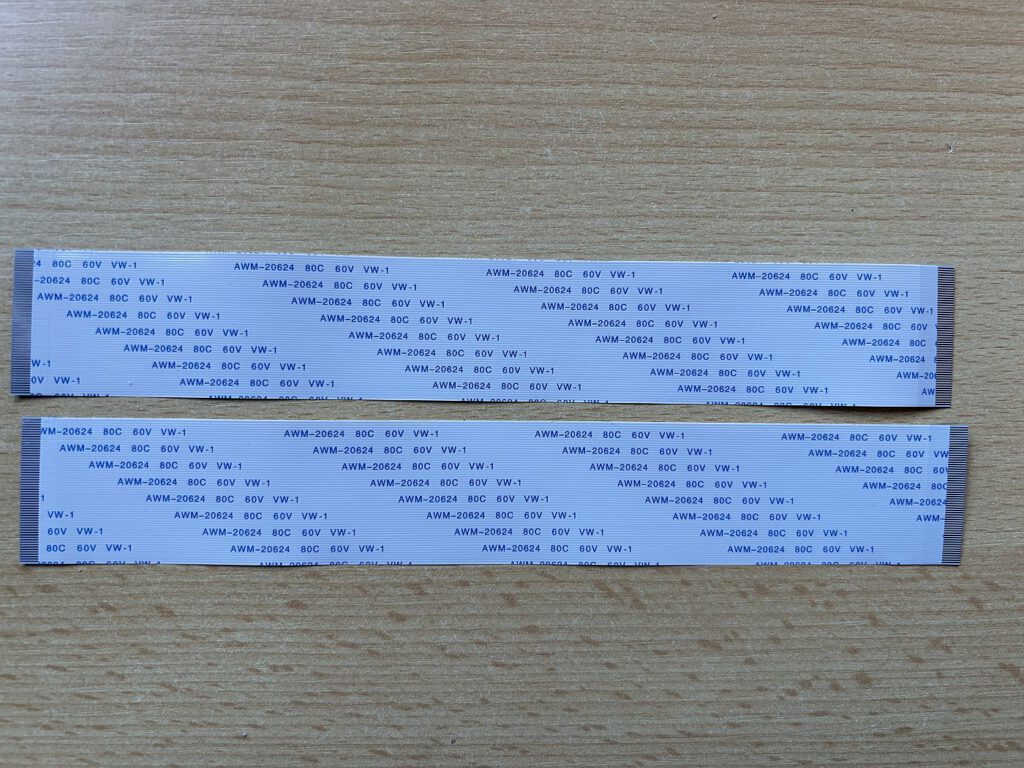
Saba Videoplay – Cartridge Kabel Oberseite 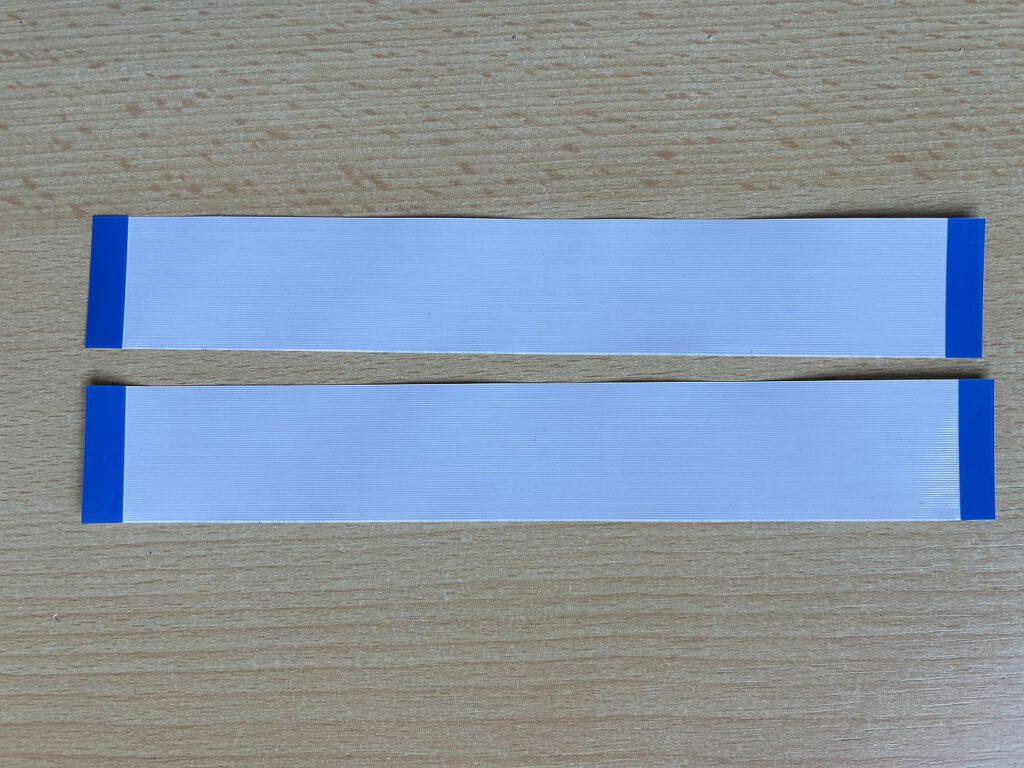
Saba Videoplay – Cartridge Kabel Unterseite 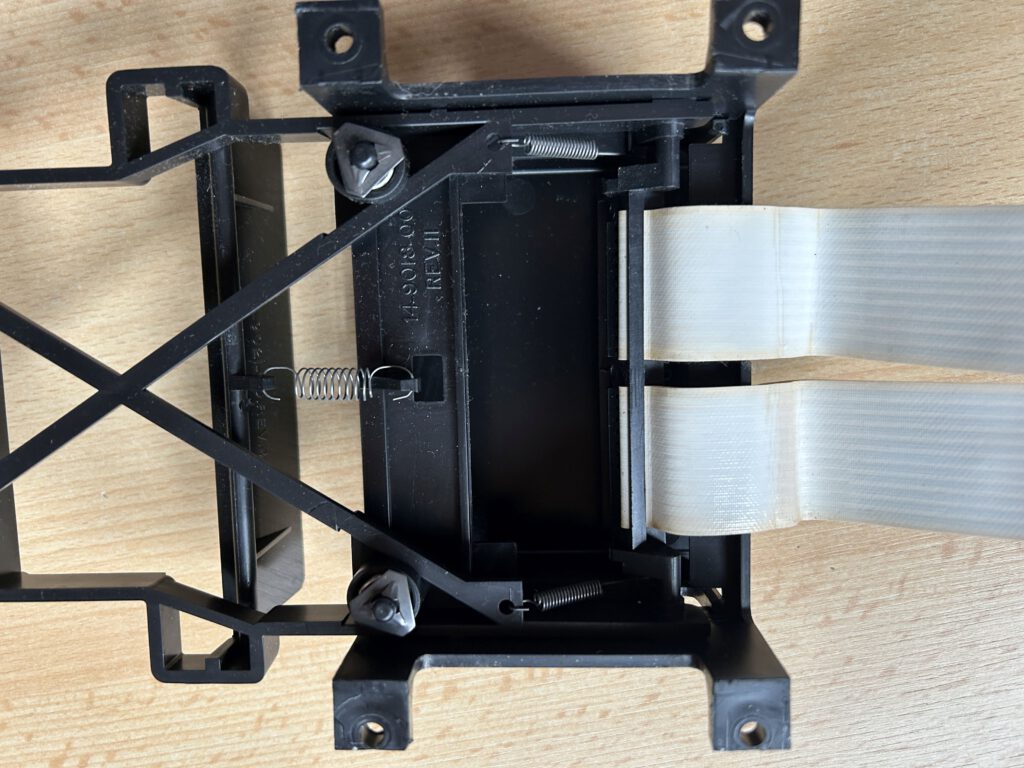
Saba Videoplay – Cartridge Slot Unterseite – altes Kabel 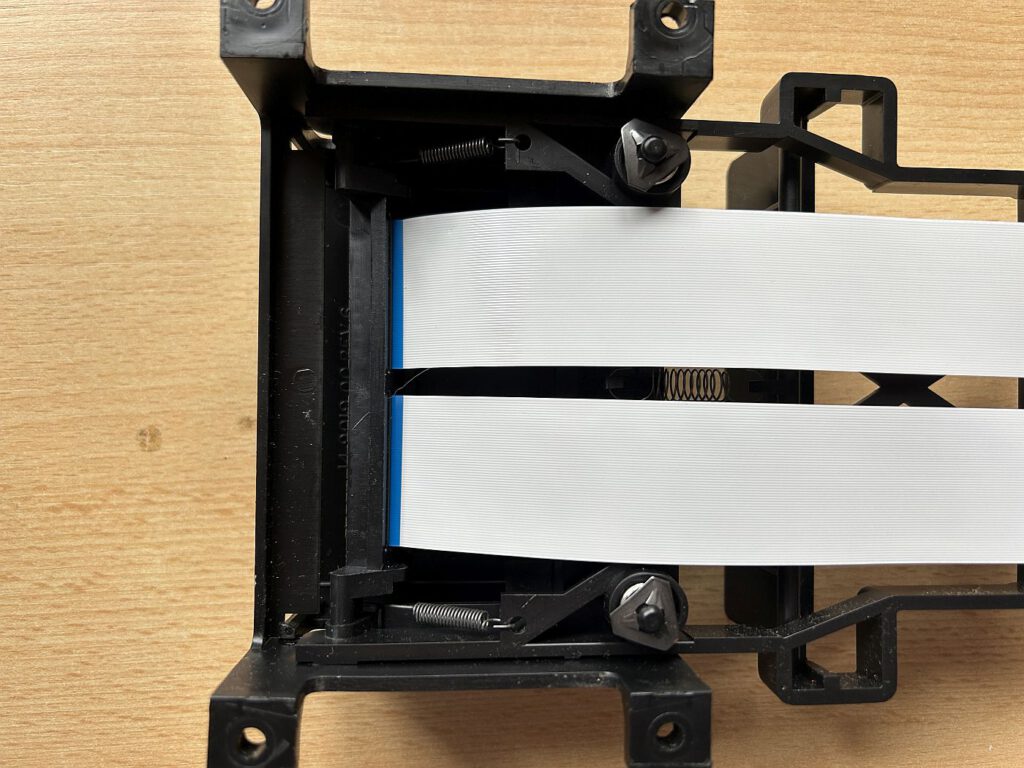
Saba Videoplay – Cartridge Slot Unterseite – neues Kabel 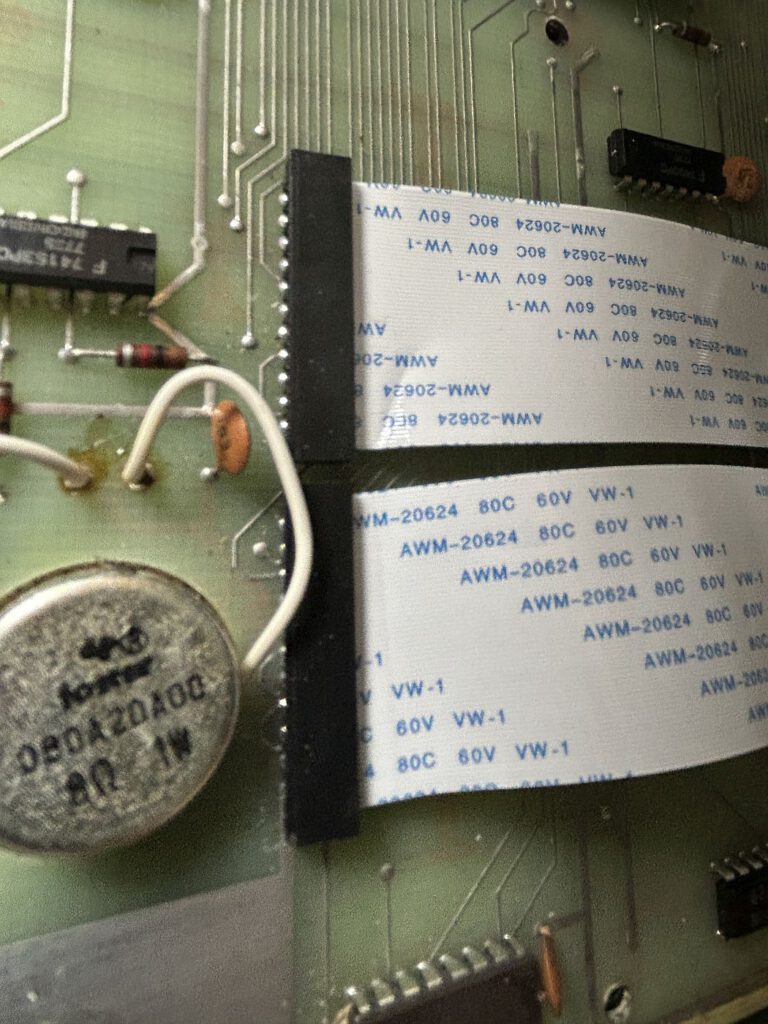
Saba Videoplay – Cartridge Slot Unterseite – neues Kabel Platine 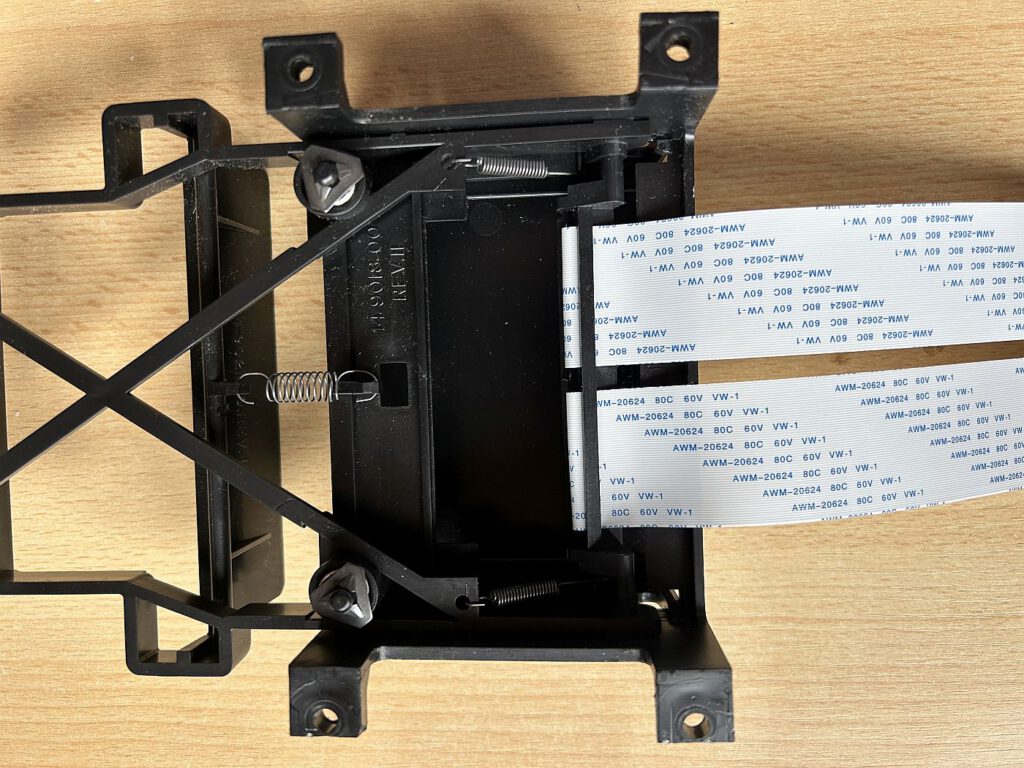
Saba Videoplay – Cartridge Slot Unterseite – neues Kabel umgeschlagen
For any hobbyists who might want to perform an AV mod on the device, I recommend this Channel F page.
Historically, these consoles marked a turning point as the first devices of the second generation of game consoles. They exerted a strong influence on the market, even though they themselves quickly faded into obscurity. The situation might well have unfolded differently had there been no delays in FCC approvals.
Die beiden Geräte zusammen mit 14 Spielen habe ich bei einer Auktion erstanden. Der Verkäufer hat die Controller des Saba an das Telefunken-Gerät angeschlossen, da er diese für besser hält. Der Rückbau ist relativ einfach, da die Controller im Inneren gesteckt sind.
The Invention of the Game Cartridge: Fairchild Channel F | HNF Blog
Fairchild Channel F – Wikipedia
![Binatone TV Master MK 8 [Pong Konsole]](https://www.jungsi.de/blog/wp-content/uploads/TV-Master-MK-8-Bedienelemente.jpg)
![Sanwa 9012 [Sanwa]](https://www.jungsi.de/blog/wp-content/uploads/Sanwa-9012-Verpackung-Vorderseite.jpg)
![Prinztronic Videosport 800-Colour [Prinztronic]](https://www.jungsi.de/blog/wp-content/uploads/Prinztronic-Videosport-800-Colour-Oberseite-480x300.webp)
Leave a Reply