

![Dreamcast [Sega]](https://www.jungsi.de/blog/wp-content/uploads/Sega-Dreamcast-seitlich.jpg)
Is the Sega Dreamcast already "retro"? In my view, yes—I use a very simple criterion for this: older than 20 years. In a few years, the PlayStation 3 will be "retro" for the younger generation, too 🙂
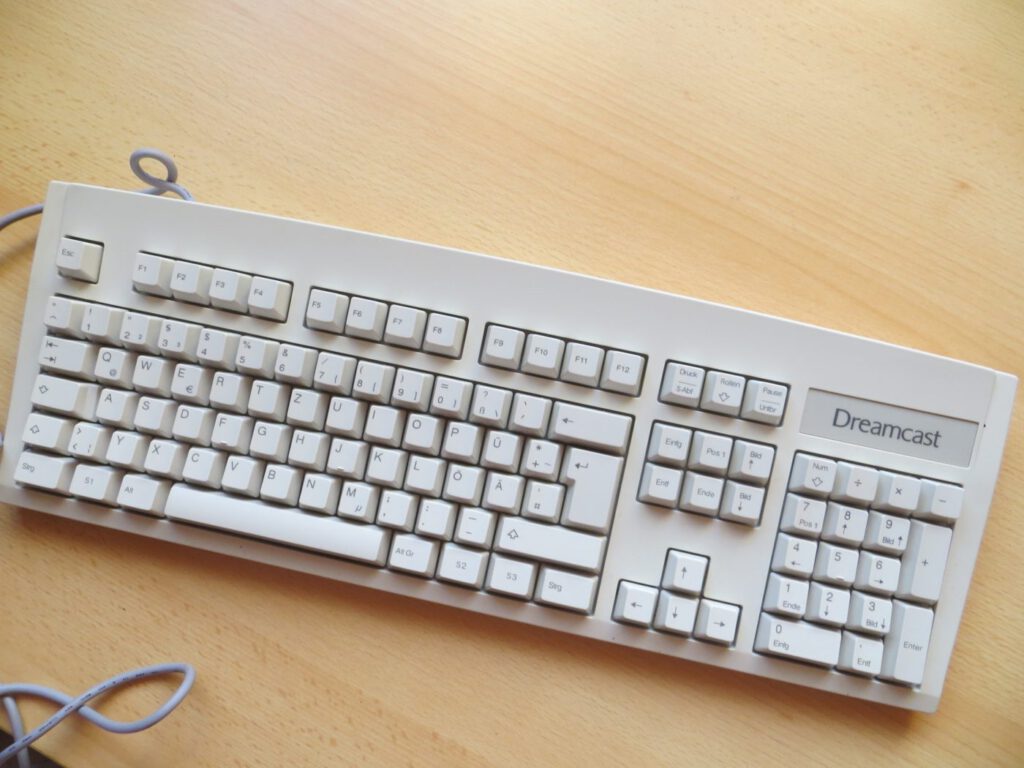
My Dreamcast comes from a collector friend who was selling off his collection; it is therefore in good condition, with many items in their original packaging—keyboard, mouse, several games, etc.
History
To place this in context, it must be noted that Sega’s then-current console—the Saturn—was not the success that had been hoped for. As a result, the console manufacturer lagged far behind its competitors, the Nintendo 64 and Sony PlayStation.
Consequently, Sega began developing a successor in 1997—commissioning two separate teams to do so, reportedly to increase the pressure to create something truly great.
The US team led by IBM employee Tatsuo Yamamoto initially worked with a Motorola PowerPC 603e as the main processor and planned to use a 3dfx graphics chip. The early prototype boards bore the label "Shark," and later "Dural"—while the project as a whole went by the codename Black Belt.
In contrast, Sega’s internal Japanese development team, led by Hideki Sato, opted from the outset for the Hitachi SH4 processor (32-bit RISC, 200 MHz) and a VideoLogic PowerVR2 graphics processor manufactured by NEC. Sato’s prototype boards were initially named “Guppy” and later “Katana,” while the project itself bore the codename White Belt. At the urging of management, Yamamoto’s US team also eventually switched to the SH4.
Sega ultimately opted for Sato's design. Consequently, 3dfx sued both Sega and NEC for breach of contract, as they had already received firm commitments for the order. The dispute was resolved through an out-of-court settlement.
The GD-ROM (Gigabyte Disc ROM) storage medium was developed jointly with Yamaha specifically for the Dreamcast. It held around 1 GB—significantly more than a standard 650 MB CD. However, standard CDs could also be read.
During development, there were various codenames for the console and its hardware projects: Guppy, Katana, Dural, and Black Belt. The final name, Dreamcast, is composed of the words "Dream" and "cast" (meaning "to broadcast" or "transmit"): dream transmission. The logo—a swirl—is intended to symbolize the connection between hardware and software.
The available operating systems were Sega's proprietary system (developed using the Katana SDK)—typically used for exclusive titles—and Windows CE with DirectX support, the latter being used primarily for porting PC games. Native Katana titles generally made more efficient use of the hardware. Both systems were included on the game's GD-ROM rather than within the console itself.
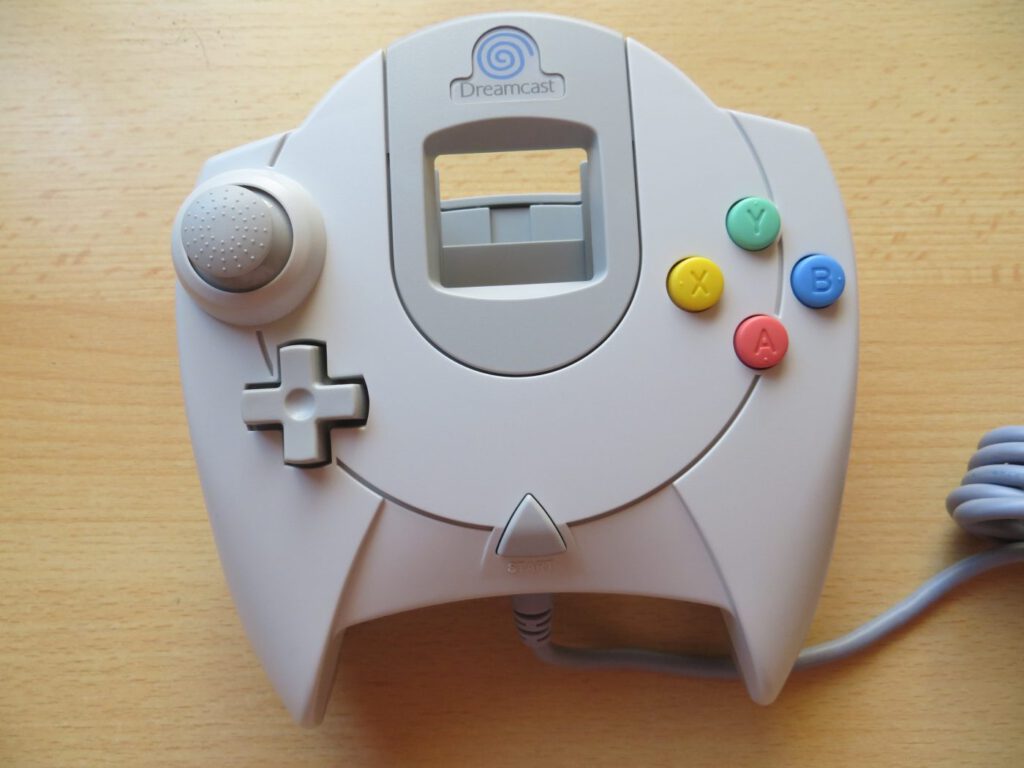
The Dreamcast was released in Japan on November 27, 1998, in North America on September 9, 1999, and in Europe on October 14, 1999. In the USA, all sales records were broken, and one million consoles were sold within a few weeks.
Unfortunately, the strong sales figures could not be sustained over the long term. At that point, the PlayStation 2—featuring a DVD drive—was released and dominated the competition at will. At times, PlayStation 2 sales figures were more than ten times those of the Dreamcast.
Inzwischen hatten Hacker eine Möglichkeit gefunden, mit einer Boot-CD – ohne Modchip – Kopien der Spiele zu verwenden. Auch das trug dazu bei, dass Sega im ersten Halbjahr 2000 einen Verlust von fast 350 Millionen Euro machte. Am 31. März 2001 wurde die Produktion der Konsole eingestellt und Sega zog sich als Konsolenhersteller aus dem Markt zurück – und konzentrierte sich fortan auf die Spieleentwicklung.
Zubehör
The Dreamcast’s standard equipment naturally includes its modern controller. Complementing this is the VMU (Visual Memory Unit)—a memory card featuring a small monochrome display, a directional pad, and two buttons. It was the world's first console memory card to feature its own display and processor. It allows for storing small games, checking the time and date, and—of course—saving and managing game data.
When the VMU is inserted into the controller, game information is displayed on the screen. Two VMUs—or one VMU and a vibration module—can be inserted into the controller. The VMU is powered by two coin-cell batteries (CR2032).
The Dreamcast was the first console to feature a built-in modem (USA: 56 kbit/s – Europe: 33.6 kbit/s). It can be easily removed and replaced.
Games
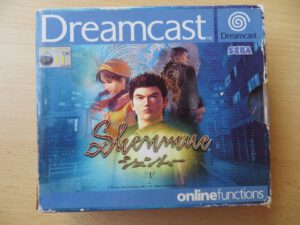
216 PAL games were released – some of the best games are:
- Grandia II
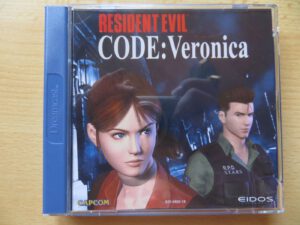
- Resident Evil Code: Veronica
- Dead or Alive 2
- Metropolis Street Racer
- Sonic Adventure 2
- Jet Set Radio
- Phantasy Star Online
- Virtua Tennis 2
- SoulCalibur
- Shenmue II
Homebrew
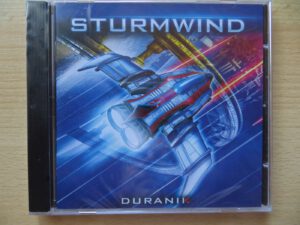
Eine wichtige Rolle spielt hier das legale und kostenlose KallistiOS, ein Open-Source-Entwicklerkit für die Dreamcast. Mit C oder C++ können damit schnell und relativ einfach Spiele entwickelt werden. https://en.wikipedia.org/wiki/List_of_Dreamcast_homebrew_games
There are still some commercial and free games being developed for the Dreamcast.
Extensions/Modifications
Anyone wishing to explore the console in greater detail—and potentially modify it—should search the internet for the following terms:
- DreamPSU
- USBGDROM
- GD Emu
- Terraonion MODE
- DCHDMI
- VGA: suitable cable or VGA box
Leave a Reply