

![ColecoVision [Coleco]](https://www.jungsi.de/blog/wp-content/uploads/cbs-colecovision.jpg)
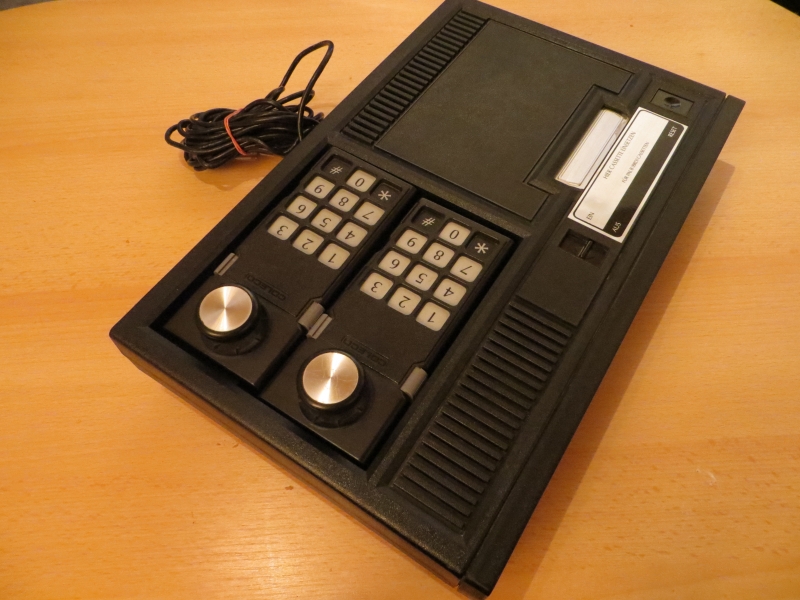
The *ColecoVision*—a cult console from 1982—has now found a place in my collection. It wasn't released in Germany until 1983, manufactured and distributed by *CBS Electronics*—hence the name *CBS ColecoVision*. I managed to win the console at auction on eBay, along with several games and *Expansion Module #1*. Unfortunately, the console was defective upon arrival; it was brought back to life by 0711 Spiele and—while they were at it—upgraded with composite video and audio outputs. 🙂
Coleco (Connecticut Leather Company) was founded in 1932 and initially manufactured leather goods. From the mid-1950s, the company expanded into plastic toys and wading pools; in 1963, the acquisition of the Kestral Corporation made it the world's largest manufacturer of above-ground swimming pools. Finally, in 1976, the company entered the video game market with the Telstar game console.
What made the console special was that, thanks to the technology it employed, it was capable of faithfully replicating games from the arcade machines that dominated the era—not least due to *Donkey Kong* being included as a pack-in title, which played a key role in its strong launch. Twelve game cartridges were available at the console's release, a number that later grew to around 140. At the time, the market was still dominated by the Atari 2600, followed by the Mattel Intellivision and the Philips G7000. Like the Intellivision, the console featured built-in storage compartments for its two controllers (which included a numeric keypad). By Christmas 1982, 500,000 units had already been sold; total sales eventually exceeded two million before production ceased. Sales figures plummeted in early 1984 due to the video game market crash of late 1983, though production was not officially discontinued until 1985.
Tip
If the original controller is missing or unavailable, a standard joystick can be used instead—for example, the Competition Pro works. However, an original controller must remain connected, as the keypad is required to start the games.
Technology
Processor: Z80A - 3.58 MHz
Working memory: 1 KByte (+ 16 KByte video RAM)
BIOS ROM: 8 KByte
Module ROM: 8, 16, 24 or 32 KByte
Graphics chip: Texas Instruments TMS9928A
Sprites: 32
Resolution: 256 x 192
Colors: 16
Sound chip: Texas Instruments SN76489AN
Sound: 3 voices, mono, 1 noise generator
Expansions
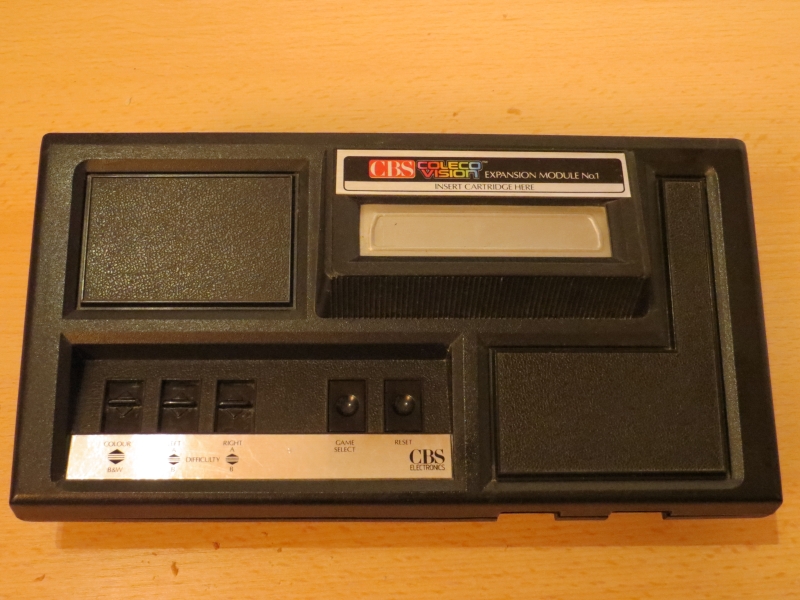
Expansion Module #1: This made it possible to play Atari 2600 games, thereby providing access to a vast library of software. Atari took legal action but did not prevail, as Coleco did not use any protected components. Ultimately, the two companies reached an out-of-court settlement: Coleco agreed to pay licensing fees to Atari. Since the expansion cost roughly the same as a used Atari 2600, it posed little economic threat to Atari in the end.
Expansion Module #2: alternative controller for racing games in the form of a steering wheel with accelerator
Expansion Module #3: Expansion for full-fledged home computer Adam
Roller Controller
Super Action Controller: ergonomic add-on controller with action buttons, for sports games and more
AtariMax Ultimate SD Cartridge
Opcode Super Game Module
The console can still be purchased with confidence today—there are great accessories available, such as the Multi-Card and the Super Game Module. Many games are currently being reprogrammed with new features for the latter. Incidentally, the ColecoVision's hardware foundation—most notably the TMS9928A graphics chip—influenced the development of later consoles like the NES.
Known Games
Cabbage Patch Kids
Donkey Kong
Time Pilot
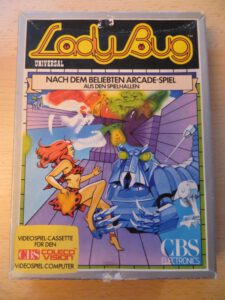
Lady Bug
Carnival
Smurf
Pitstop
Zaxxon
Gorf
Links
Colecovision Zone
ColecoVision.dk
Coleco.Vision
ColecoVision at AtariAge
Current Hardware
Atarimax Colecovision Ultimate SD Multi-Cart
Super Game Modules
Literature
Coleco – The Official Book
![Atarimax Ultimate SD [Colecovision]](https://www.jungsi.de/blog/wp-content/uploads/Ultimate-SD.jpg)
![Expansion Module #2 [CBS Colecovision]](https://www.jungsi.de/blog/wp-content/uploads/CBS-Colecovision-Expansion-Module-2-Lenkrad.jpg)
![Super Game Modul [Colecovision]](https://www.jungsi.de/blog/wp-content/uploads/Super-Game-Module-Oberseite.jpg)
Leave a Reply