

![Atari Lynx [Atari]](https://www.jungsi.de/blog/wp-content/uploads/Lynx-vorne.jpg)
Back in 2013—when I first started this blog—I wrote an article about the Atari Lynx. After nine years, my standards for an article have shifted somewhat, so I’ve put together a new post on the subject. Plus, I recently acquired a well-preserved Atari Lynx 1, meaning I now own both versions of the console 🙂
History
Die Entwicklung des Atari Lynx ist unmittelbar mit drei Namen verknüpft, die für viele bestimmt keine Unbekannten sind. Dave Morse, RJ Mical und David Needle waren vorher alle an der Entwicklung des Commodore Amiga beteiligt. Alle drei trafen sich bei der Softwareschmiede Epyx (Summer Games, Winter Games usw.) wieder und begannen 1986 mit der Entwicklung eines Geräts mit dem Namen „Handy“. 1987 wurde das Geld bei Epyx langsam knapp (unter anderem wegen der Raubkopierer) und es wurde ein Partner gesucht, wobei auch Nintendo und Sega besucht wurden, die aber das Angebot ablehnten. Am Schluss landete das Gerät dann bei Atari. Dazu gibt es wilde Geschichten über Zahlungen seitens Ataris die ausblieben weil vereinbarte Ziele nicht eingehalten wurden. Atari sollte die Produktion und Vermarktung übernehmen und Epyx für die Software verantwortlich sein. Warum das fertige Gerät fast zwei Jahre in der Schublade von Jack Tramiel blieb, bleibt wohl für immer sein Geheimnis.
Sales of the Lynx—sometimes referred to as the "Lynx Classic"—finally began on September 1, 1989; the Game Boy had launched in the US just under a month earlier (July 1989) and in Japan as early as April. The device hit the European market in 1990 and cost twice as much as Nintendo's product. Despite technical capabilities that were ahead of their time, it failed to achieve the hoped-for success. One reason for this was the system's lack of availability during the 1989 Christmas shopping season, despite high demand.
Here are a few details: portable, color display, suitable for left- and right-handers, network-capable, fast multiplication and division hardware, multi-channel sound generation circuitry, large (copy-protected) cartridges, bitmaps with hardware collision detection, and the ability to move and scale compressed sprites. The development environment for programmers and the developer consoles were also perfectly set up, making development fun—though, much to Atari's dismay, the software ran exclusively on Commodore Amiga computers 🙂
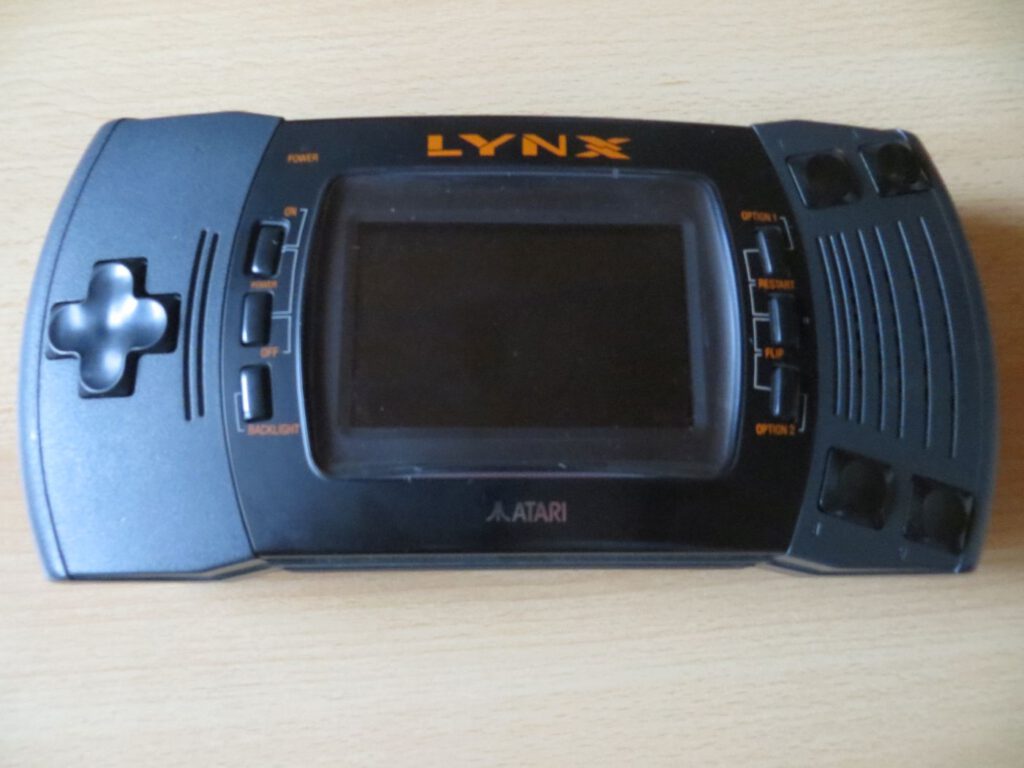
Despite everything, a considerable number of units were sold in 1991, and the Lynx enjoyed a reputation for excellent arcade conversions. Nevertheless, it still lacked hit titles—an area where Nintendo held a clear advantage thanks to its extensive library of NES licenses. Then, in May 1991, the Sega Game Gear was released, meaning the Lynx was no longer the only handheld on the market with a color display.
Nevertheless, the hardware underwent a revision, resulting in the release of the Lynx II. The device was made smaller and featured molded handgrips, a screen protector, and a switch to turn off the backlight. Additionally, production costs were reduced, and battery life was extended. Things were still going reasonably well for the Lynx in 1992, though the lack of support from other publishers and the overwhelming dominance of the Game Boy eventually took their toll. In 1993, Atari all but abandoned support for the handheld in favor of the Atari Jaguar, prematurely cancelling many announced games.
Es wurden weltweit schätzungsweise zwischen 1 und 3 Millionen Geräte verkauft – die genauen Zahlen sind bis heute nicht verbürgt., aber die Szene lebt weiter. Dazu zählen z.B. Telegames, Songbird und auch einzelne Entwickler, die immer wieder neue Spiele für den Lynx veröffentlichen. Einen positiven Einfluss hatten bestimmt auch die FlashCard und der LCD-Bildschirm aus Deutschland und das Lynx Gamedrive von RetroHQ aus England. 2019 gab es sogar eine „Atari Lynx 30th Birthday Programming Competition“ mit zahlreichen Teilnehmern.
Technology
Das Herzstück des Atari Lynx sind die beiden Spezial-Chips MIKEY und SUZY. Der erste der beiden beinhaltet einen angepassten 65SC02 (ein Abkömmling des 6502, wie er etwa im Atari 8-Bit oder Apple II zum Einsatz kam), aber mit 4 MHz getaktet und ist für den Sound zuständig. Suzy ist ein 16-Bit Chip mit 16 MHz und ermöglicht Grafik, Blitter und Sprites. Dabei konnte aus 4096 möglichen Farben gewählt werden, wobei 16 gleichzeitig darstellbar sind. Als Speicher standen 64 kB DRAM mit 120ns zur Verfügung. Der Bildschirm ist ein hintergrundbeleuchteter 3,5“ Flüssigkristall-Bildschirm mit 160×102 Pixel. Die 6 AA-Batterien hielten den Lynx 4-5 Stunden und den Lynx II 5-6 Stunden am Laufen. Mit den ComLynx-Kabeln ließen sich bis zu acht Geräte miteinander verbinden.
Special models
Lynx II for Him and Her (nicht veröffentlicht)
In diesem Fall bin ich fast froh, dass diese Geräte niemals veröffentlicht wurden. Anscheinend waren die Zielgruppe Pärchen – wobei das Gerät für „Sie“ in pastellrosa und für „Ihn“ in hellblau gehalten war. Technisch sind sie identisch mit dem Modell PAG-0400.
Marlboro Abenteuer Team
Diese Sonderedition – komplette in rot – wurde vom Tabakkonzern Philip Morris in Deutschland auf den Markt gebracht. Auf der Front war der Schriftzug „Marlboro Abenteuer Team“ in weißer Schrift angebracht. Mit dabei war das Spiel Marlboro Go – ein Motorrad-Spiel mit keinerlei Bezug zwischen Videospielen und Zigaretten. Das Spiel ist sehr wiederholend und langweilig – die Platine war handgemacht und individuell nummeriert. Ab und zu tauchen Cartridges mit der Bezeichnung „Marlboro Man“ auf, was ein Fake ist. Das Gerät dürfte selten sein, da es nur wenige hundert Konsolen davon gab. Es wird vermutet, dass mit dem Kauf von Zigaretten Punkte erworben wurden und diese dann gegen das Gerät eingetauscht werden konnten.
P.I.T.S. – Portable Information and Training System – for the German driving test and traffic regulations. Work on the project began in late 1992, commissioned by the DVPI (German Institute for Traffic Education), and the names behind it were no strangers to the Lynx scene: Lars Baumstark and Bastian Schick. Supplied in a transparent carrying case, the P.I.T.S. package contained everything needed to successfully pass the driving test: an Atari Lynx II (referred to as the "theory computer"), the corresponding P.I.T.S. cartridge, a small binder with accompanying documentation for driving students and instructors, and one of the sought-after original Lynx power adapters. It is impossible to determine today exactly how many of these kits were produced and distributed to driving schools; however, given that these systems rarely surface, the total number was likely only a few dozen units.
Genuine Accessory
ComLynx Cable (Model PAG-3200)
This cable connects multiple Lynx units for multiplayer games. It was included in the system's original Lynx package.
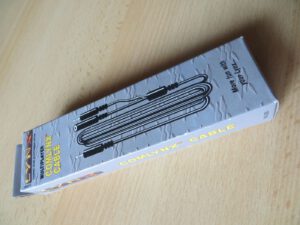
ComLynx (Modell PAG-3200)
Car Cigarette Lighter Adapter (Model PAG-3300)
This standard cigarette lighter adapter powers two Lynx units simultaneously. Multiplayer in the car!
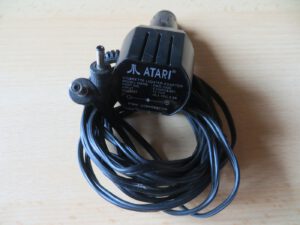
Battery Pack (Model PAG-3325)
This pack contains six D-cell batteries and a belt clip. Six batteries should provide an operating time of up to 20 hours.
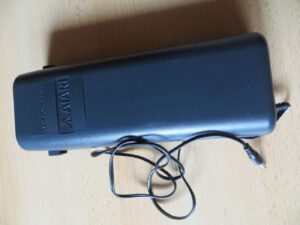
Battery Pack (Modell PAG-3325)
Carrying Case (Model PAG-3350)
This is a great carrying case that comfortably holds the Lynx, power adapter, ComLynx cable, and many of your favorite games. It features a convenient carrying handle and a shoulder strap. Perfect for long trips when you want to take everything along.
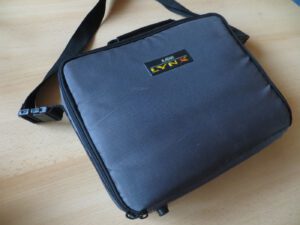
Kit Case (Modell PAG-3350)
Carrying Pouch (Model PAG-3375)
This carrying pouch holds a Lynx, 24 game cards, and accessories. It features a wrist strap or belt loop for portability.
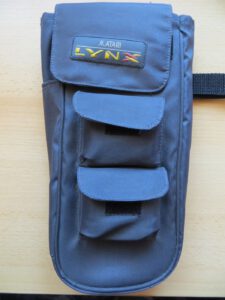
Sun Visor / Screen Guard (Models PAG-3400 and PAG-3425)
This accessory can either be folded down to protect the Lynx screen when not in use or folded up to shield the screen from the sun during outdoor play. This model works only with the original Lynx.
Power Supply (Model PAG-1200)
If you don't like spending money on batteries, this is a pretty important accessory. Since the Lynx consumes a huge amount of battery power, you should use the power supply whenever you are near a wall outlet.
Modern Accessories
Lynx Flashcard (no longer available)
Rewritable Multigame Cartridge Atari Lynx
Lynx Gamedrive
AgaCart (no longer available)
LYNX LCD Replacement Screen and TV Output
BennVenn ElCheapoSD-Lynx
Games
Für den Lynx sind offiziell 71 Spiele erschienen – drei weitere Titel wurden nach der Einstellung des Systems noch von Telegames veröffentlicht. Einige Cartridges gibt es unterschiedliche Varianten – flat, riged oder curved. Die ersten komplett glatten (flat) Cartridges wurden durch die Variante mit den zwei waagrechten Balken auf der Rückseite (riged – geriffelt) und den acht „Löchern“ auf der Vorderseite ersetzt. Diese Form war aber nicht gut zum „Stapeln“ geeignet und wurde daher durch die endgültige Version mit der gebogenen Kante (curved) ersetzt. Hier ein paar der Top-Spiele:
– Klax
– Joust
– Rampart
– California Games
– Blue Lightning
– Checkerd Flag‘
– S.T.U.N. Runner
– Chips Challenge
– Lemmings
– Batman
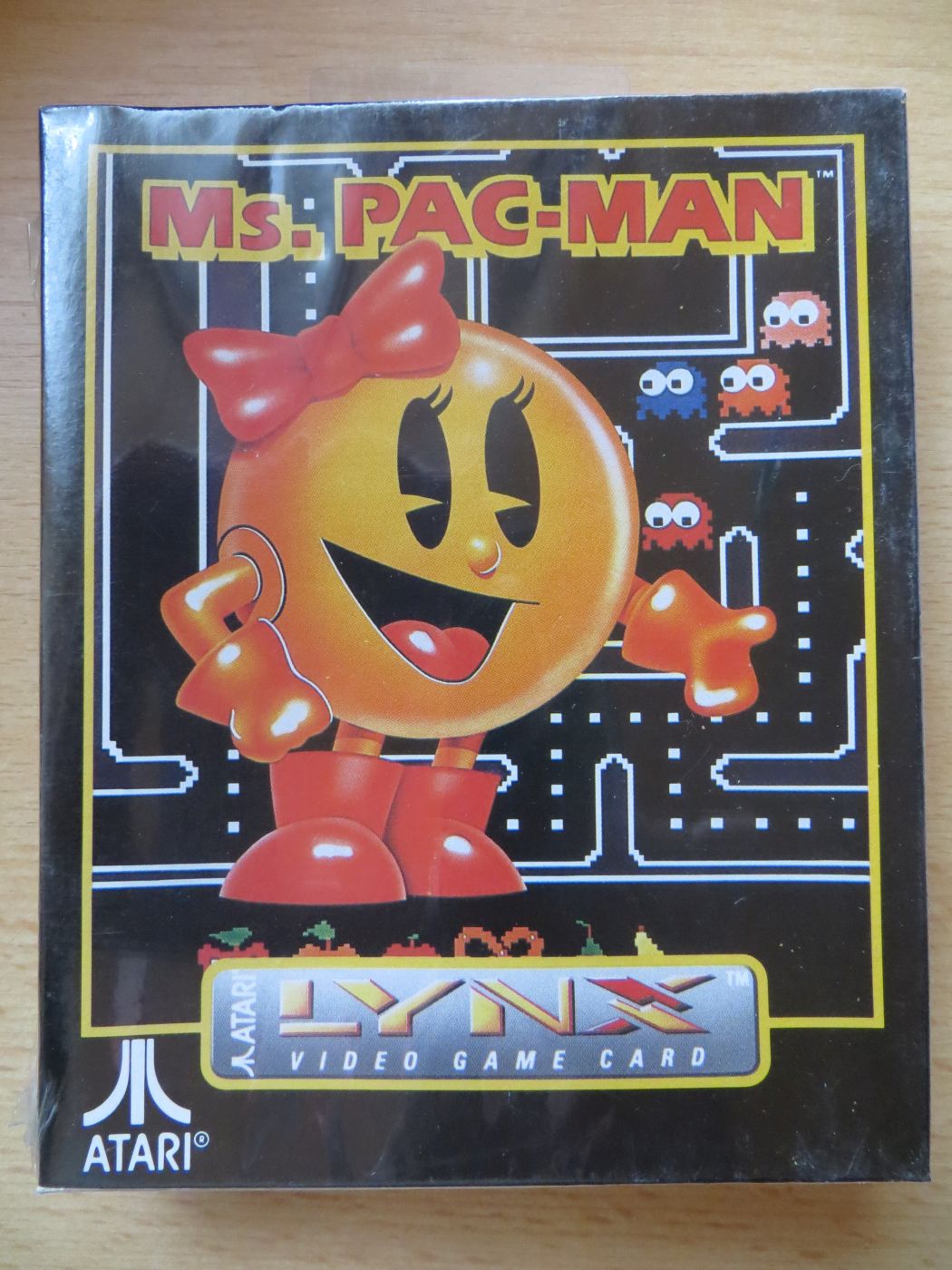
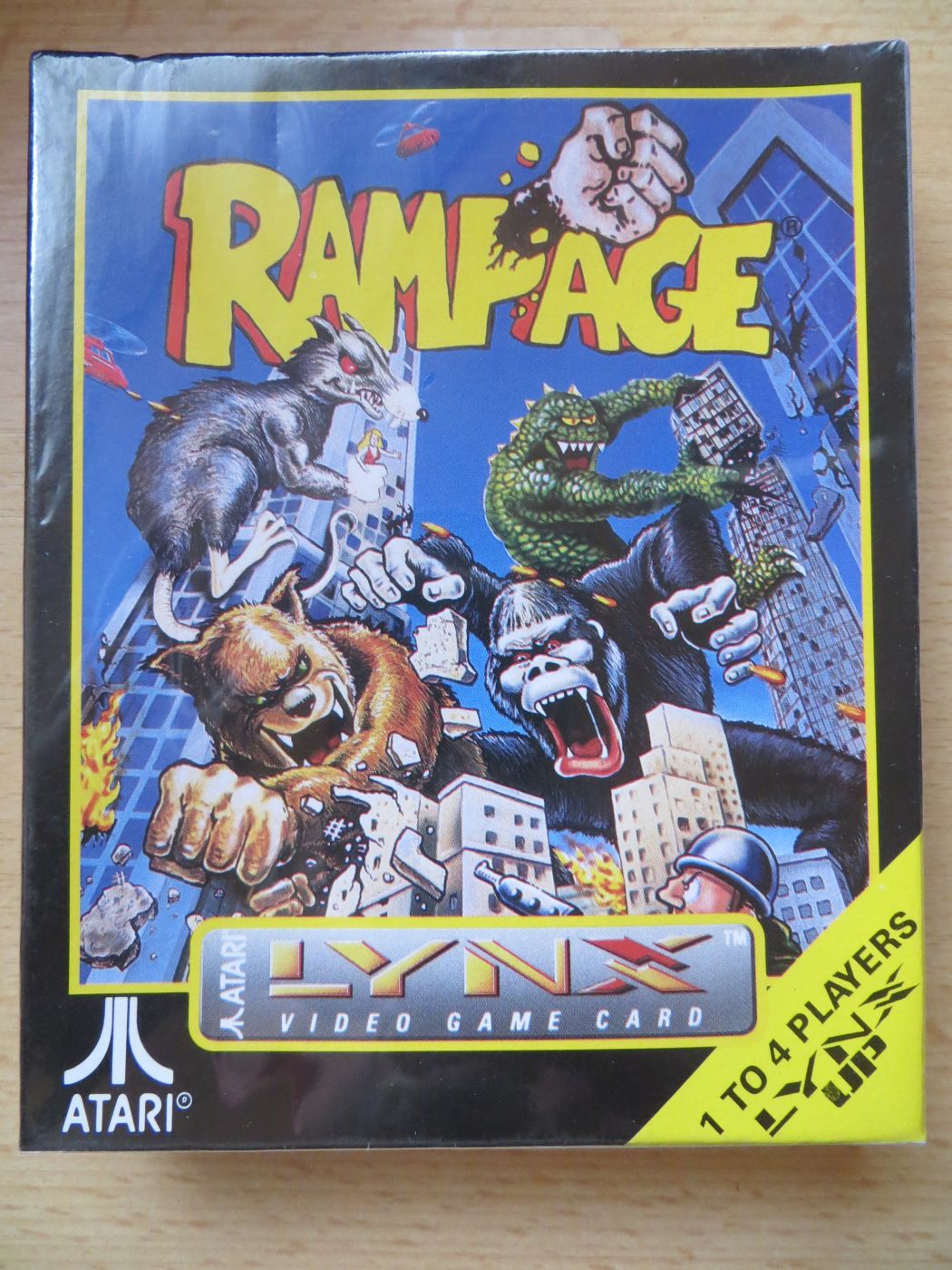
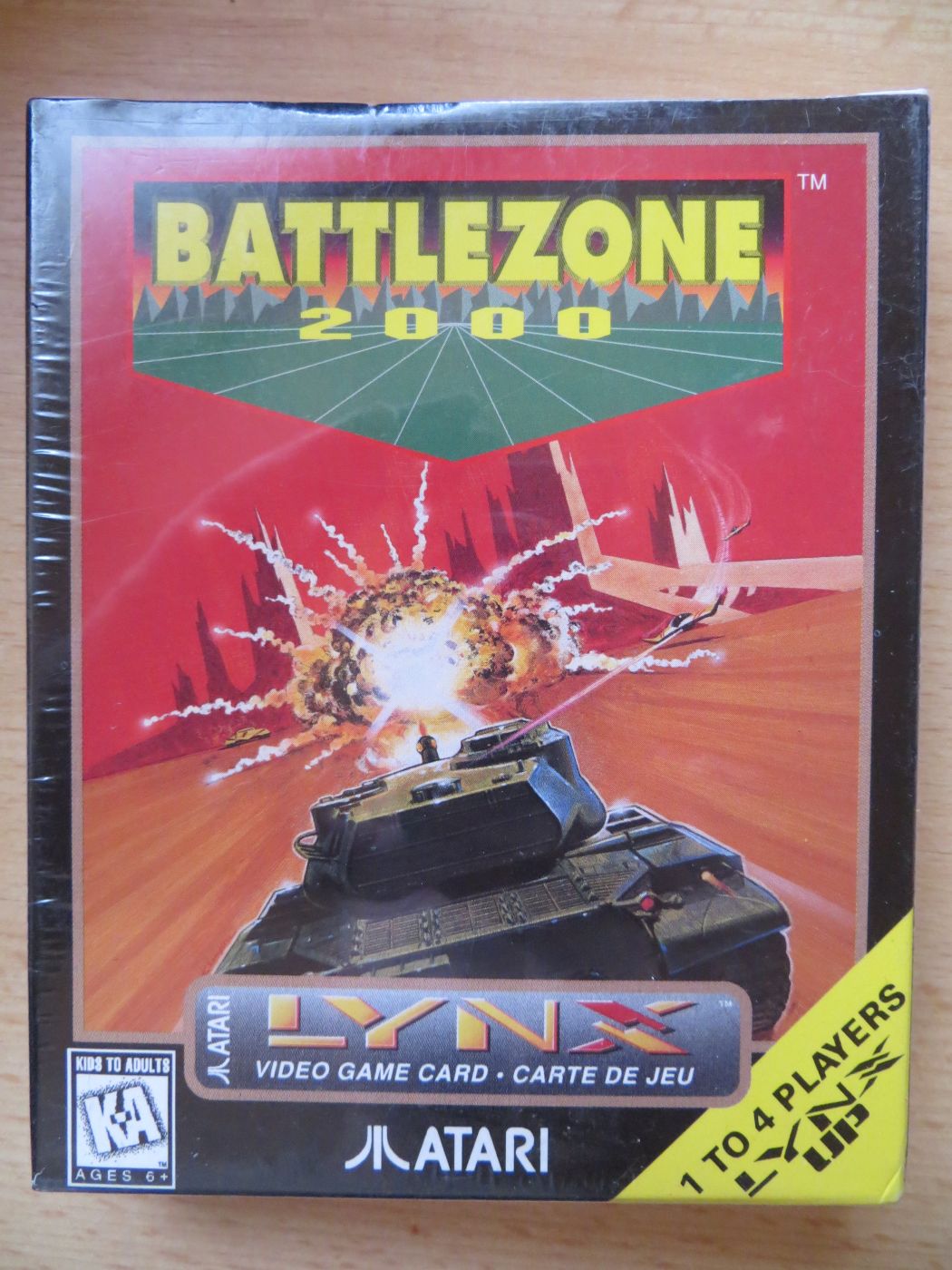
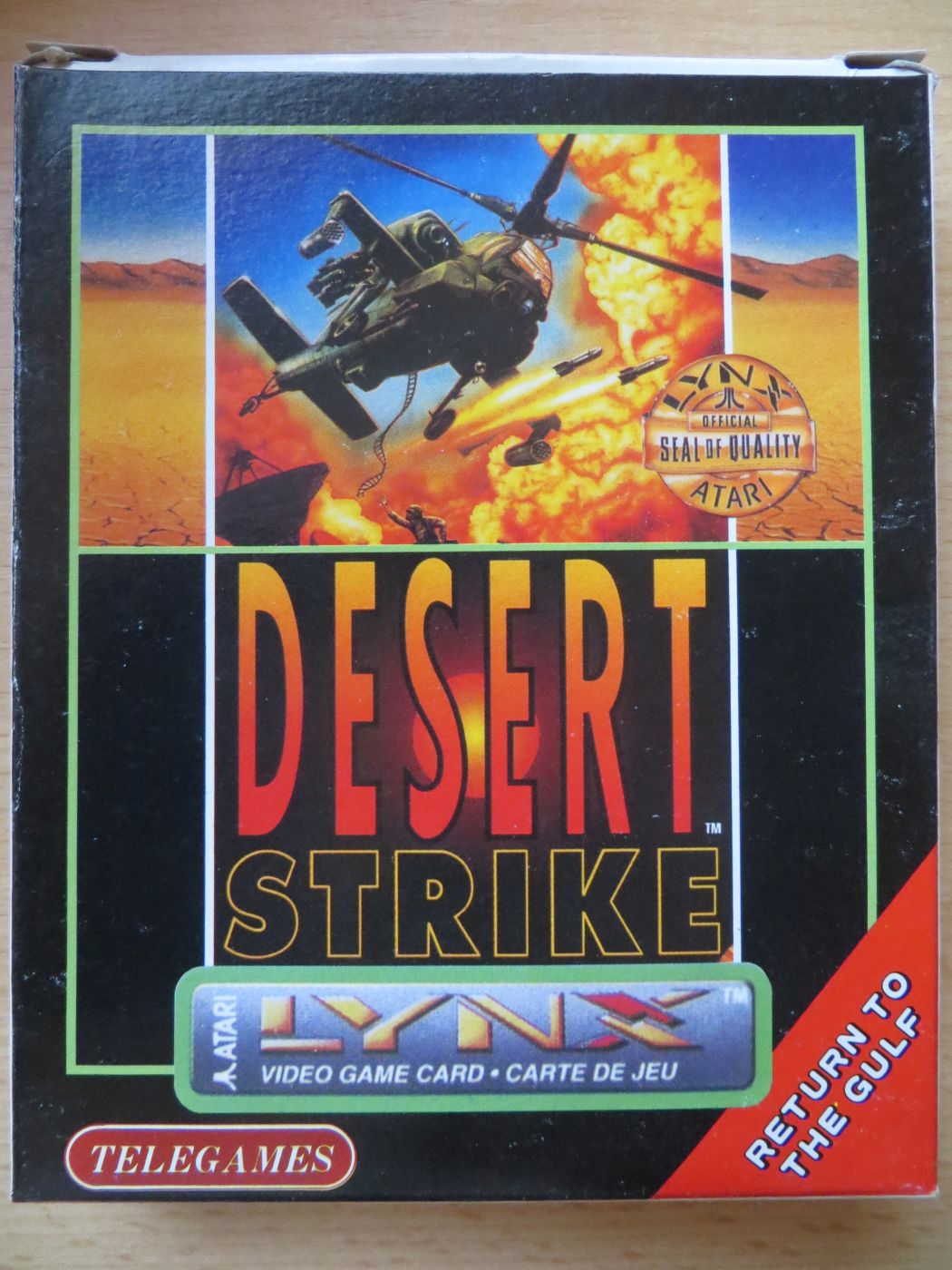
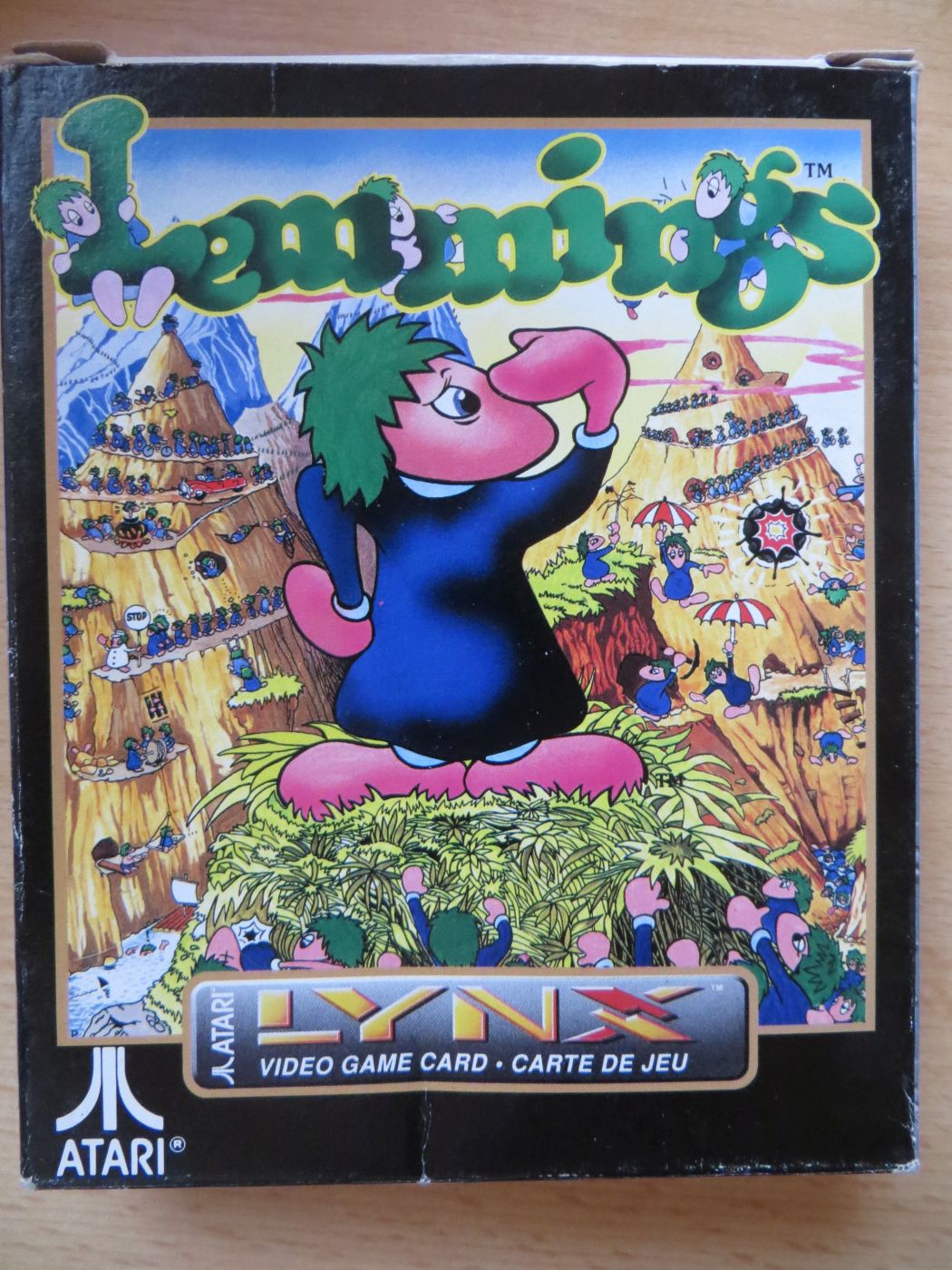
Da ich einige Spiele besitze, die noch originalverpackt sind, habe ich im AtariAge-Forum nachgefragt ob sich von der Art der Verpackung auf die Form der Cartridge schließen lässt. Die umfangreiche Nachricht des Nutzers „LynxHandyCaster“ habe ich übersetzt:
Blue Lightning (PA2020):
large box: flat or ribbed
small box with gray vertical band: flat, ribbed, or curved
small box without gray vertical band: curved
Electrocop (PA2021):
large box: flat or corrugated
small box with gray vertical band: flat, corrugated, or curved
small box without gray vertical band: curved
Gates of Zendocon (PA2023):
large box: flat or corrugated
small box with gray vertical band: flat, corrugated, or curved
small box without gray vertical band: curved
Gauntlet: The Third Encounter (PA2024):
small box with gray vertical band: flat, ribbed, or curved
small box without gray vertical band: curved
California Games (PA2025):
the cartridge supplied with the Lynx can be flat, ribbed, or curved
small box without the gray vertical band: curved
Chips Challenge (PA2028):
small carton with gray vertical band: flat, ribbed, or curved
small carton without gray vertical band: curved
Sometimes it is difficult to determine whether a *Blue Lightning*, *Electrocop*, or *Gates of Zendocon* box is large or small when viewing photos online—especially on eBay—if the description doesn't specify the box size. Here is a tip on how to tell the difference: simply count the rows of "Lynx X"s in the vertical gray stripe on the right side of the box; 10 and a half Xs indicate a large box, while 7 and a half Xs indicate a small box.
Homebrew
For several years now, the homebrew scene for the Lynx has been active again. Great new games are released regularly. In fact, there was even a software competition in 2019 featuring some promising entries.
Game Shops
Songbird
Yastuna Games
Atari Gamer
polyplay
![eJagFest Slideshow [Atari Lynx]](https://www.jungsi.de/blog/wp-content/uploads/eJagFest-Slideshow-Vorderseite.jpg)
![Raid on TriCity – Second Wave [Atari Lynx]](https://www.jungsi.de/blog/wp-content/uploads/Raid-On-Tricity-Ladescreen.jpg)
![Sky Raider Redux [Atari Lynx]](https://www.jungsi.de/blog/wp-content/uploads/Sky-Rider-Redux-Vorderseite.jpg)
Leave a Reply