

![Amstrad CPC464 [Amstrad/Schneider]](https://www.jungsi.de/blog/wp-content/uploads/Amstrad-CPC-464-oben.jpg)
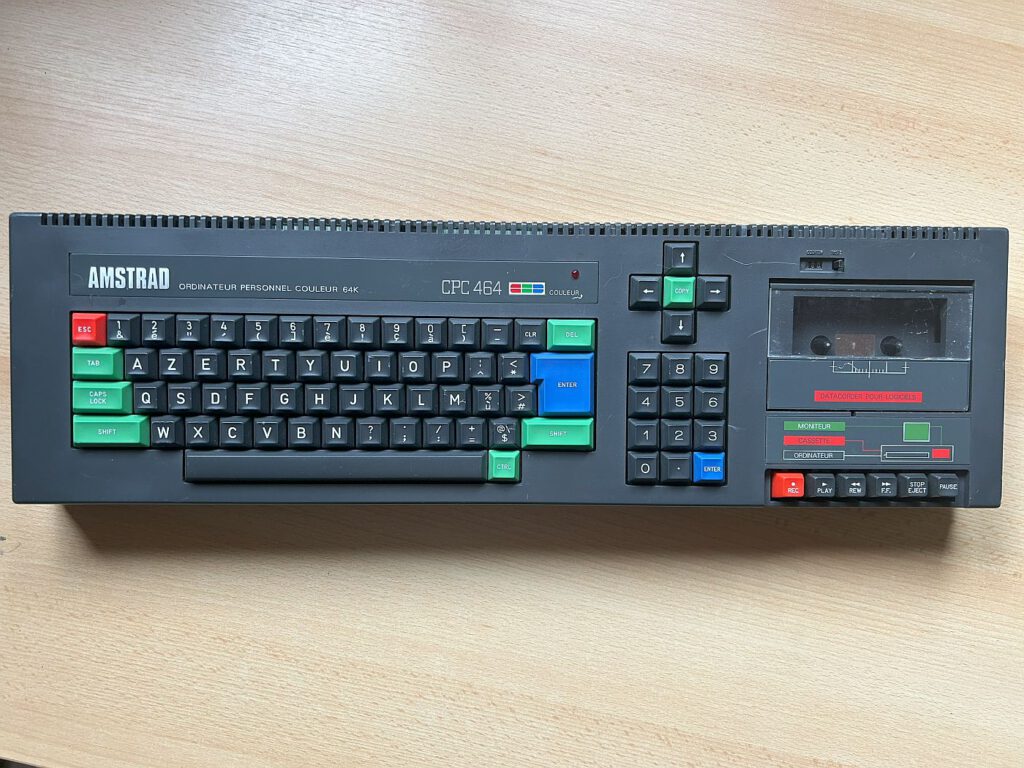
The Amstrad CPC464 had been on my wish list for quite some time—even though I already have a Schneider CPC464 in my collection. What particularly appealed to me about this unit is the striking, colorful keyboard design featuring green, red, and blue keys. This version of the Amstrad originates from France and, apart from the keyboard, is identical to the English original.
Instead of recounting the entire history of the CPC series, in this post I would like to provide just a brief refresher and focus on the specific features of this model.
The CPC Series at a Glance
The CPC464 (short for Colour Personal Computer 64K) was the first model in the popular CPC series, manufactured by the British company Amstrad between 1984 and 1989. Amstrad, originally known for household appliances, achieved great success with the CPC series.
Key features of the CPC464 included the integrated cassette recorder and the bundled monitor, which also served as the power supply. Over the years, subsequent models were released, such as the CPC664, the CPC6128, and the CPC472, which was developed specifically for the Spanish market. For the German-speaking market, Amstrad partnered with the company Schneider, resulting in the devices being marketed under the Schneider CPC brand.
The CPC464 was produced in several versions, distinguished by different motherboards. My unit dates from 1986, bears the serial number 531-6×05614, and is equipped with the second revision of the motherboard (Z70200 MC0002D).
The technology behind the French CPC464
The French CPC464 comes with an AZERTY keyboard, which differs from the German QWERTZ version. The model has the following technical specifications:
- CPU: Zilog Z80 (Z8400APS Z80 CPU)
- RAM: 64 KB (eight MT 4264-12 ICs, 8 KB each)
- ROM: 32 KB (Amstrad 40050, with BIOS and BASIC)
- Graphics modes: Three text and three graphics modes with 27 colors
- Sound: Mono sound (internal), stereo via amplifier or headphones
- Keyboard features: The French AZERTY keyboard differs, among other things, in how numbers are entered (using key combinations).
The cassette recorder is integrated directly into the casing—typical of the CPC series—and is located on the right-hand side.
Amstrad CPC 464 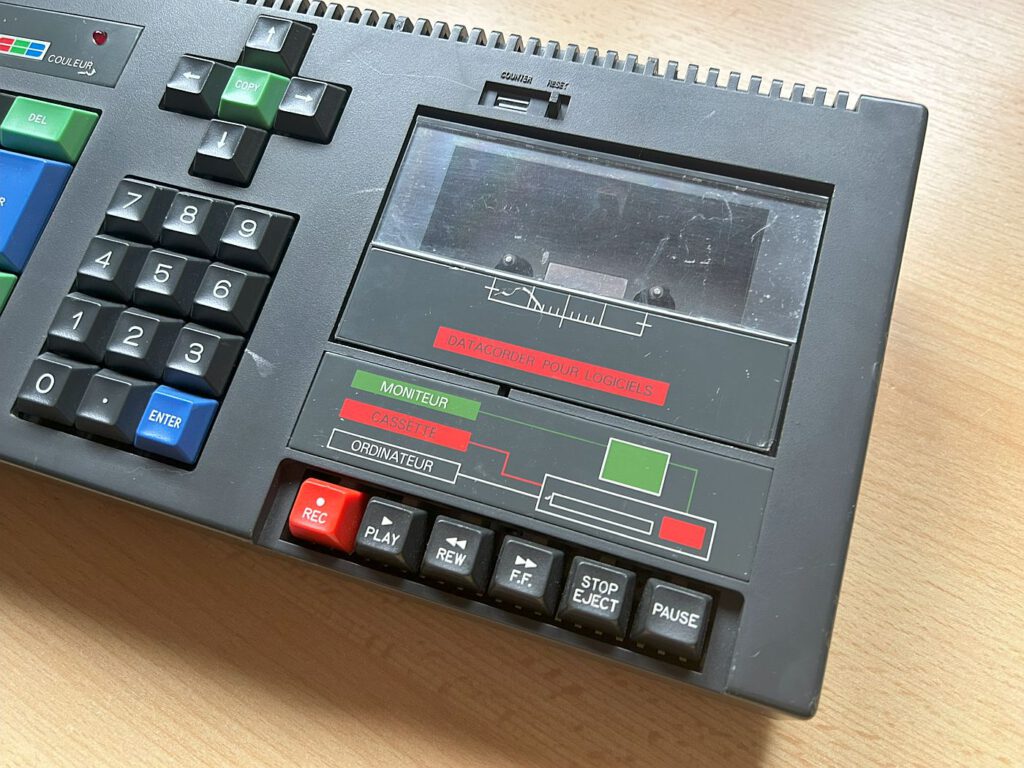
Amstrad CPC 464 – Cassette deck 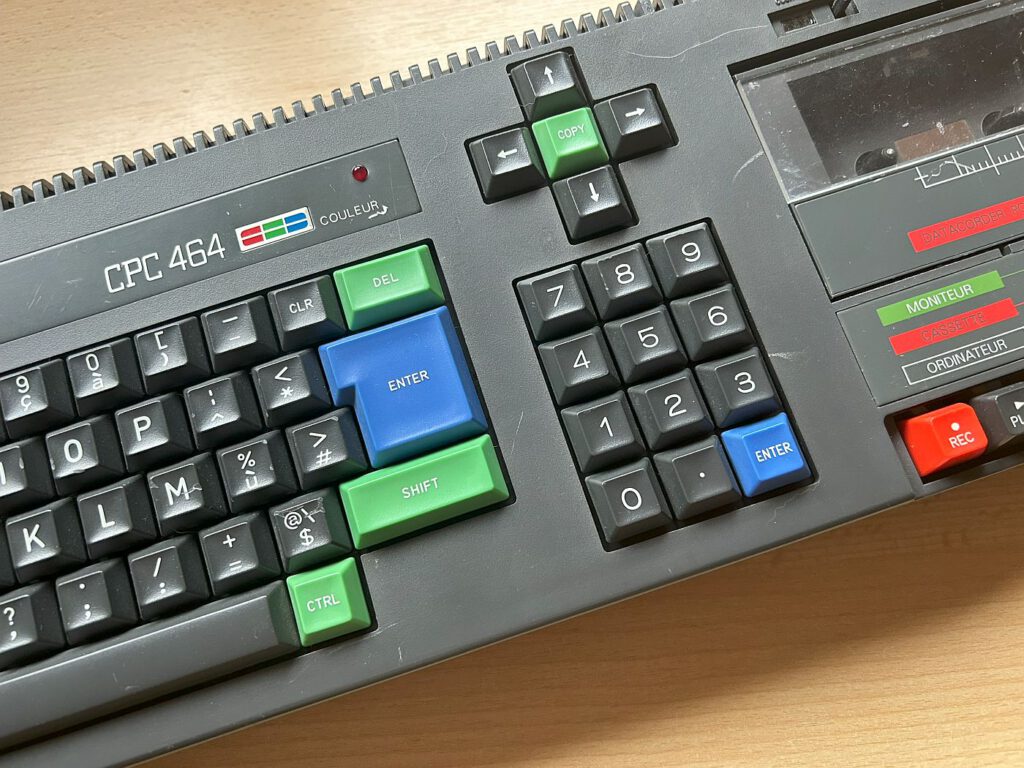
Amstrad CPC 464 – Keyboard (right) 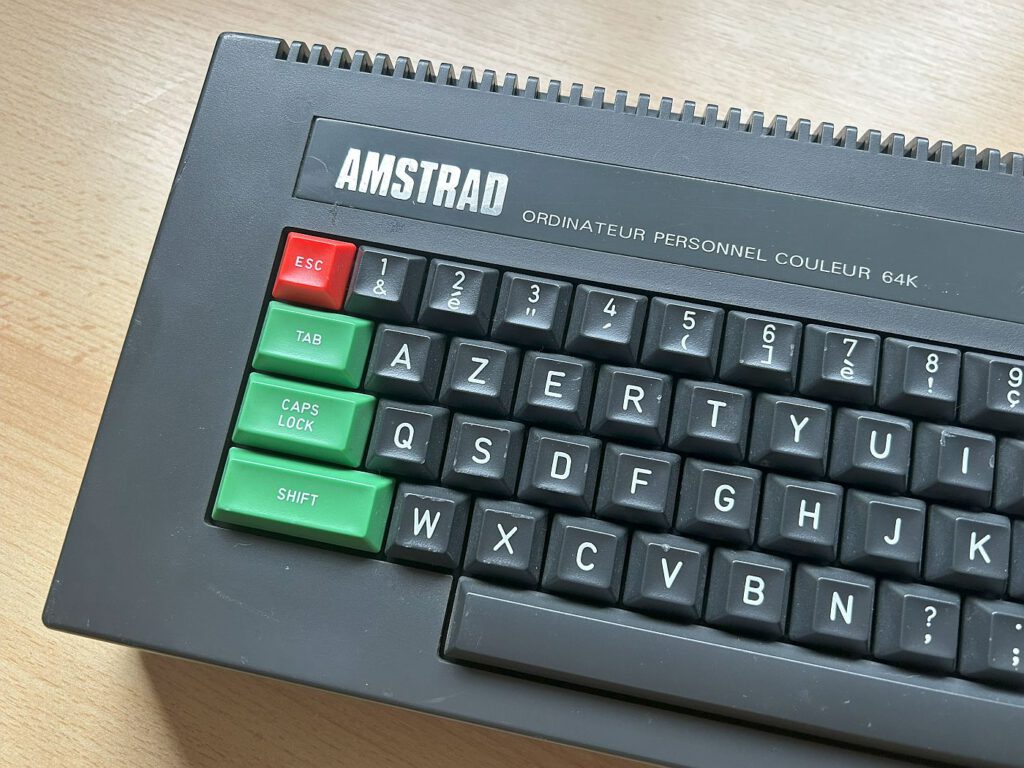
Amstrad CPC 464 – keyboard on the left 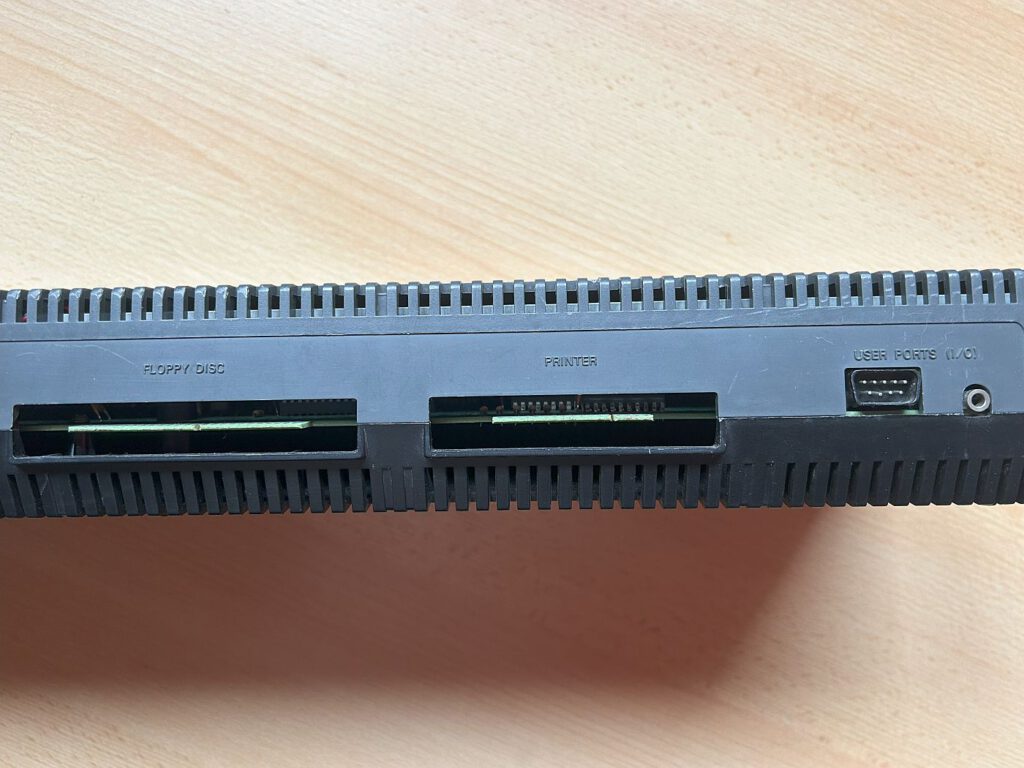
Amstrad CPC 464 – Floppy Printer User Ports Anschluss 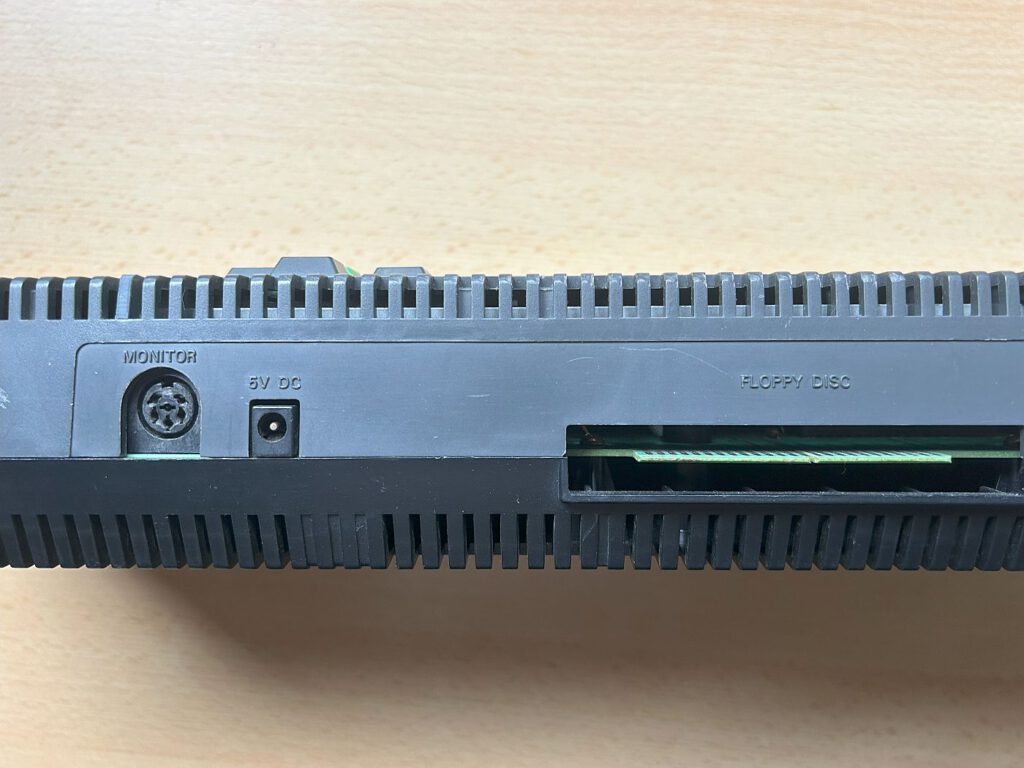
Amstrad CPC 464 – Monitor, Power, and Floppy Connections 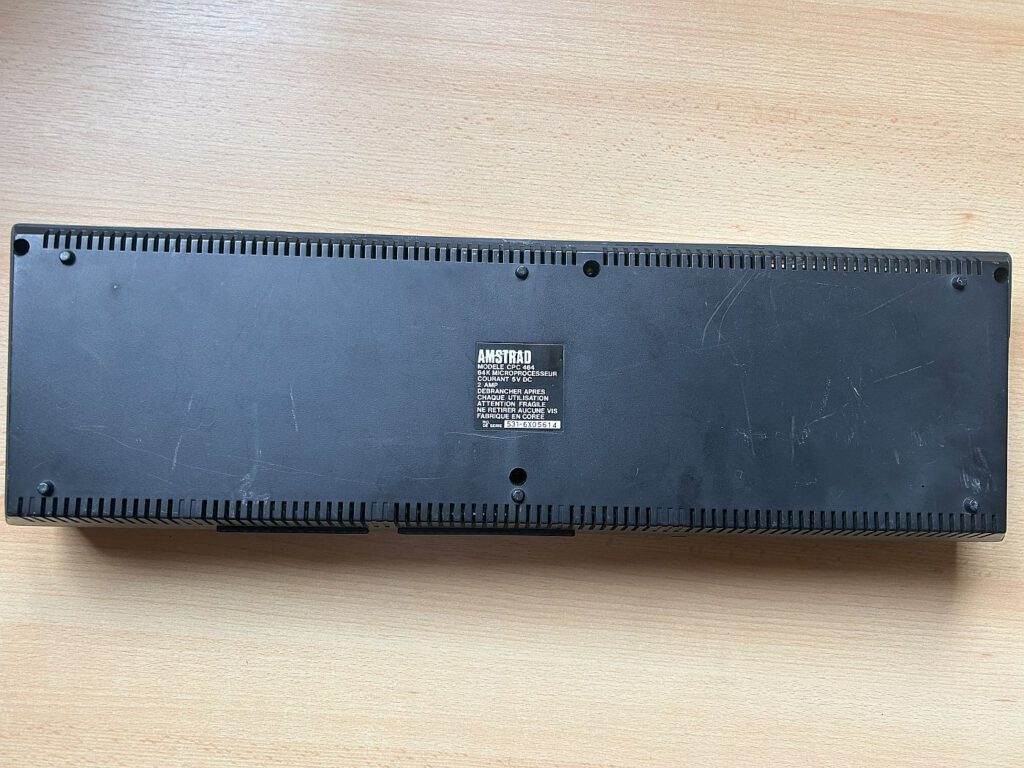
Amstrad CPC 464 – Underside of the case 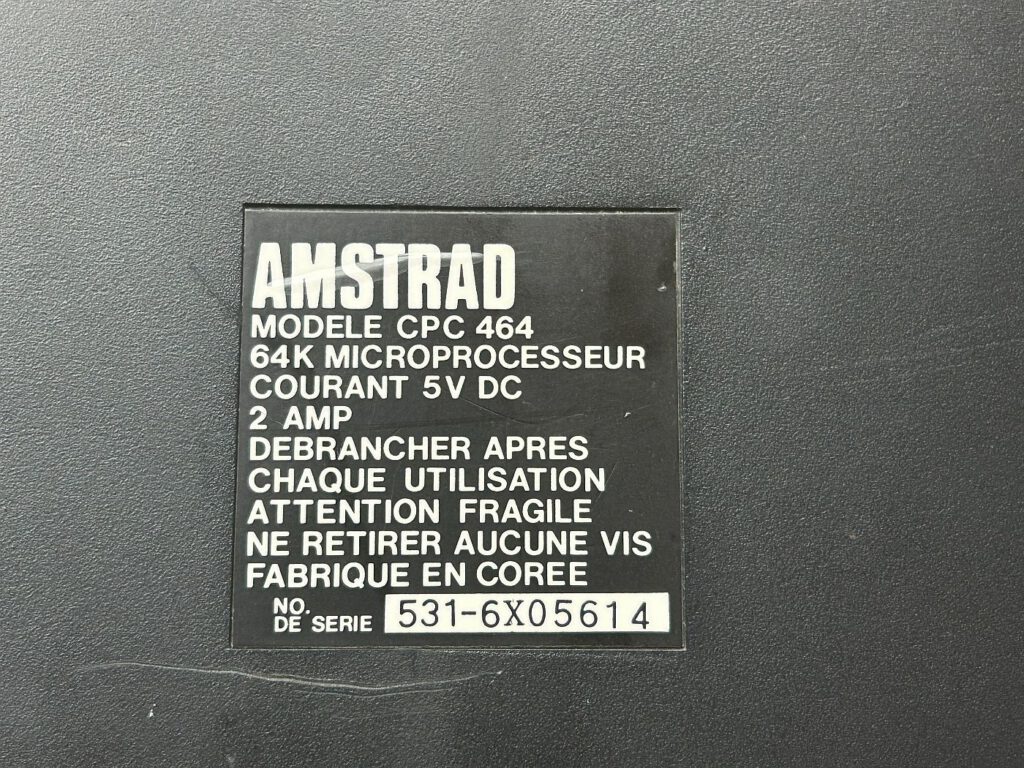
Amstrad CPC 464 – Model and serial number 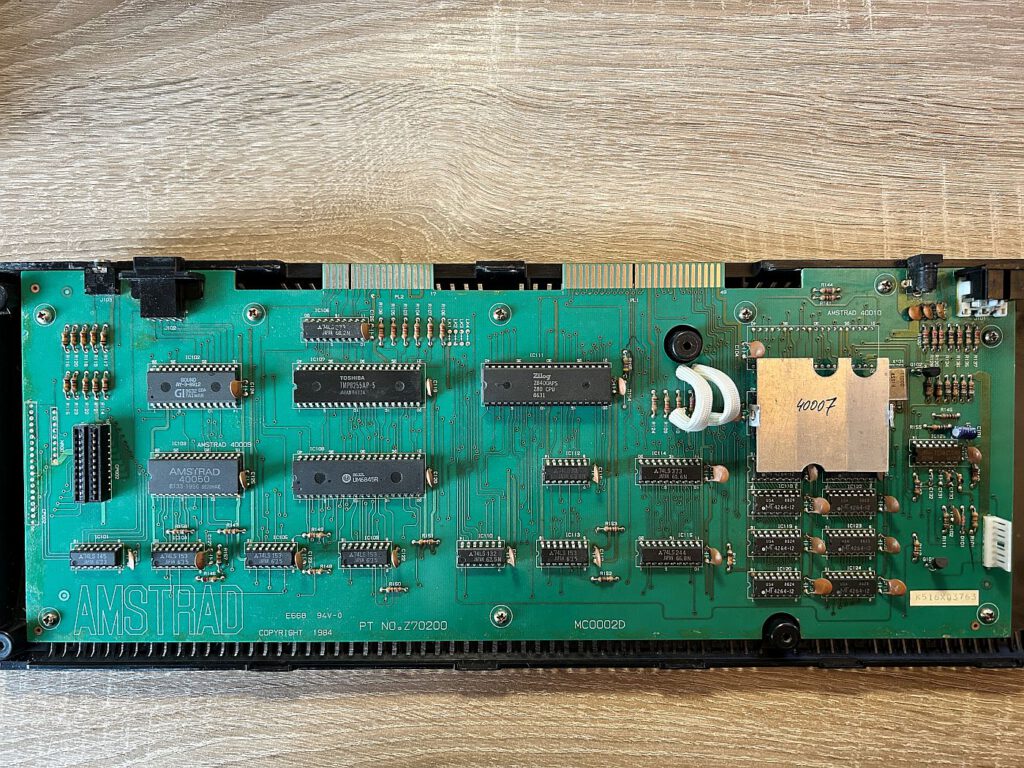
Amstrad CPC 464 – Circuit board 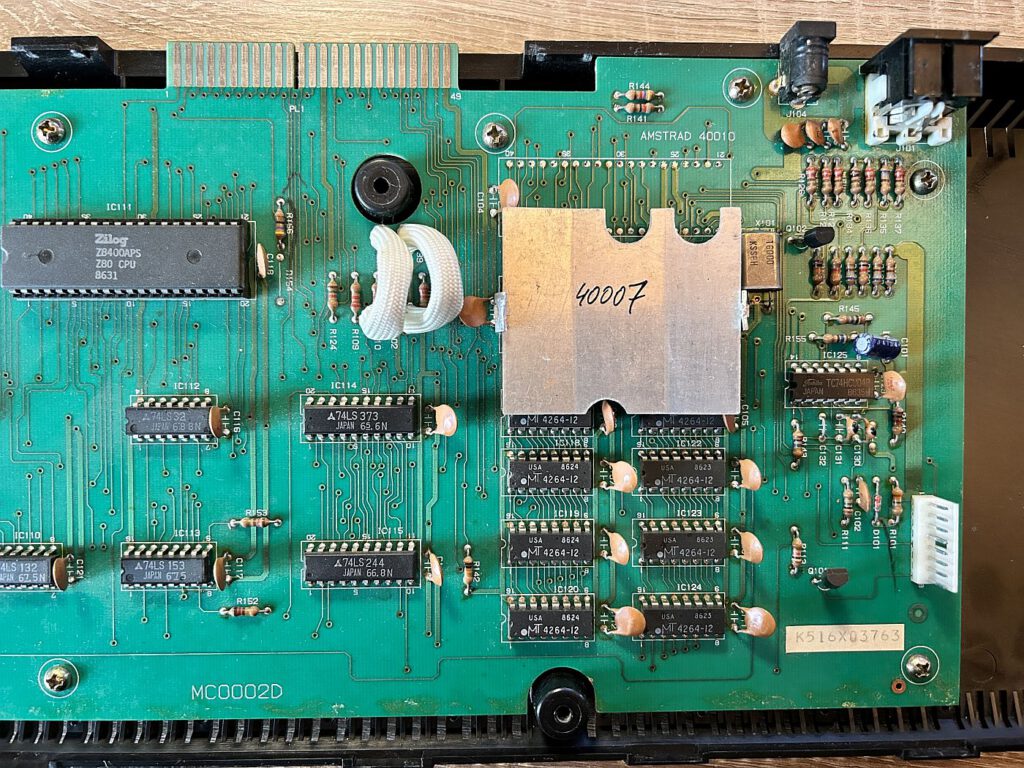
Amstrad CPC 464 – Platine rechts 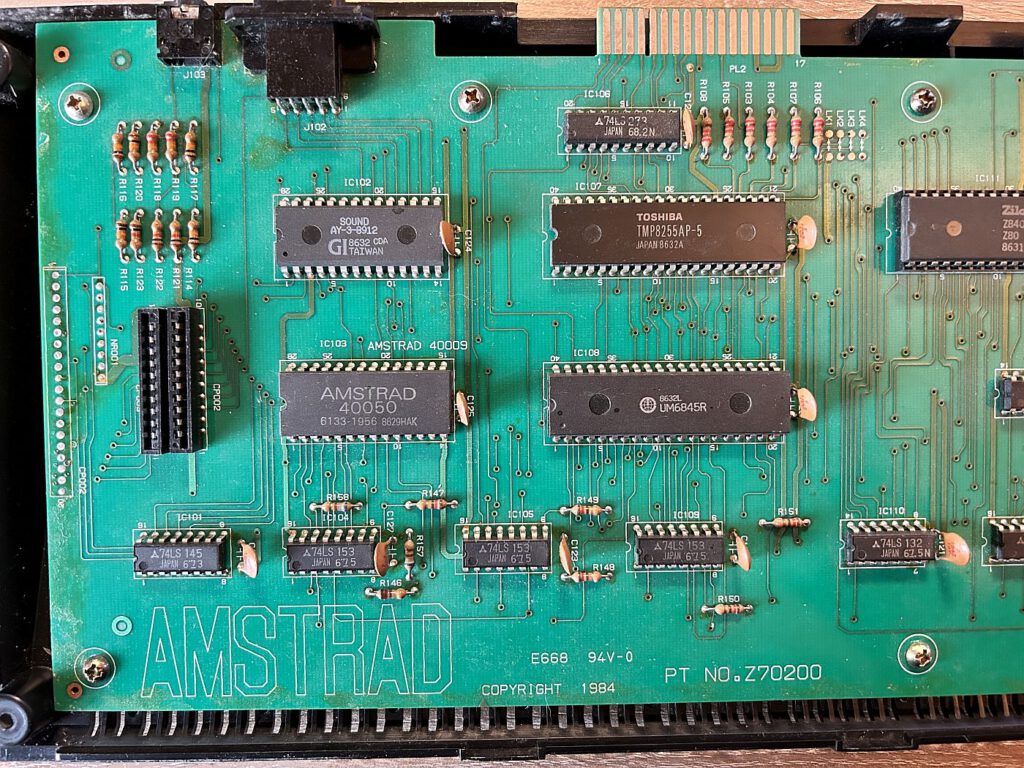
Amstrad CPC 464 – board on the left 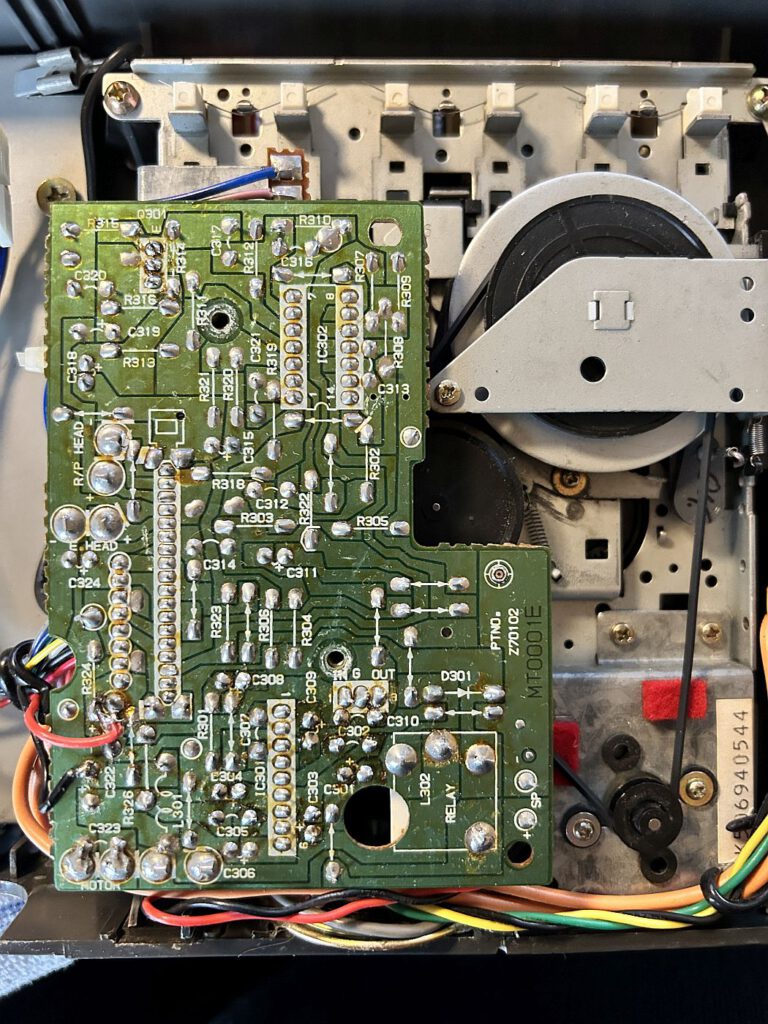
Amstrad CPC 464 – Cassette drive interior
An important tip for the French keyboard
Anyone using the CPC464 with an AZERTY keyboard for the first time might quickly reach a point of frustration—just as I did. The reason is that the "|" symbol used in BASIC commands does not work the way one would expect on an AZERTY keyboard; instead, you have to use the "ù" key. This means that, rather than typing |cat as you would on a QWERTZ keyboard, you must type ùcat—for instance, to load the contents of a disk.
Conclusion
The Amstrad CPC464 with a French keyboard is a fantastic collector's item, not only because of its colorful keys but also due to its historical significance within the CPC series. Although there are no technical differences compared to the German version, the AZERTY keyboard gives this model a unique character—and presents a minor challenge that is easily overcome once you get used to it.
Leave a Reply