

![Atari 7800 [Atari]](https://www.jungsi.de/blog/wp-content/uploads/Atari-7800-seitlich.jpg)
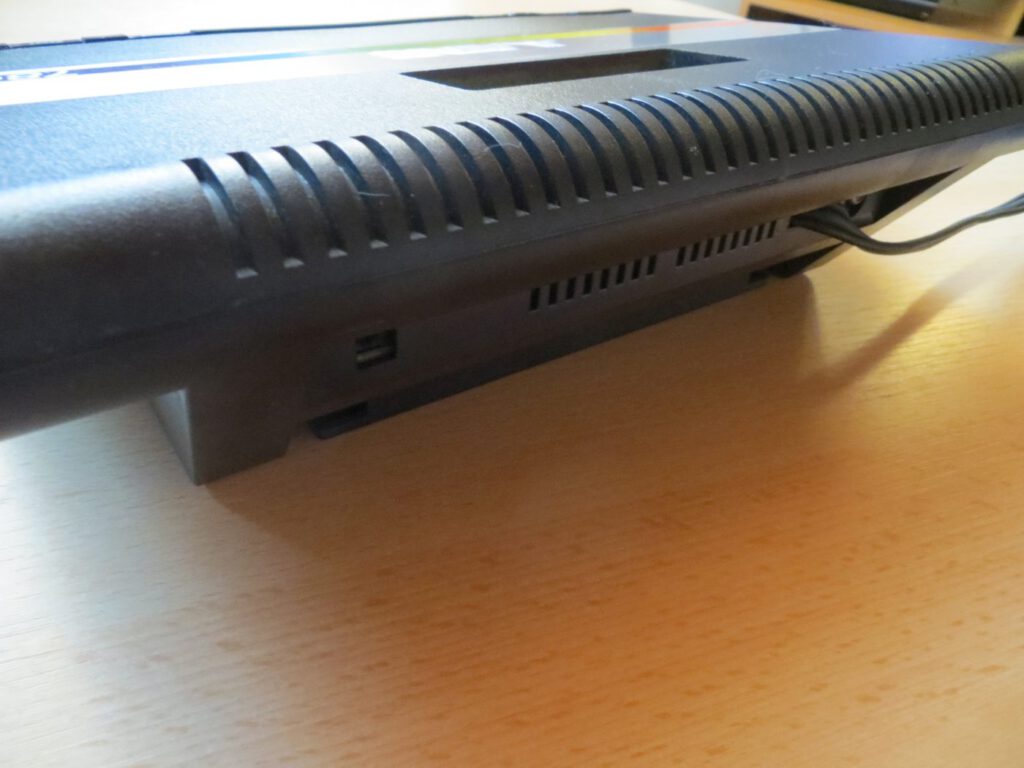
After the Atari VCS 2600, the second Atari 8-bit console, the Atari 7800, is now part of my collection as well. It followed the Atari 5200, which was pulled from the market in 1983, and was first released in June 1984. Warner, the parent company of Atari, had already commissioned General Computer Corporation in the summer of 1981 to develop arcade games for Atari. In the fall of 1982, GCC began developing the console under the name Spring, based on the Intel 80186 processor. In early January 1983, however, this plan was abandoned, and development of MARIA, the graphics chip of the new console, began. The developers were Art Ng and Steve Golson, along with other chip designers from GCC and the Atari Semiconductor Group. Spring was renamed Maria, made its way to Atari via Warner, and was initially renamed CX3600. One of the development names was reportedly Atari 9000 Video Computer System. The new chip could move up to 100 different sprites.
At the time, the Atari 2600 was still selling reasonably well, but was technically well behind its competitors, the Mattel Intellivision and Colecovision. The Atari 5200 fell far short of expectations. Development of the graphics chip dragged on and required several revisions: in July 1983 the GCC-1701 (with many bugs), in October 1983 the GCC-1702 (with further bugs), and finally in April 1984 the GCC-1702B (bug-free). The name GCC-170x was a nod to the starship Enterprise with its designation NCC-1701 😉 After these developments, production began and the console was renamed Atari 7800 ProSystem. The first shipped version still featured an expansion bus on the left side, to which a computer upgrade, a laserdisc player, a printer, or a floppy drive were later to be connected.
The high-score cartridge developed by General Computer Corporation for saving scores never made it past the prototype stage. Press reception was consistently positive, and many saw more potential in the 7800 than in the NES.
After Jack Tramiel took over Atari's home computer division, the console was temporarily discontinued after just 45 days on the market. The reason was apparently that it was unclear who was supposed to pay off co-developer GCC – Atari or Tramiel. It wasn't until 1986 that the console was re-released – without the expansion bus. By that point, the NES was already far ahead in sales figures. At least the Sega Master System could still be kept in check in terms of sales.
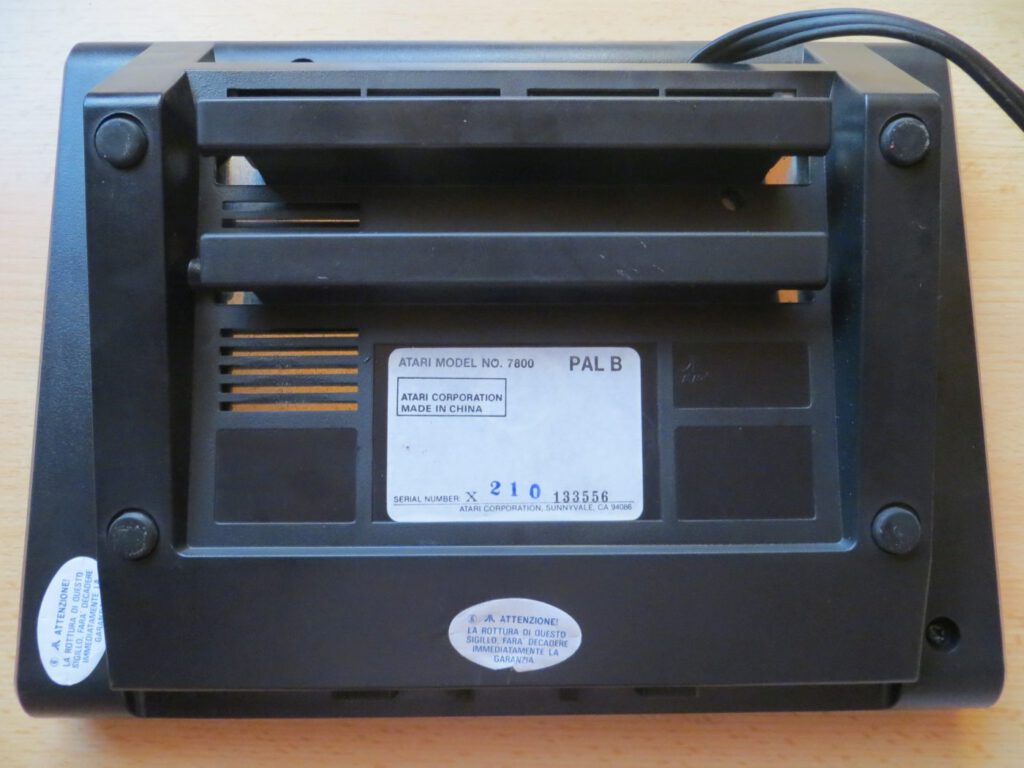
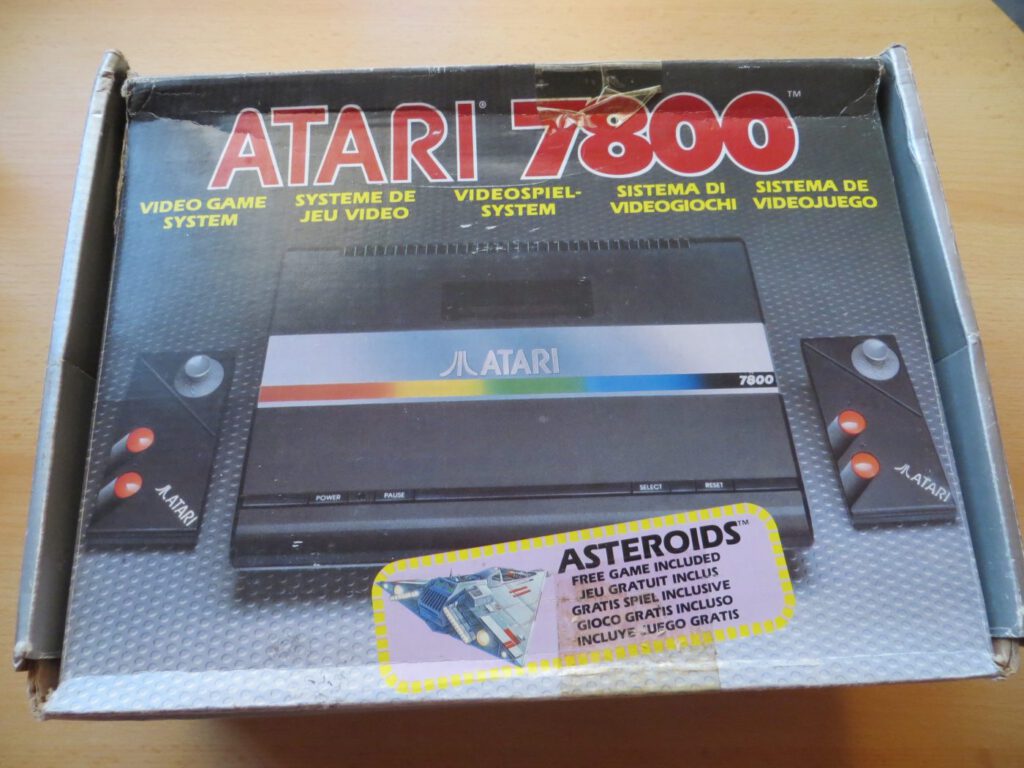
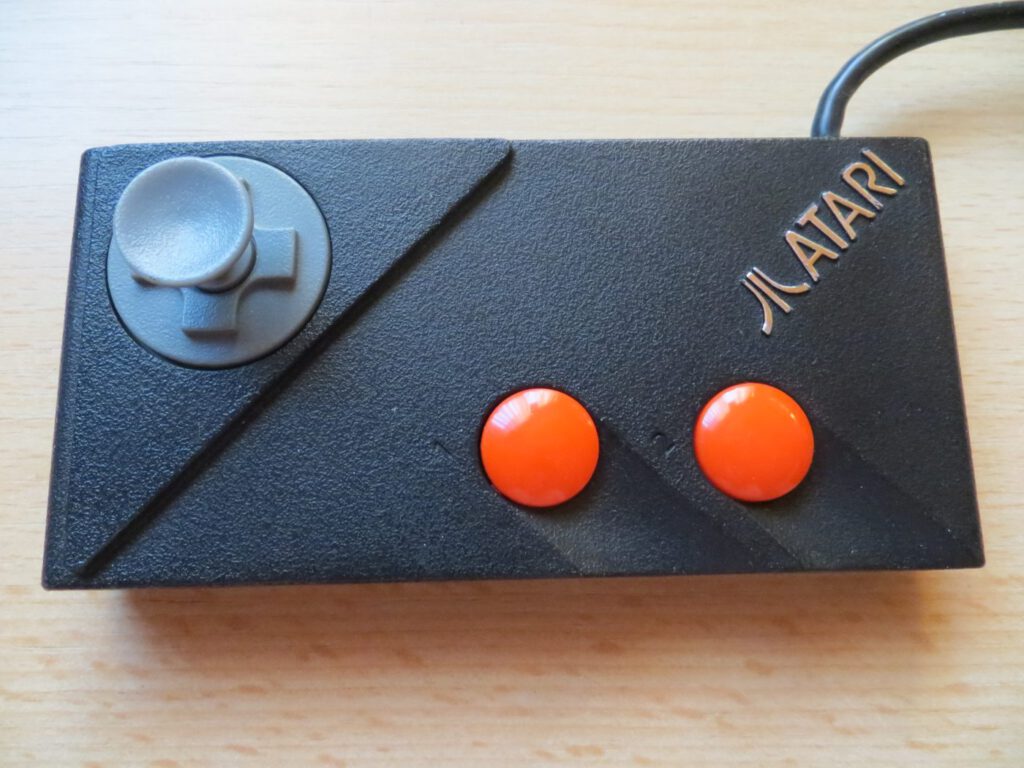
Originally, Atari did not want to release the 7800 in Europe and instead focused on the XE Games System. Due to criticism from industry specialists, Atari reconsidered and at times reached a 50% market share in England. The PAL version was renamed Atari 7800, includes the game Asteroids, and was sold in Europe with the CX78 gamepad. For the NTSC version in North America, Missile Command was planned but never realized, and the ProLine joystick was included as the controller.
Sales in the USA reached 3.7 million units.
Atari and Nintendo
Im April 1983 starteten die Verhandlungen zwischen Atari and Nintendo. Währenddessen präsentierte Nintendo einen Prototyp ihrer Konsole sowie die nahezu fertiggestellten Spiele Donkey Kong and Popeye. Atari wurde die Möglichkeit geboten, bis zu 150.000 Platinen zu erwerben, die in ihre eigenen Konsolen eingebaut werden konnten. Nach mehreren Treffen stand fest, dass Atari bis Weihnachten 1983 ausreichend Konsolen bereitstellen könnte. Jedoch musste der damalige Atari-Chef Ray Kassar aufgrund von Insiderhandel zurücktreten, und sein Nachfolger Jim Morgan nahm sich zunächst eine zweimonatige Auszeit. Nach seiner Rückkehr legte er alle Projekte für einen weiteren Monat auf Eis. Infolgedessen entschied sich Nintendo, den westlichen Markt ohne Atari zu erschließen. Es bleibt spekulativ, was geschehen wäre, hätte Atari das „NES“ auf den Markt gebracht.
System
The 7800 uses the SALLY processor, which was derived from the MOS 6502. SALLY is clocked at 1.79 MHz. For compatibility with the Atari 2600, the TIA graphics chip is available, but is only needed for sound output and the 2600 games. The most important chip is MARIA, which was developed by GCC and the Atari Semiconductor Group. By the way, TIA-MARIA is a Jamaican coffee liqueur (typical of the many former MIT students at GCC). The resolution is 320 × 200 pixels and the color palette contains 256 colors, of which 16 (some sources say 25) could be displayed simultaneously. Groundbreaking for its time were the double-buffered memory and direct memory access (DMA). The console has 4 KB of memory, and the maximum cartridge size is 125 KB. The BIOS of the cartridges contained a digital signature intended to prevent the unlicensed production of cheap third-party games. Since the sound couldn't keep up with other consoles, the POKEY chip from the Atari 8-bit computers or the cheaper equivalent GUMBY was integrated into later game cartridges – e.g. Ballblazer and Commando.
Hinweise
– die Harmony-Cartridge ist sowohl mit dem Atari 2600 als auch dem 7800 kompatibel
– aus einem unverständlichen Grund wurde beim Stromstecker kein Standard verwendet. Steht kein Original-Netzteil (9 Volt, 1 Ampere) zur Verfügung, kann auch ein anderes Netzteil verwendet werden. In diesem Fall muss aber die Buchse auf der Platine entsprechend getauscht werden. Bei dem Originalstecker ist bei Draufsicht (die „Nase“ befindet sich unten) links +9V und rechts Masse.
– aktuelle Informationen: im entsprechenden Forum auf AtariAge
– 7800XM: eXpansion Module – eine Erweiterung für die Konsole mit diesen Features: Highscore-Speicherung, 128 KB RAM, POKEY-Chip, Yamaha 2151 Audiosynthesizer – die Auslieferung hat im April 2020 begonnen und die erste Auflage von 200 Stück ist ausverkauft. Erhältlich ist das XM ebenfalls über das AtariAge-Forum
Atari 7800 Top Games
Only 80 games were released during the console's lifetime. Unfortunately, a killer app like Mario on the NES was missing. This was partly due to the developers' exclusive contracts with Nintendo at the time. Because of Tramiel's financial policies, many games were never completed, as negotiations during development were conducted to the disadvantage of the programmers, who then downed tools.
1. Double Dragon
2. Donkey Kong
3. Mario Bros.
4. Karateka
5. Water Ski
6. Ninja Golf
7. Ikari Warriors
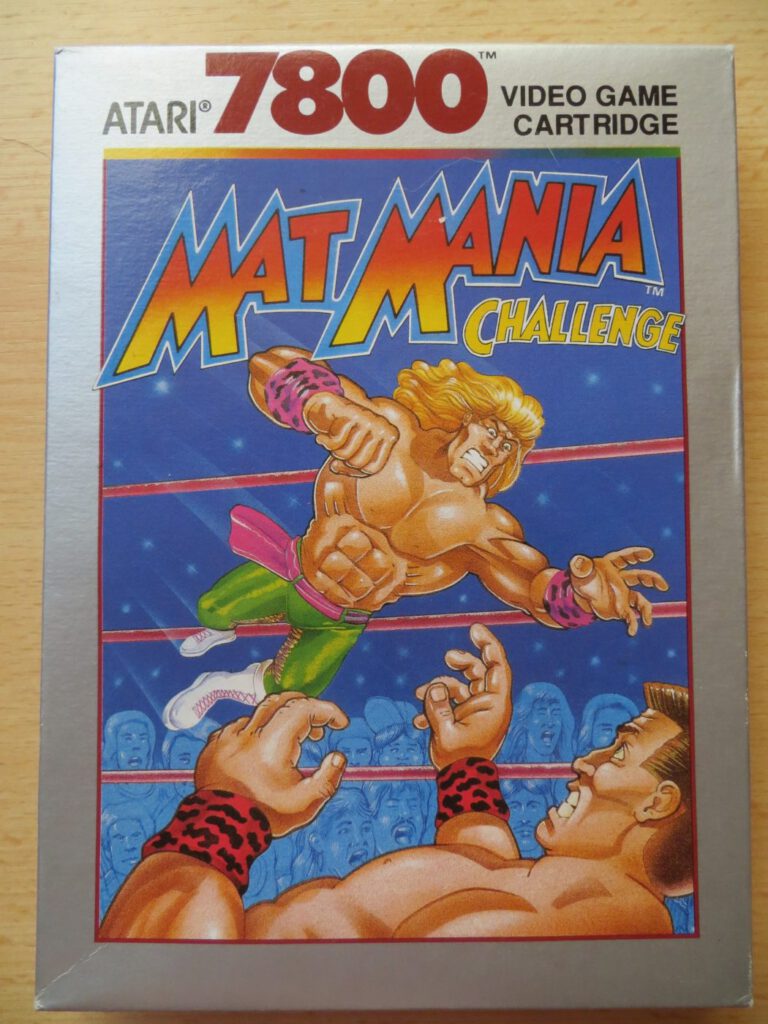
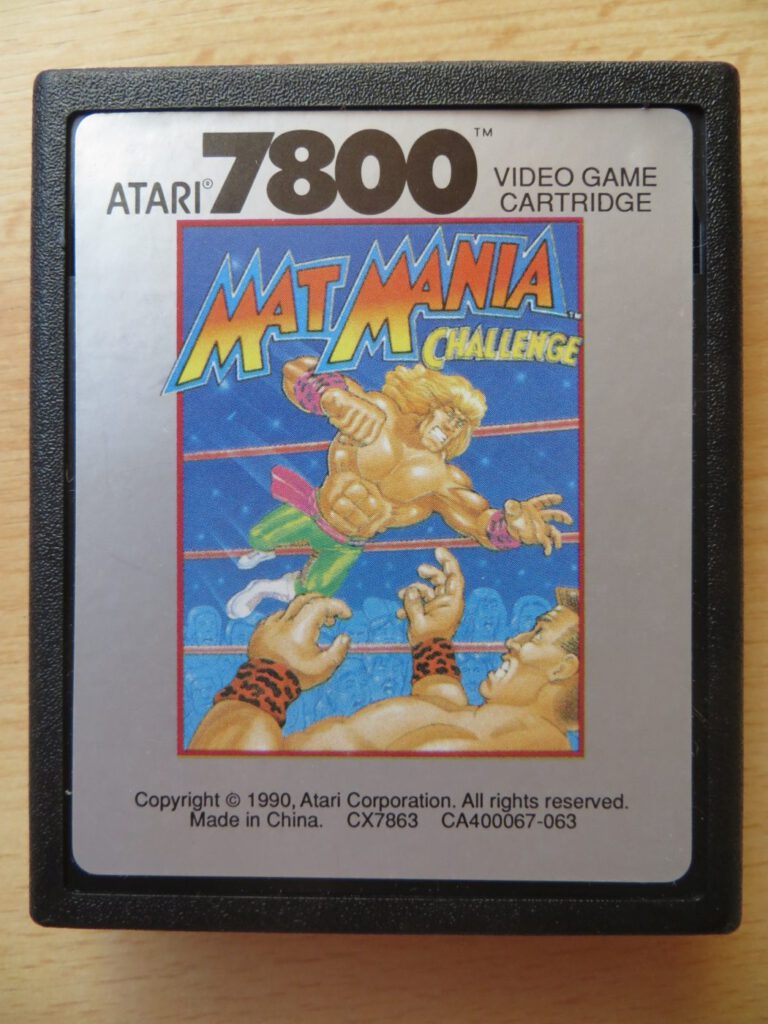
8. Mat Mania Challenge
9. Dark Chambers
10. Plutos
11. Tower Toppler
12. Ace of Aces
13. Desert Falcon
14. Sirius
15. Barnyard Blaster
16. Xenophobe
17. Planet Smashers
18. Alien Brigade
19. Midnight Mutants
20. Xvious
21. Ballblazer
22. Commando
23. Food Fight
24. Scrapyard Dog
25. Ms. Pac-Man
Homebrew
The most significant innovation is probably the Expansion Module (XM), which reintroduces the previously removed high-score feature and additionally offers more memory as well as an improved sound chip. The module is simply plugged in between the console and the cartridge. There is, for example, a version of Donkey Kong that uses the XM and probably represents the best port for any 8-bit console.
– B*NQ
– Failsafe
– Frenzy
– Pac-Man Collection
Links
Atari Museum (English)
Atari Museum (German)
Atari Age
The Atari 7800 Page
Atari 7800 Tech Page by Dan B.
![Dragonfly [Atari 7800]](https://www.jungsi.de/blog/wp-content/uploads/Dragonfly-seitlich-oben.jpg)
![GameDrive [Atari 7800]](https://www.jungsi.de/blog/wp-content/uploads/Game-Drive-Oberseite.jpg)
Hallo,
für die Atari 7800 Konsole, gibt es ein neues Spiel: Rikki & Vikki. Da werden die Grafikfähigkeiten gut umgesetzt.
Viele Grüße, MiC
http://www.penguinet.net/Games/Rikki_Vikki/index.php
Hallo MiC,
vielen Dank für den Hinweis. Muss ich direkt bestellen.
Viele Grüße
Jungsi
Kennst du das Kultbuch zu Atari: https://meinkunstbuch.wordpress.com/2020/08/20/atari-kunst-und-design-der-videospiele/
Hallo,
ich habe letztens gelesen, dass der Grafikchip Maria sogar 25 aus 256 Farben gleichzeitig darstellen kann. 16 Farben sind es im Atari 2600- Modus (TIA).
Gruß MiC
Hallo,
danke für den Hinweis. Ich bin auch bereits ein paar Mal darüber gestolpert. Allerdings habe ich noch keinen eindeutigen Hinweis dafür gefunden, dass es tatsächlich so ist.
Grüße
Jungsi